Palm Jumeirah: an island of sand and the homes being built on it
How Palm Jumeirah was reclaimed, whether it is sinking, how the trunk differs from the crescent, which homes are being built now and how much it costs to get in.
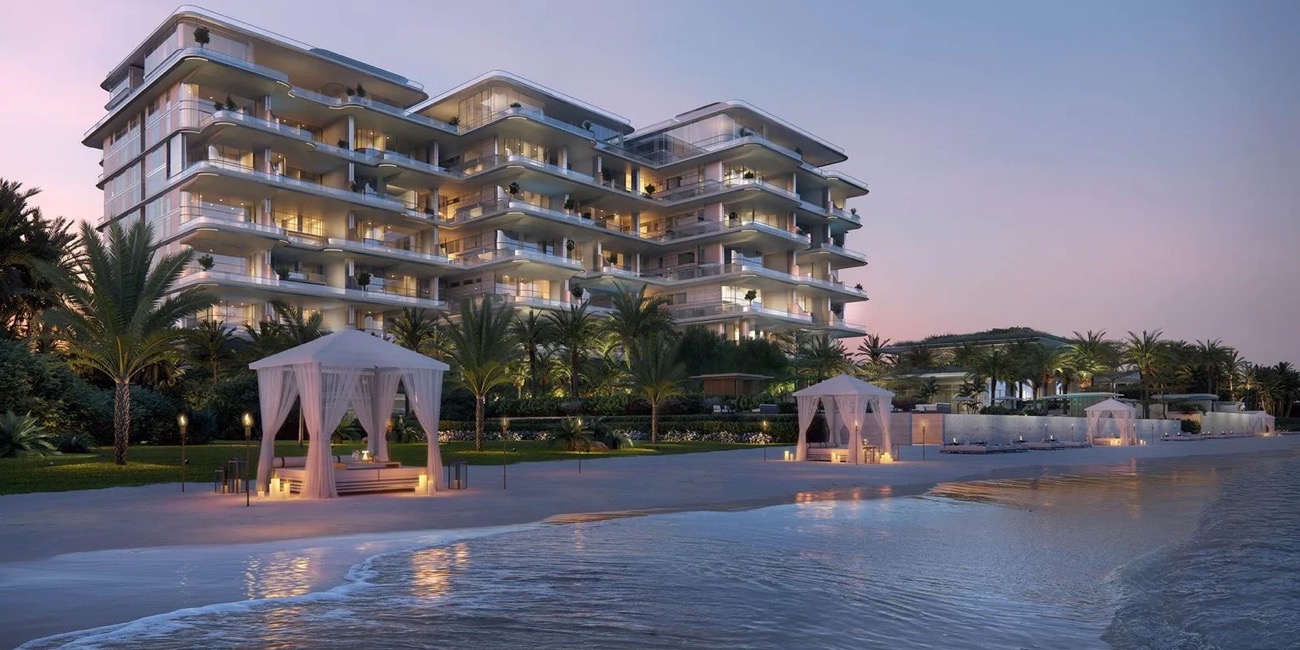
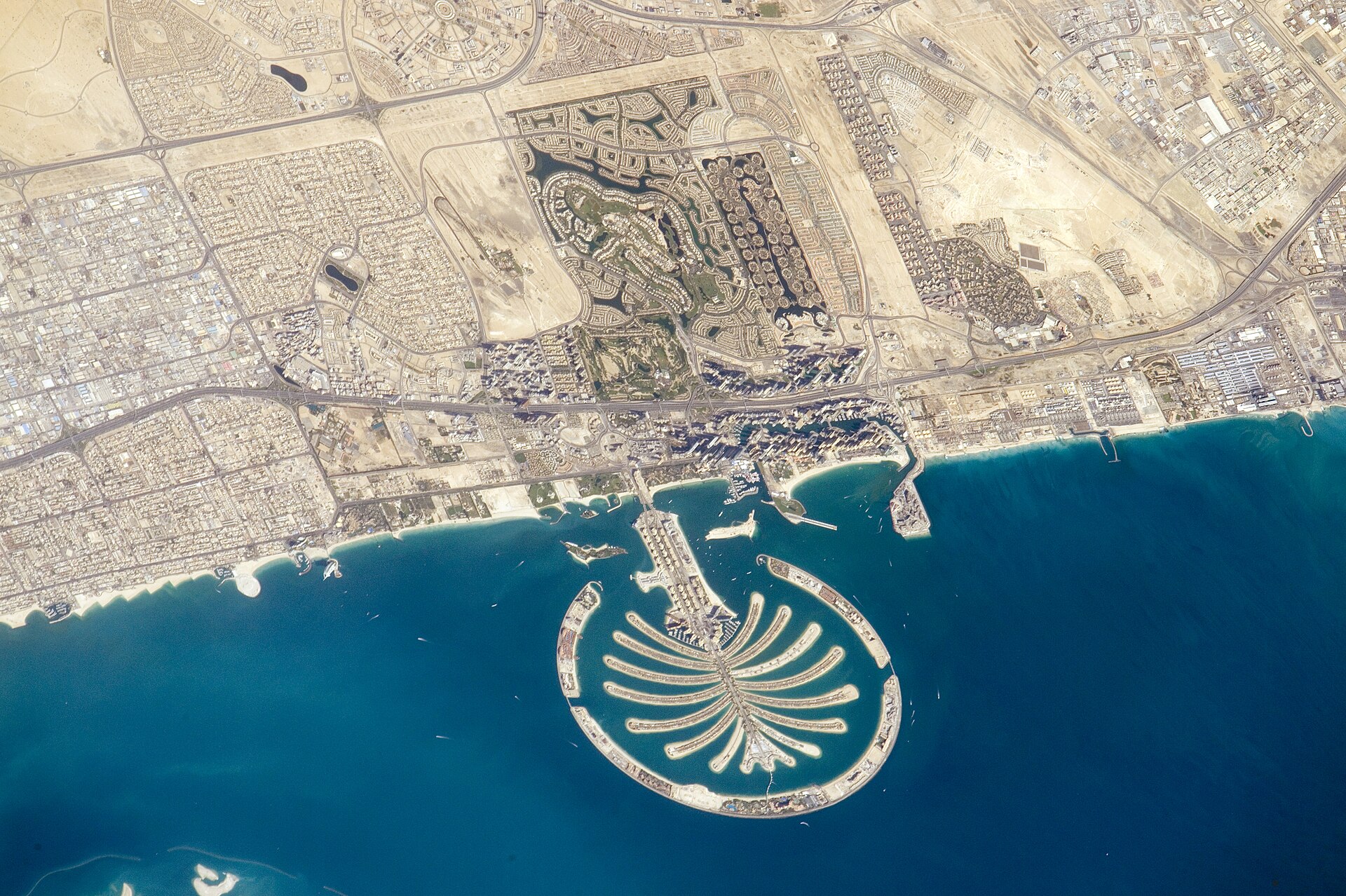
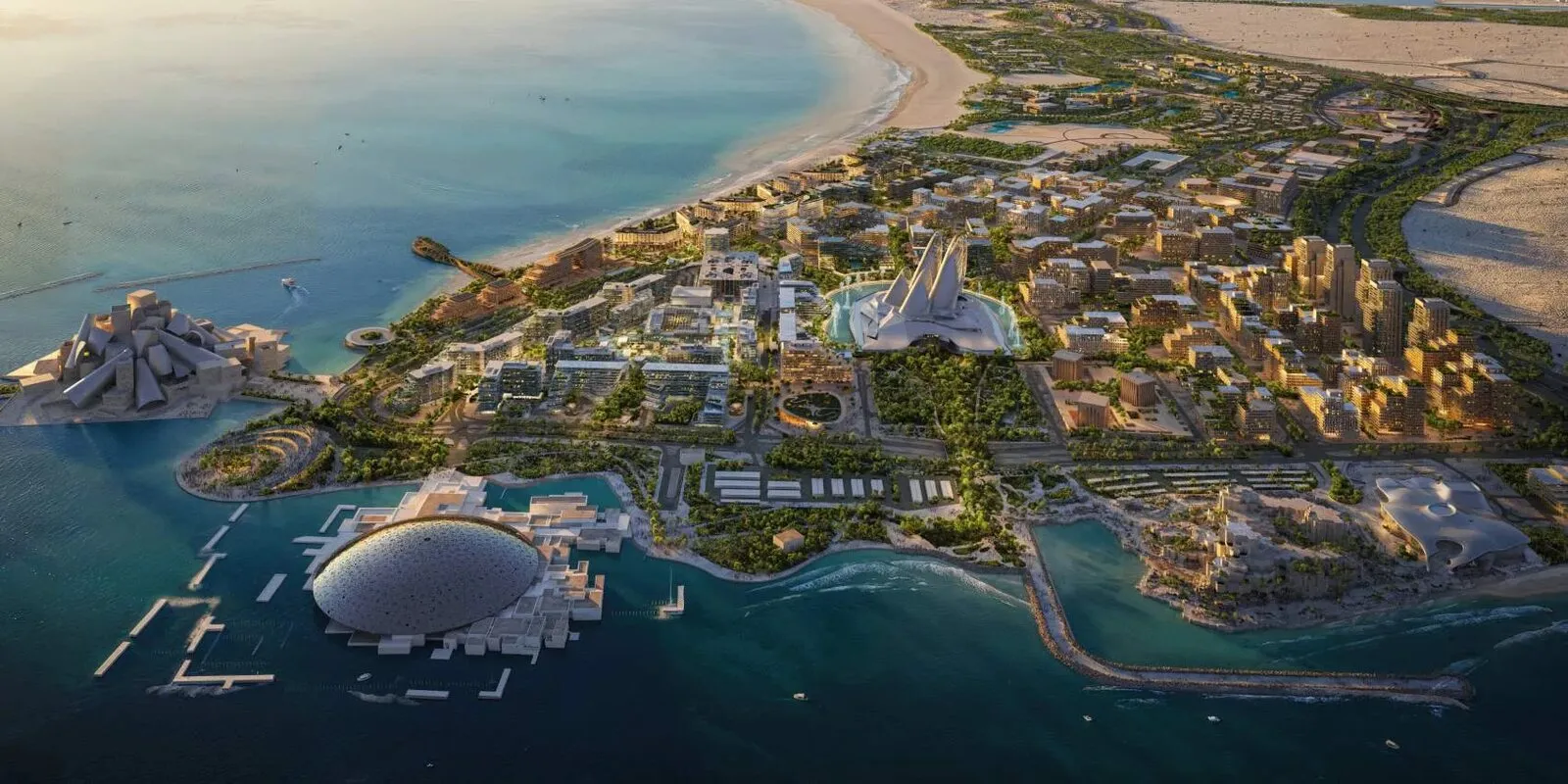
Palm Jumeirah is a palm-shaped reclaimed island off Dubai's coast. Construction began in 2001 using sand and rock, without concrete or steel in its foundations, and in just over twenty years it has become the city's most expensive address. No more land will be added here, so there are few new developments, and almost all stand by a private beach. Our catalogue lists 55 developments on the island, 19 of them with handover from 2026 onwards. We look at how the island was reclaimed, whether it is sinking, how the trunk differs from the fronds and crescent, what is being built now, how much it costs to get in and what a viewing does not show.
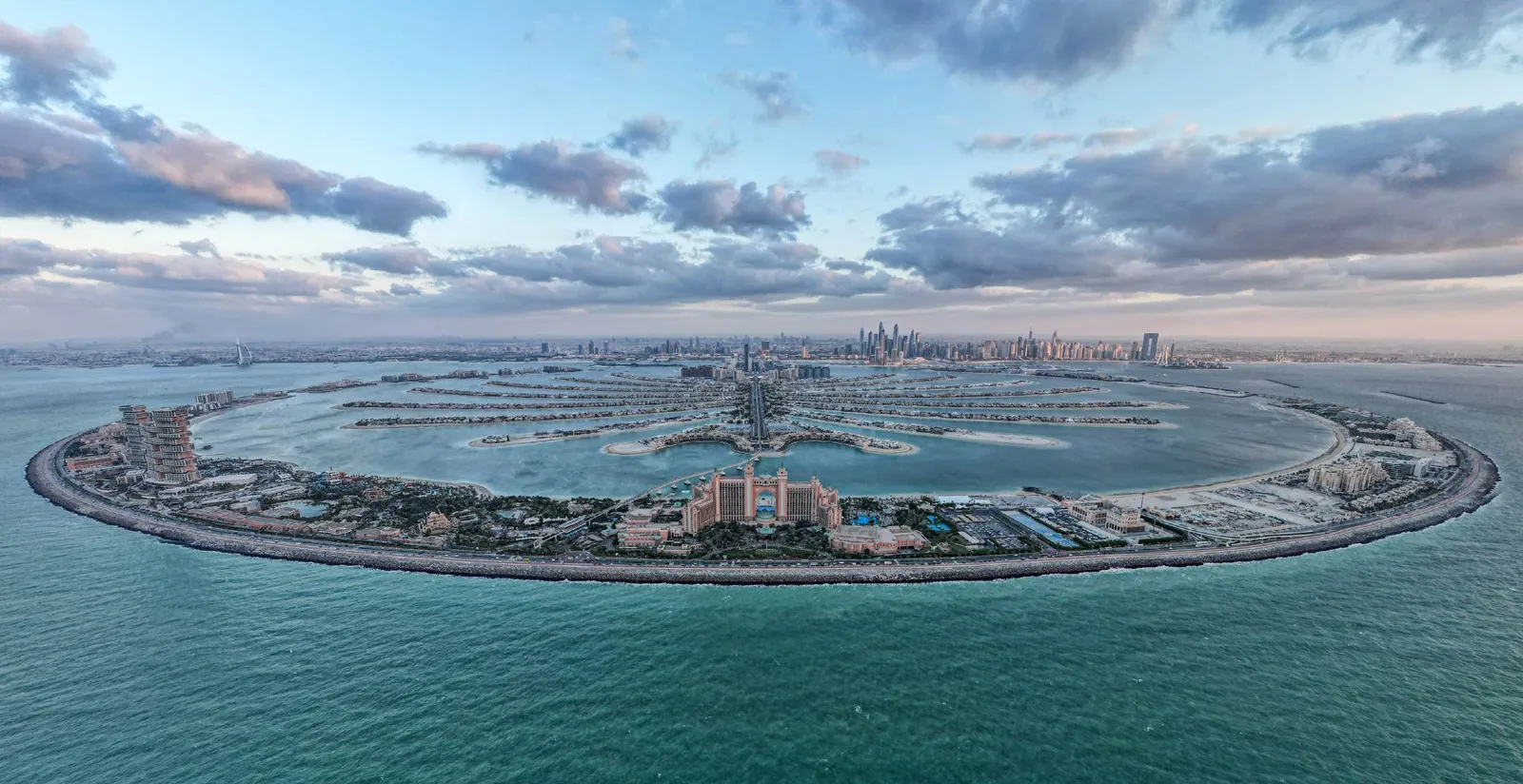
What is happening on the island
The island is built out, and new developments appear where waterfront land remains: on the crescent and by the entrance. That is why there are few of them, and they are almost always small, expensive projects. Of the new developments with prices in our catalogue, only two start below AED 5 million.
For buyers, this means three things. First, the island market is split in two. Studios in completed developments on the trunk start at AED 1.45 million, while residences in new developments on the crescent sell for tens of millions. Second, there are many developers. Nakheel built the island itself, while Omniyat, Ellington, Select Group, Beyond, Arada and others are behind the new developments, with varying standards. Third, you pay for the location every year. Service charges in the island's club-style developments reach AED 484 per m² per year.
If you are buying in the UAE for the first time, start with “How to buy property in the UAE”: it explains the Dubai transaction from reservation to handover.
Why Dubai needed a new coastline
Dubai has a short coastline, and by the end of the 1990s there was almost no space left for beachfront hotels. The island was conceived as a way to add coastline: the idea was to create new land for hotels. Sheikh Mohammed bin Rashid Al Maktoum conceived the project, which launched in 2001.
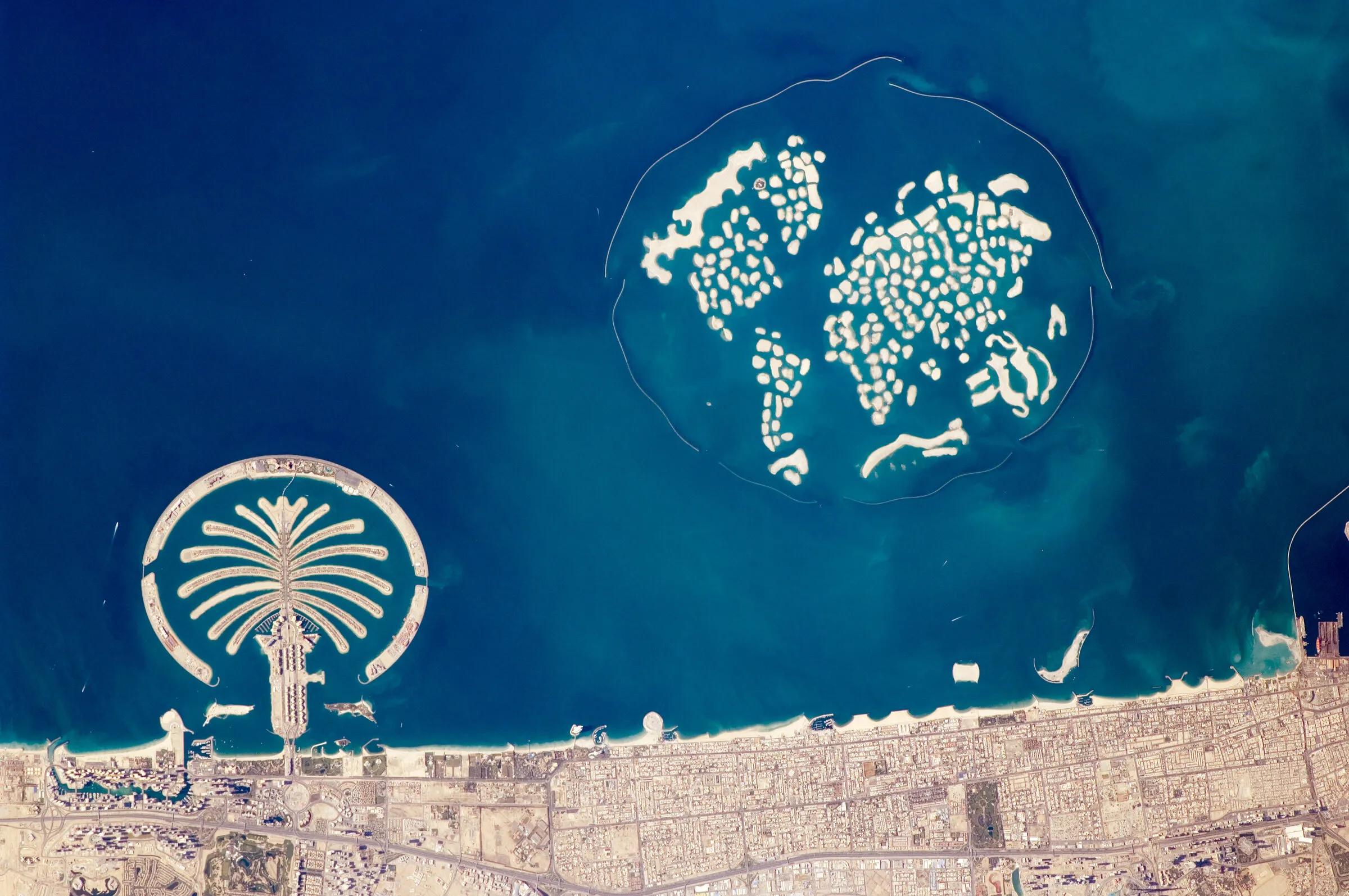
The palm shape serves the same purpose. A round island has one shoreline, while a palm has shoreline on both sides of each of its 17 fronds. The island added between 56 and 78 km of coastline to the city.
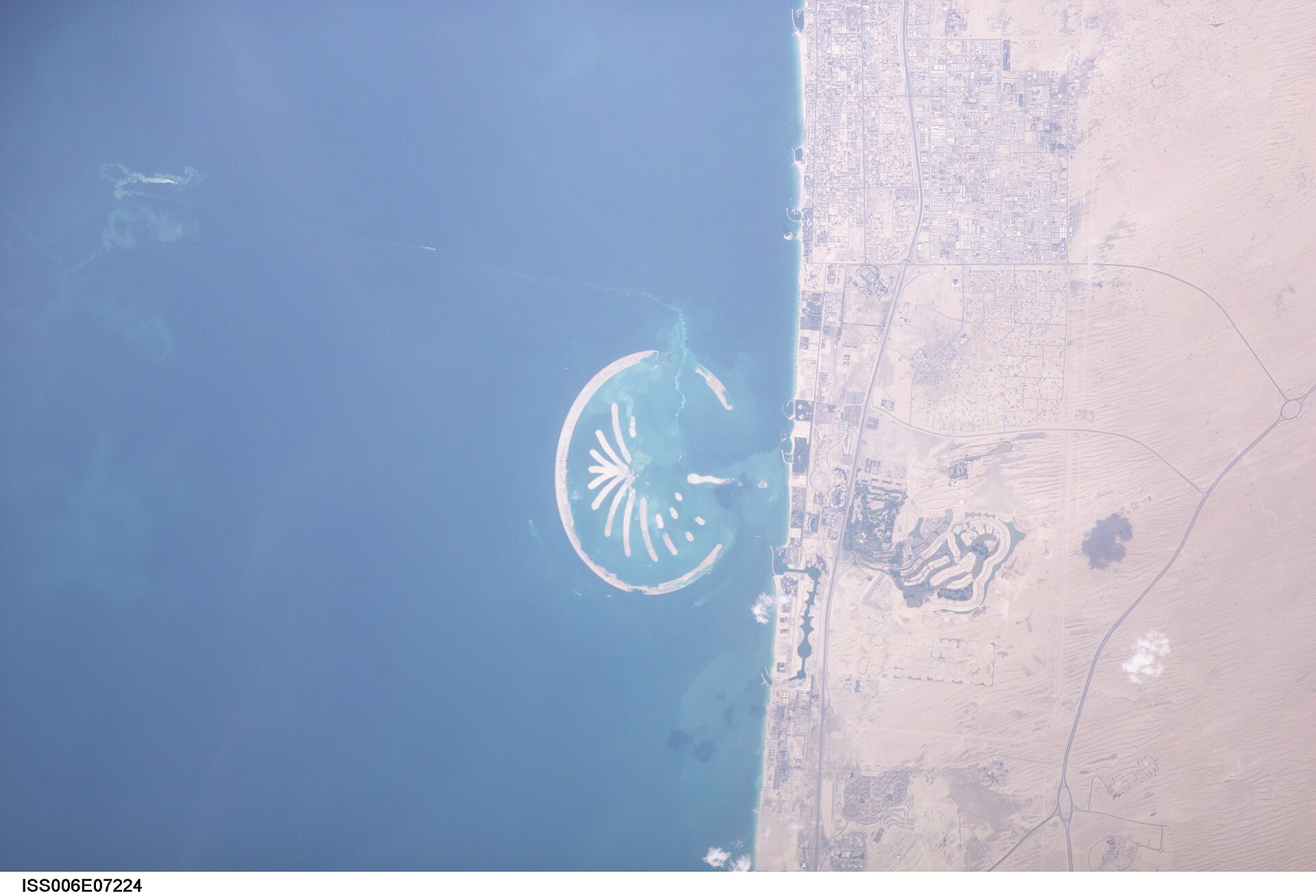
Work began in June 2001 under a master plan by the American firm Helman Hurley Charvat Peacock. Nakheel hired Belgium's Jan De Nul and the Netherlands' Van Oord to reclaim the island.
An island without concrete or steel
The sand came from the Gulf seabed. Dredgers sprayed it in an arc at the required point, a technique known as rainbowing. The palm's shape was maintained using satellite coordinates: vessels navigated by GPS readings.
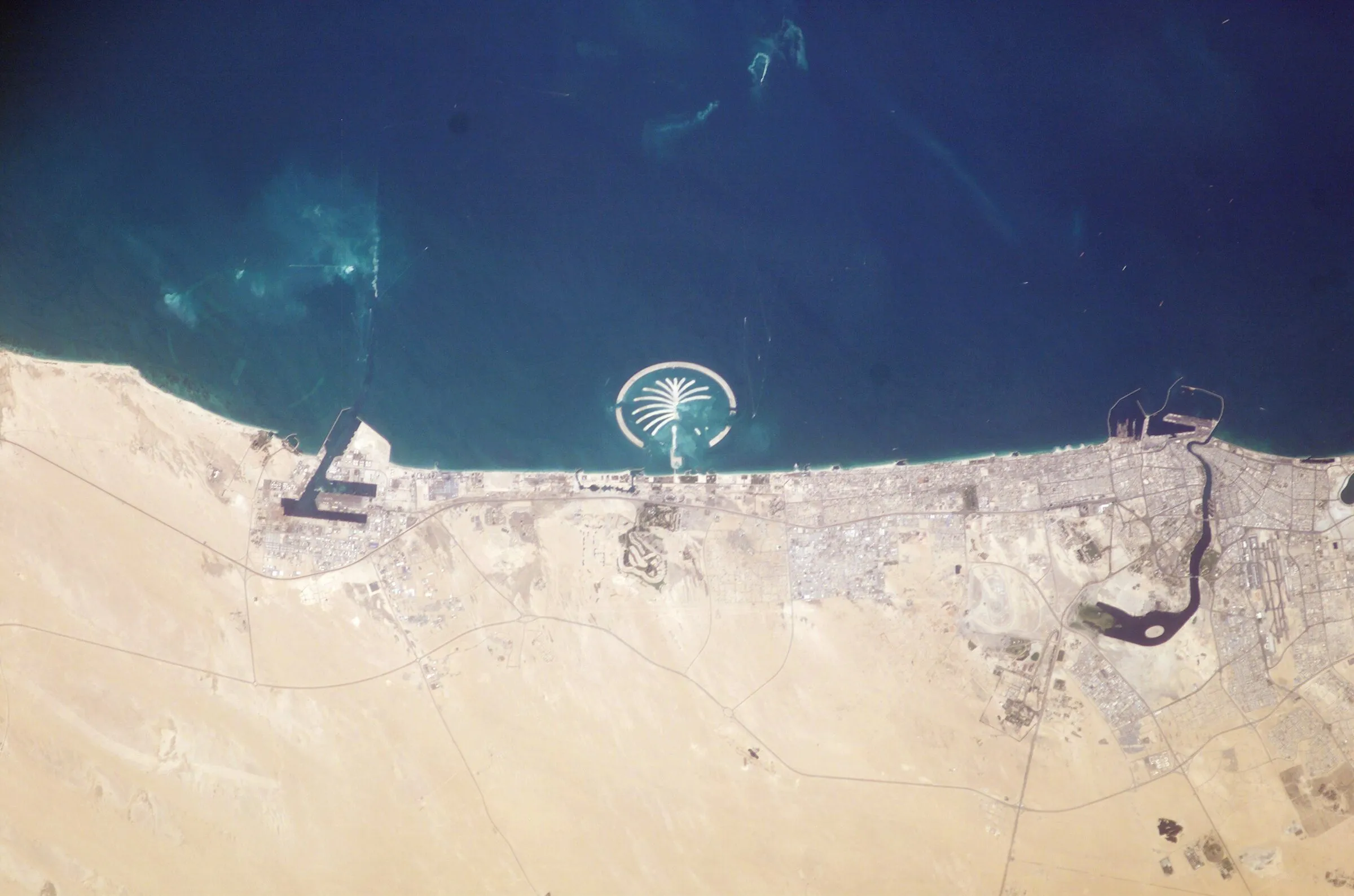
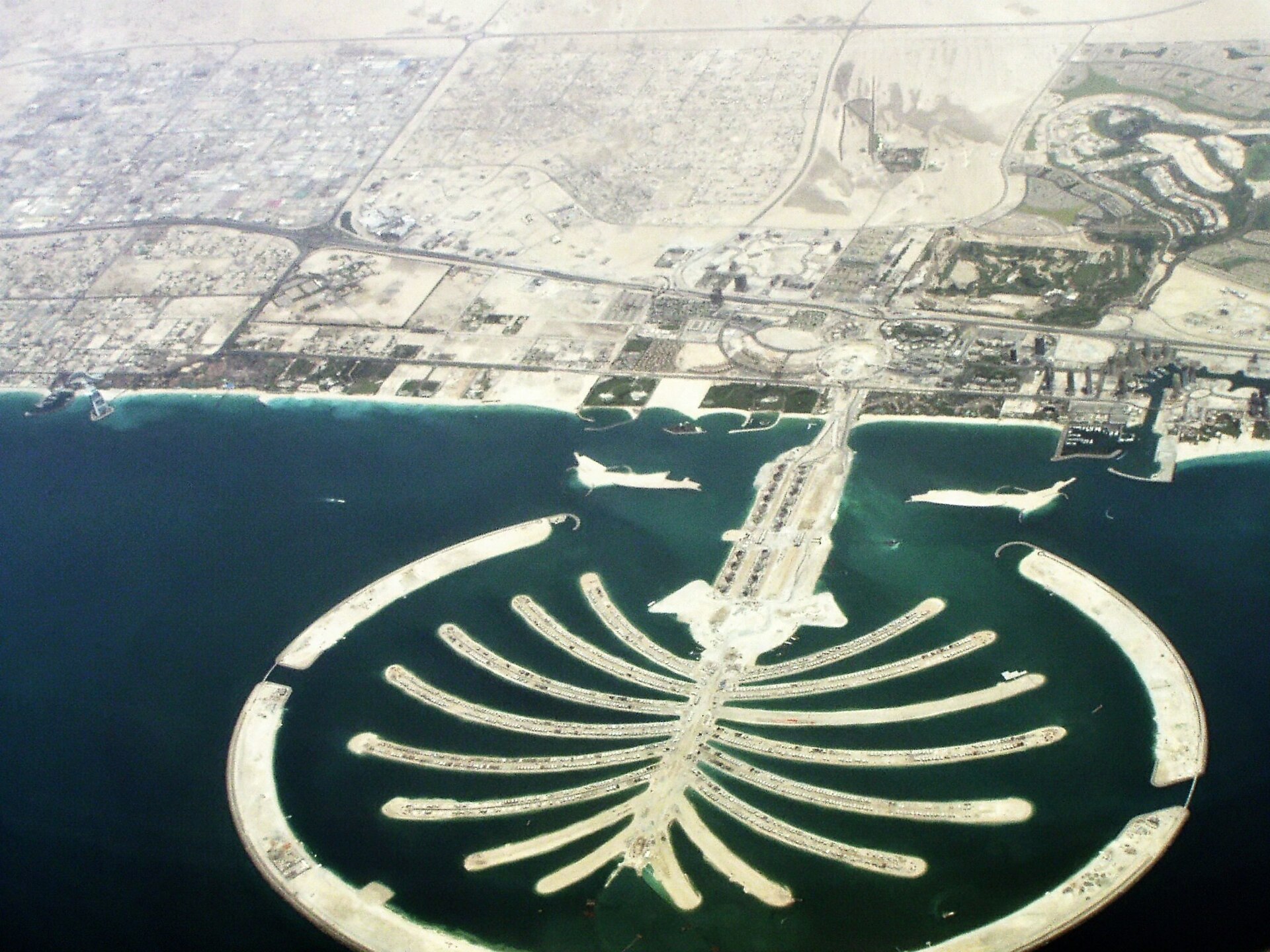
Between 94 million and 120 million m³ of sand were used. A total of 7 million tonnes of stone came from 16 quarries in the northern emirates and was delivered by sea. Each breakwater stone was placed by a crane and checked by a diver, and has its own coordinates.
The 11 km crescent breakwater protects the fronds from waves. There is no concrete or steel in the island's foundations. To keep the sand stable beneath the buildings, it was compacted: 15 cranes drilled 200,000 holes to a depth of around 16 m. The work was completed in July 2004.

Work progressed quickly. In February 2002, the outline was barely visible in the water; by November 2003, the palm was complete. By 2004, the landmass and main utilities were in place, while homes began to be built later.
First residents and first hotel
The first residents moved in in late 2006 and early 2007, and by the end of 2007 around 500 families lived on the island. The first homes to be occupied were Shoreline Apartments on the trunk: around 2,500 apartments across 20 buildings.
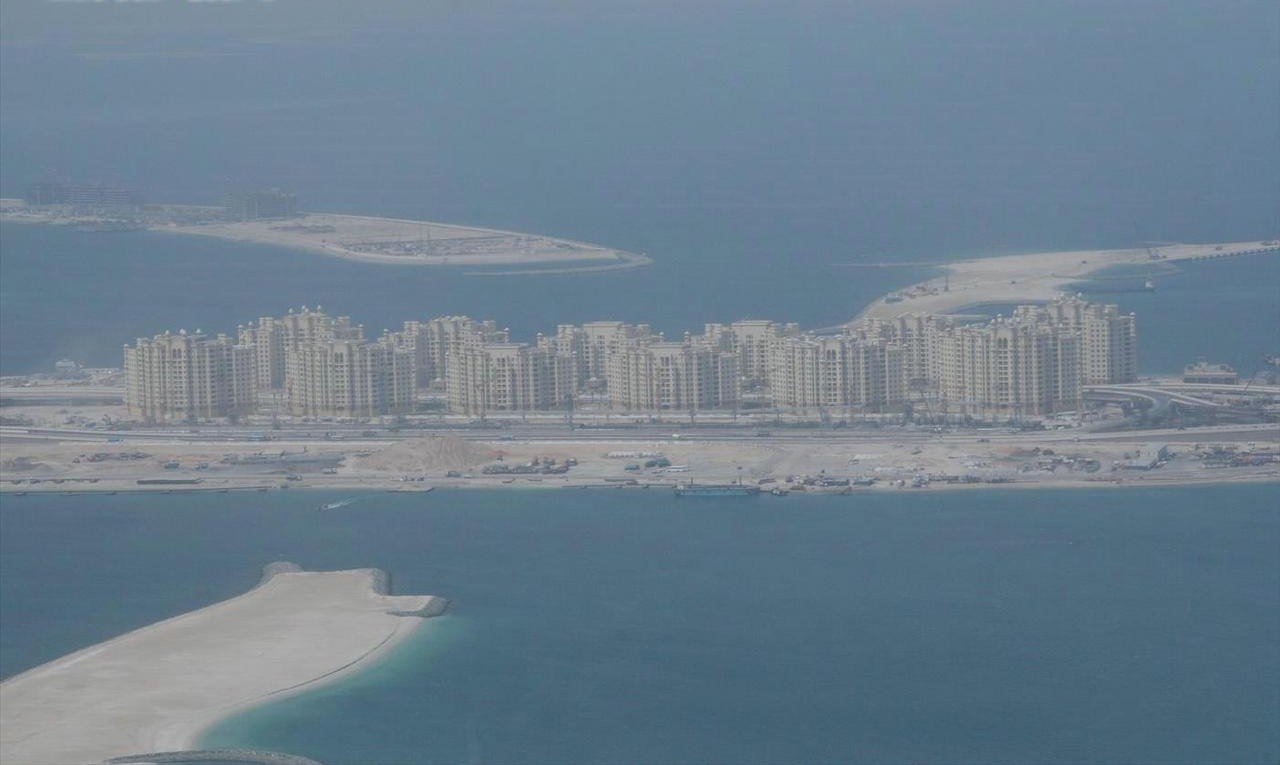
On 24 September 2008, Atlantis The Palm opened at the tip of the crescent, the island's first resort: 1,539 rooms and $1.5 billion in investment. Its official opening was held in November.
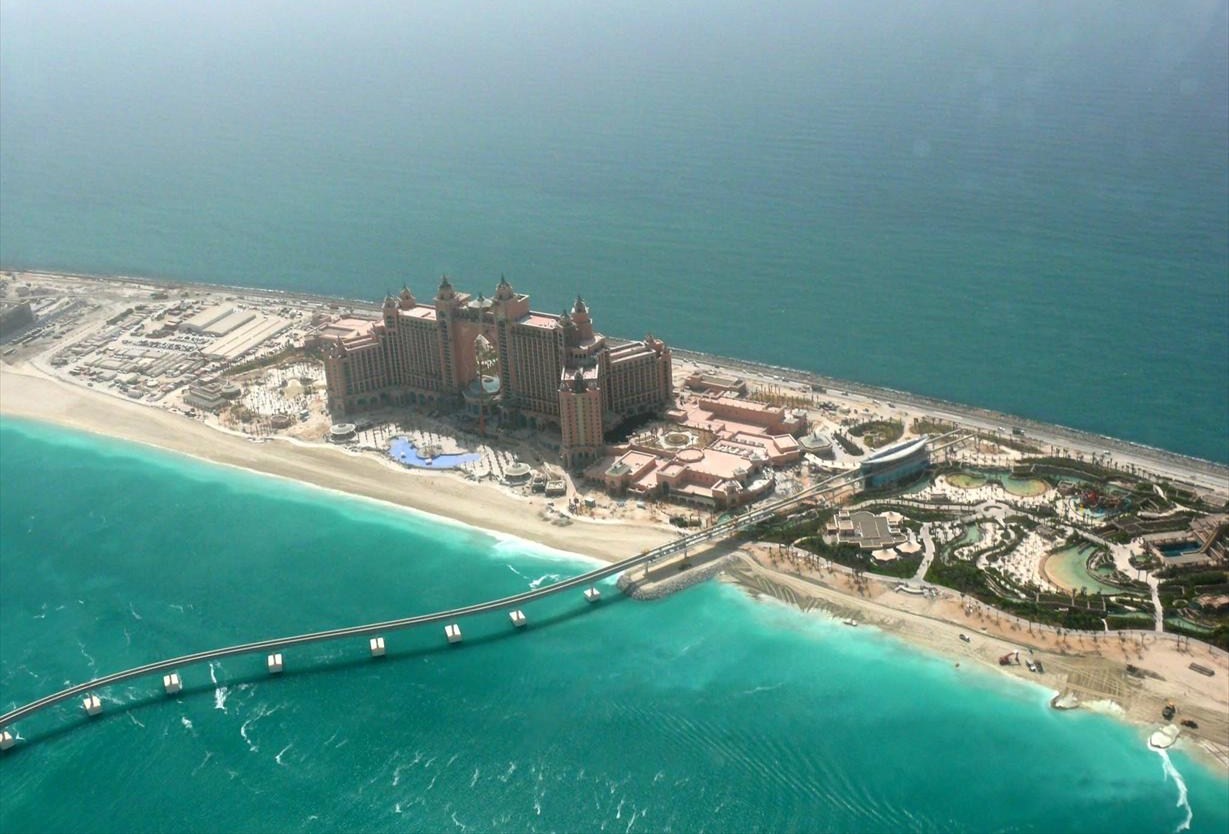
Exactly one year after the celebration, in November 2009, Dubai World, Nakheel's parent company, asked its creditors for a six-month reprieve. The company was restructuring $23.5 billion of debt. Much of the group's trouble stemmed from Nakheel. By then, the Palm was already occupied. Work on the second Palm, Palm Jebel Ali, only resumed in 2023.
Is the Palm sinking?
People have asked this question about the island since day one. In 2009, surveying firm Fugro NPA reported that the island was subsiding by an average of 5 mm a year. Nakheel responded firmly: “The Palm is intact. If there were subsidence, you would see cracks in the buildings.” The company calculated that over 100 years the island would sink by no more than 25 mm.
In 2014, the rumour resurfaced across the city. Dubai Police investigated and said it was caused by a leak in the main water pipe.
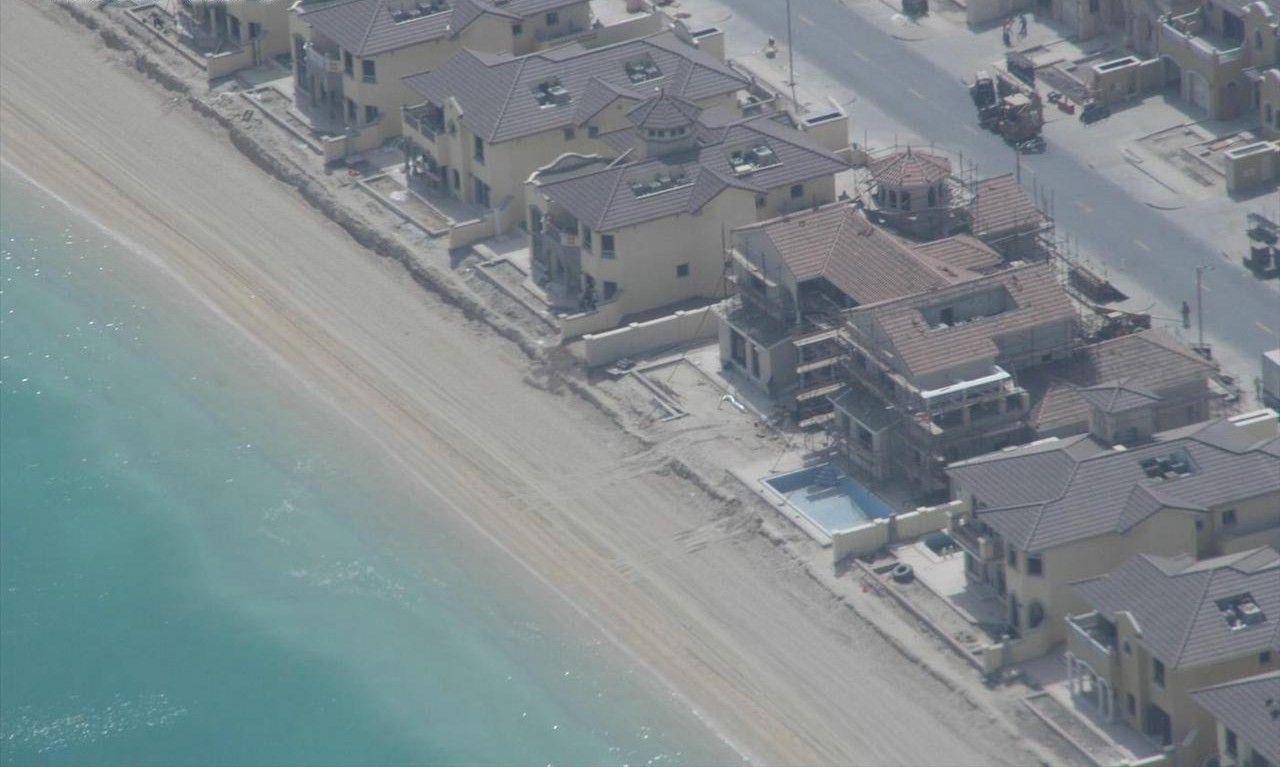
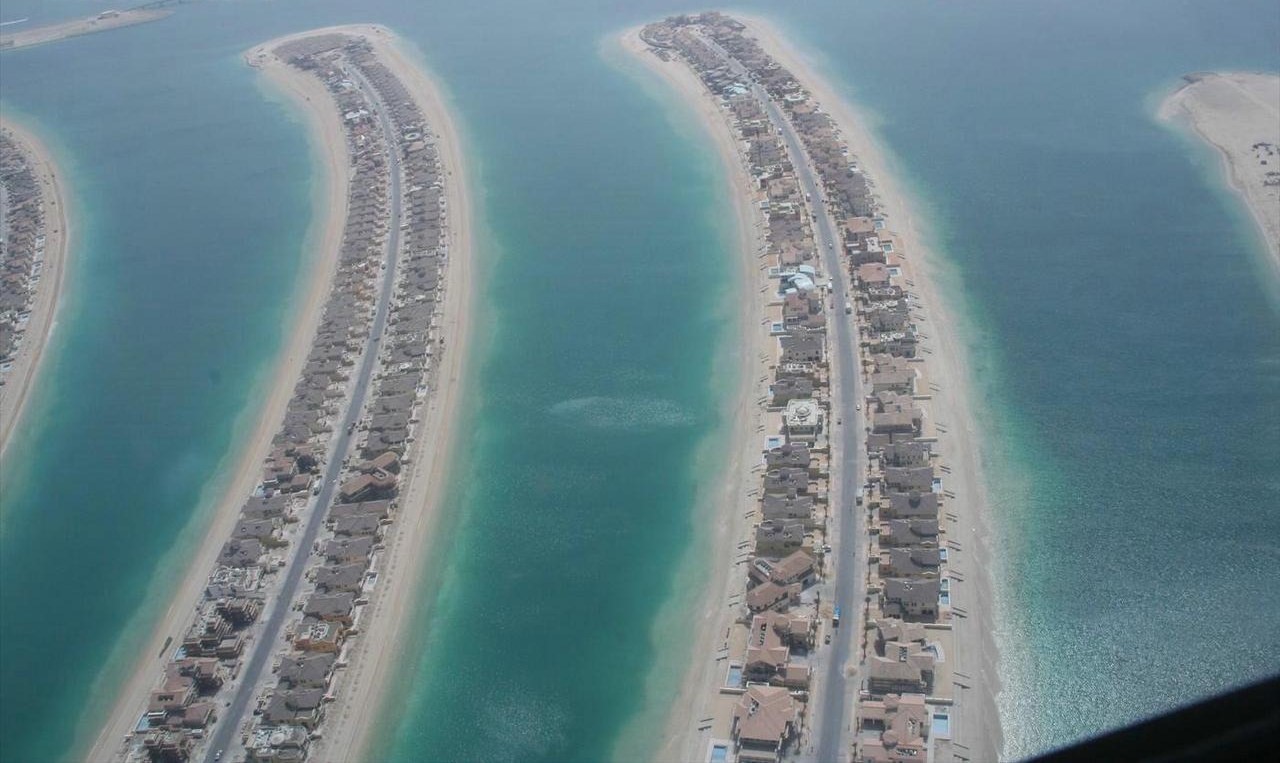
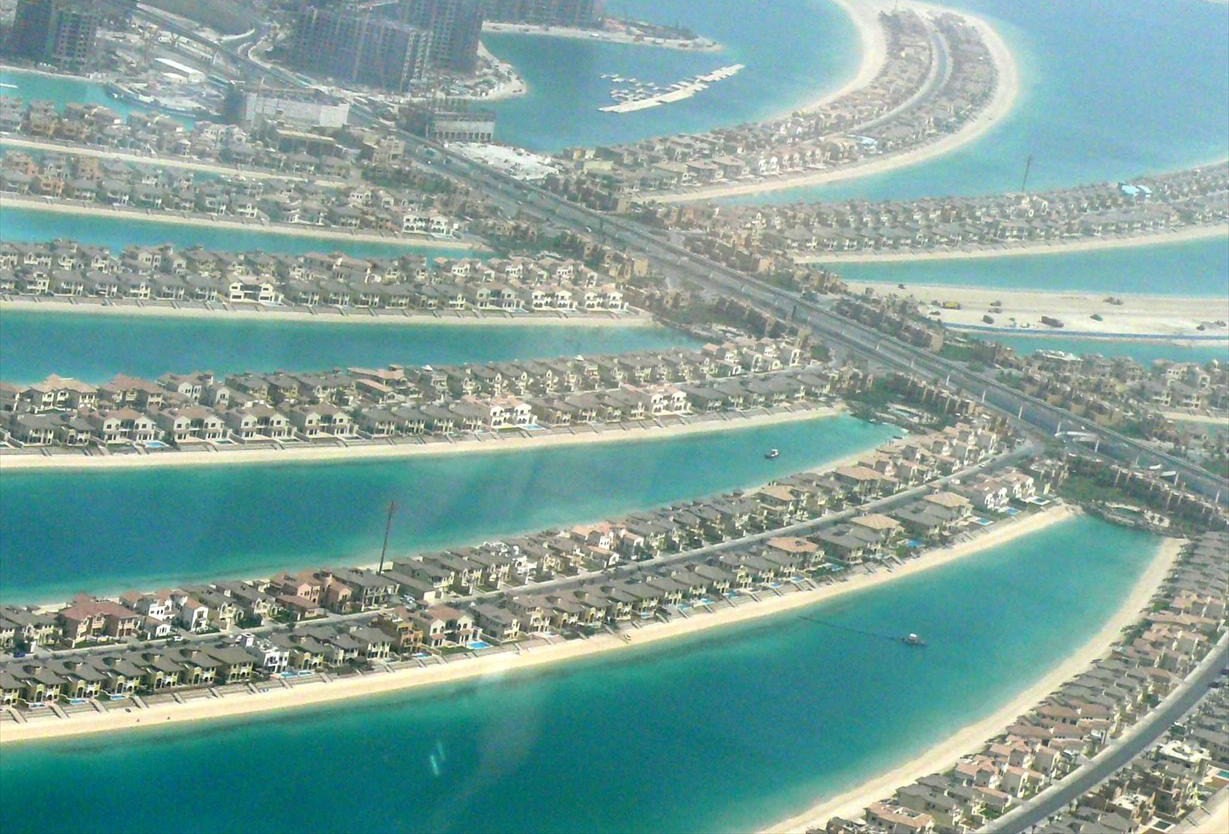
There was another criticism: density. In 2008, Wayne Hemingway said the development was too dense, which sat uneasily with the word “island”. It is clear from above on the fronds: villas stand in two rows, almost side by side.
The trunk, fronds and crescent: three distinct addresses
The island is divided into three parts, each offering buyers a different way of life.
The trunk. This is where you enter from the mainland. It has apartment buildings: Shoreline Apartments, Golden Mile and the towers by the entrance. The trunk is home to shops, Al Ittihad Park, Nakheel Mall and monorail stations. It has the island's most affordable apartments and is where the island is at its liveliest.
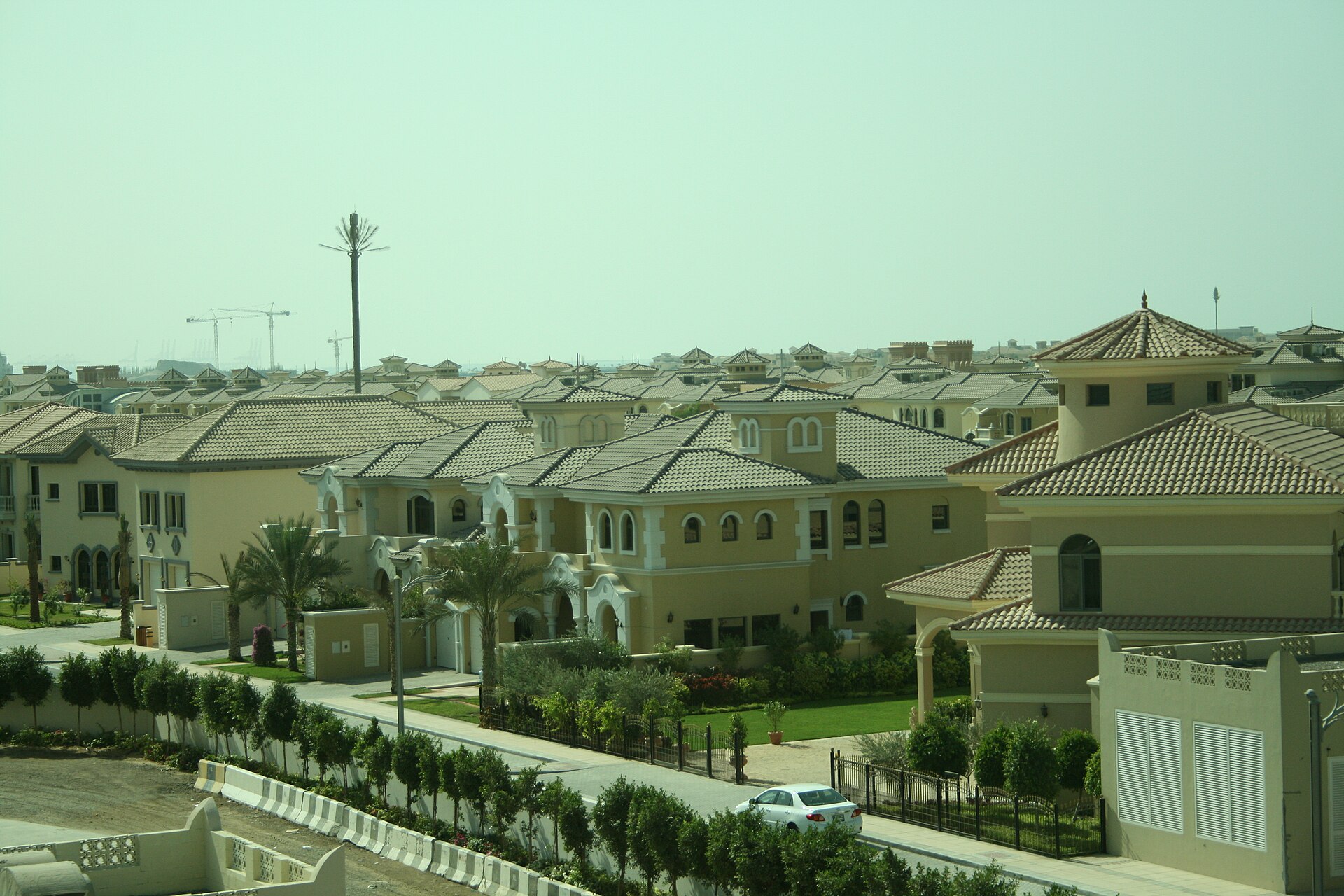
The fronds. 17 fronds, each a gated villa community. There are around 1,500 villas. Each has its own stretch of shore. This is where Dubai's highest-value transactions take place: frond G is known as Billionaires' Row.
The crescent. The outer ring, the breakwater itself. It is reached through an underwater tunnel: 1.4 km, six lanes, 25 m below sea level. The crescent is home to resorts and new club-style residences with private beaches. It is the farthest point from the city.
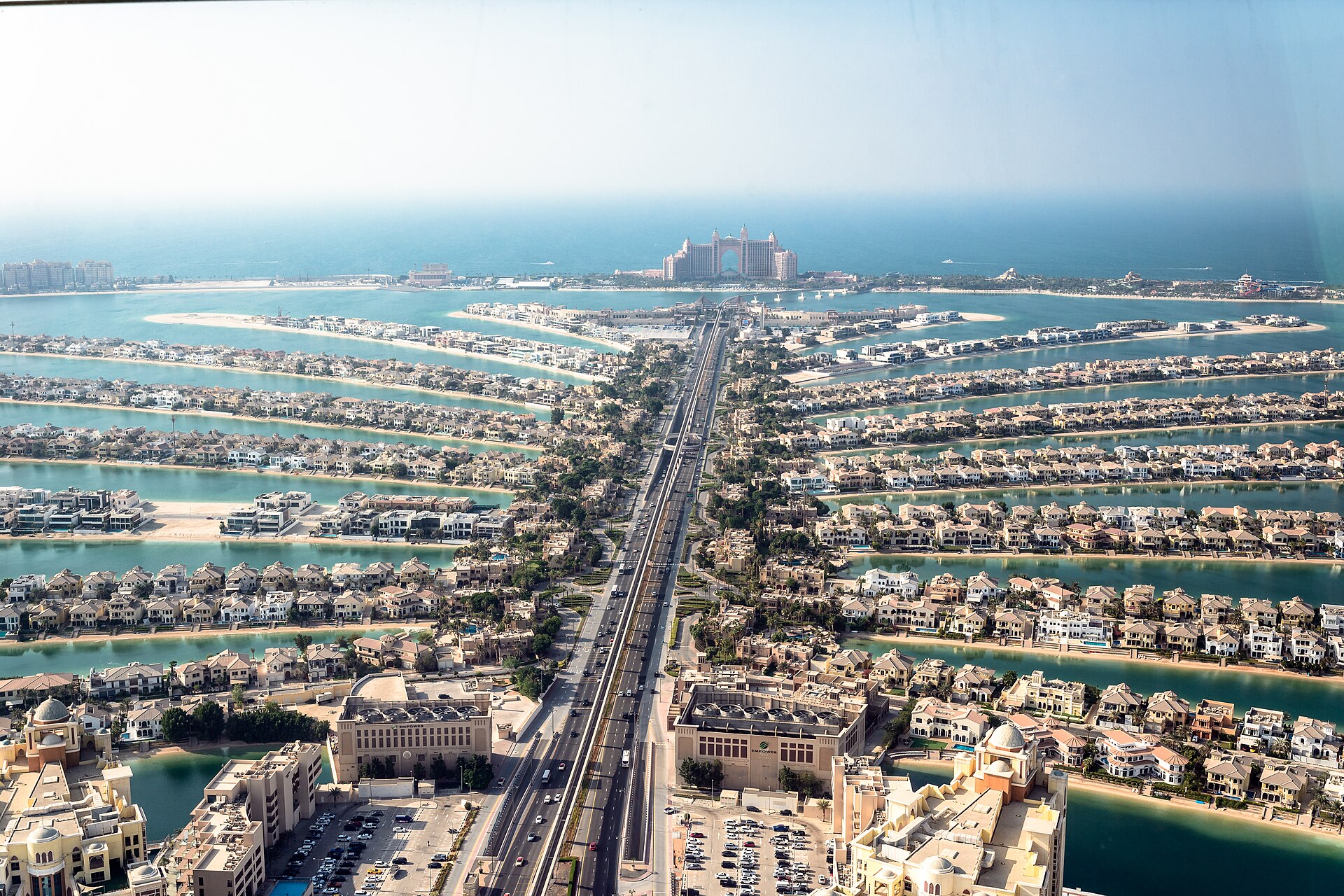
One road, a monorail and a tunnel
The island is connected to the mainland by a single entrance across the trunk. In spring 2009, the 5.45 km monorail, running from Gateway station on the mainland to Atlantis, opened. It cost AED 2.1 billion. Today the line has stations at Golden Mile Galleria, Al Ittihad Park and the mall. In 2026, the monorail closed for six months for repairs and resumed service in July.
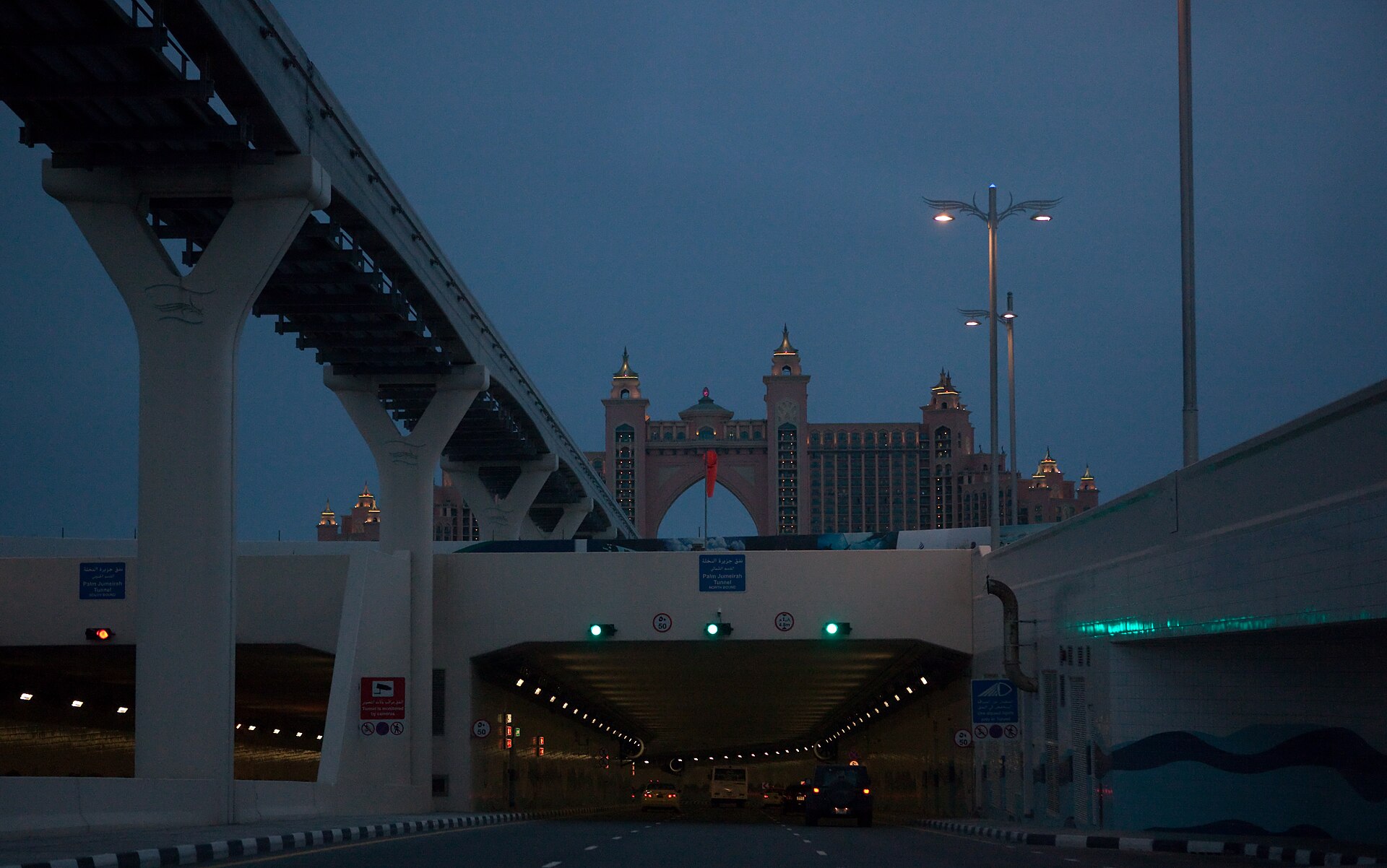
The Dubai Tram reaches Gateway station but does not go onto the island itself. There is no metro on the Palm. Otherwise, the island relies on cars, and that is its weak point: traffic on the trunk increased after Nakheel Mall and new hotels opened, and in 2022 residents called for road safety measures.
What is already open
Over 20 years, the island has gained the essentials for daily life. In November 2016, an 11 km promenade, 6 m wide, opened along the breakwater. Nakheel Mall opened on 28 November 2019: five floors, 350 shops and restaurants, and AED 1.2 billion in investment. In October 2020, Palm West Beach opened on the trunk, a 1.6 km pedestrian promenade with a beach.
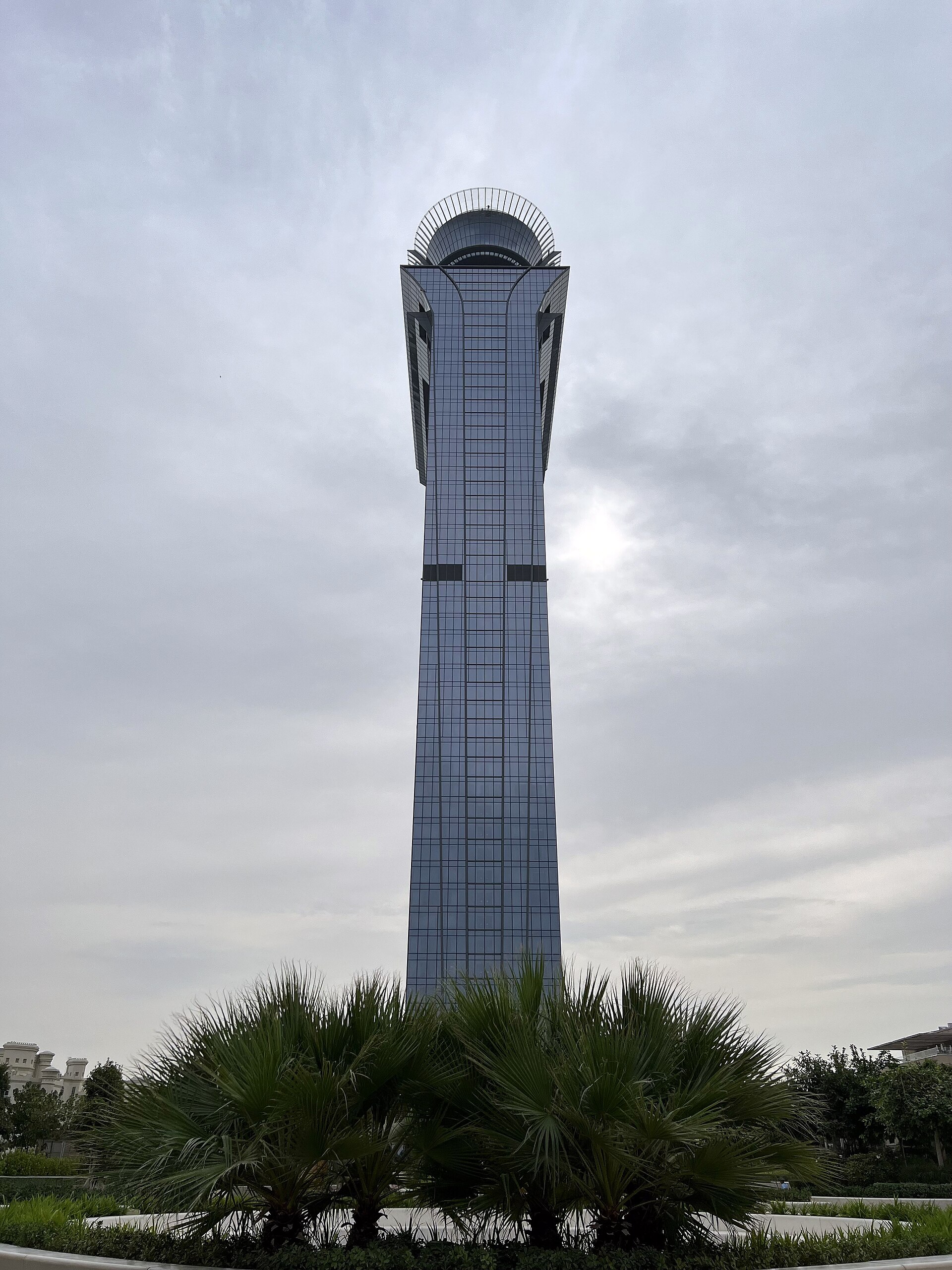
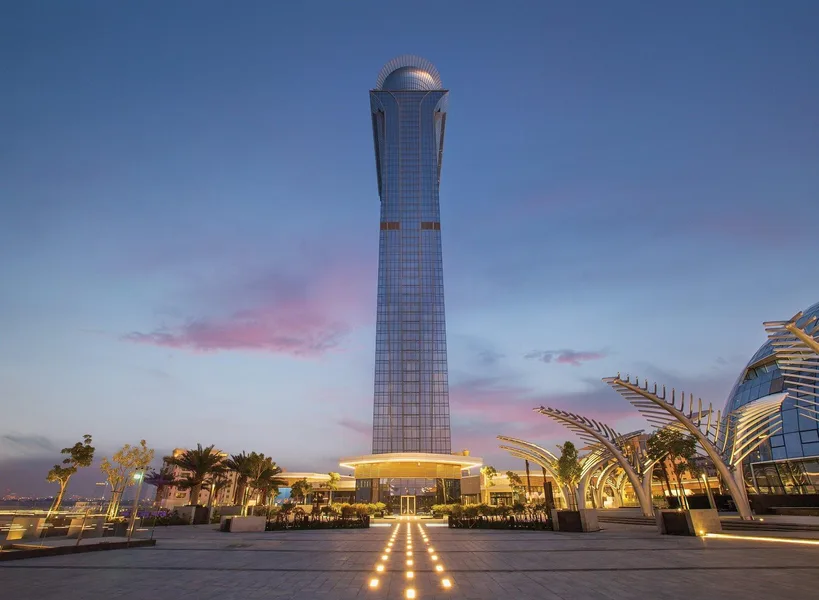
The View observation deck opened at the top of Palm Tower on 7 April 2021. The tower is 240 m high and has 52 floors. Atlantis The Royal, with 43 floors, opened on the crescent in February 2023.
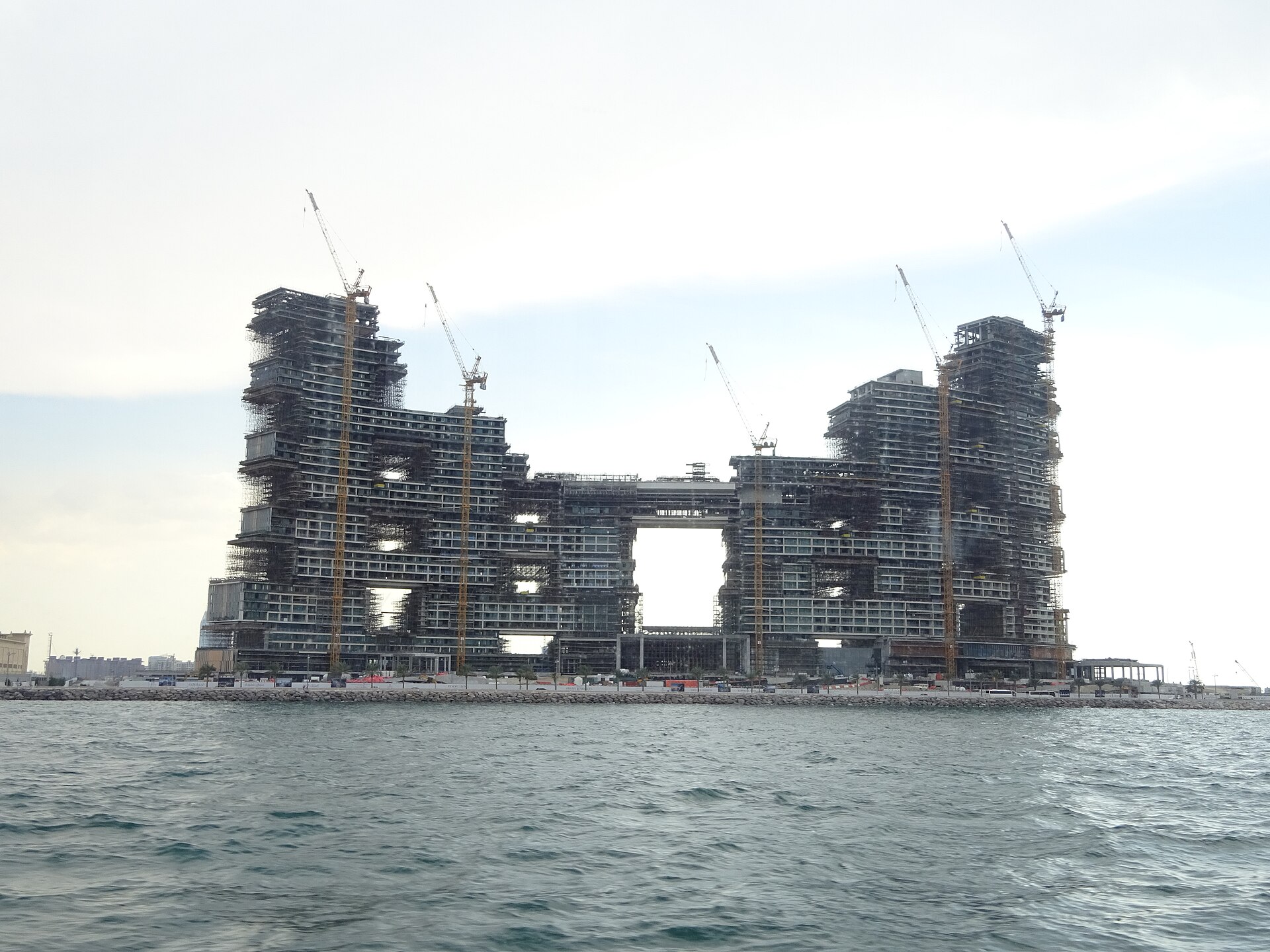
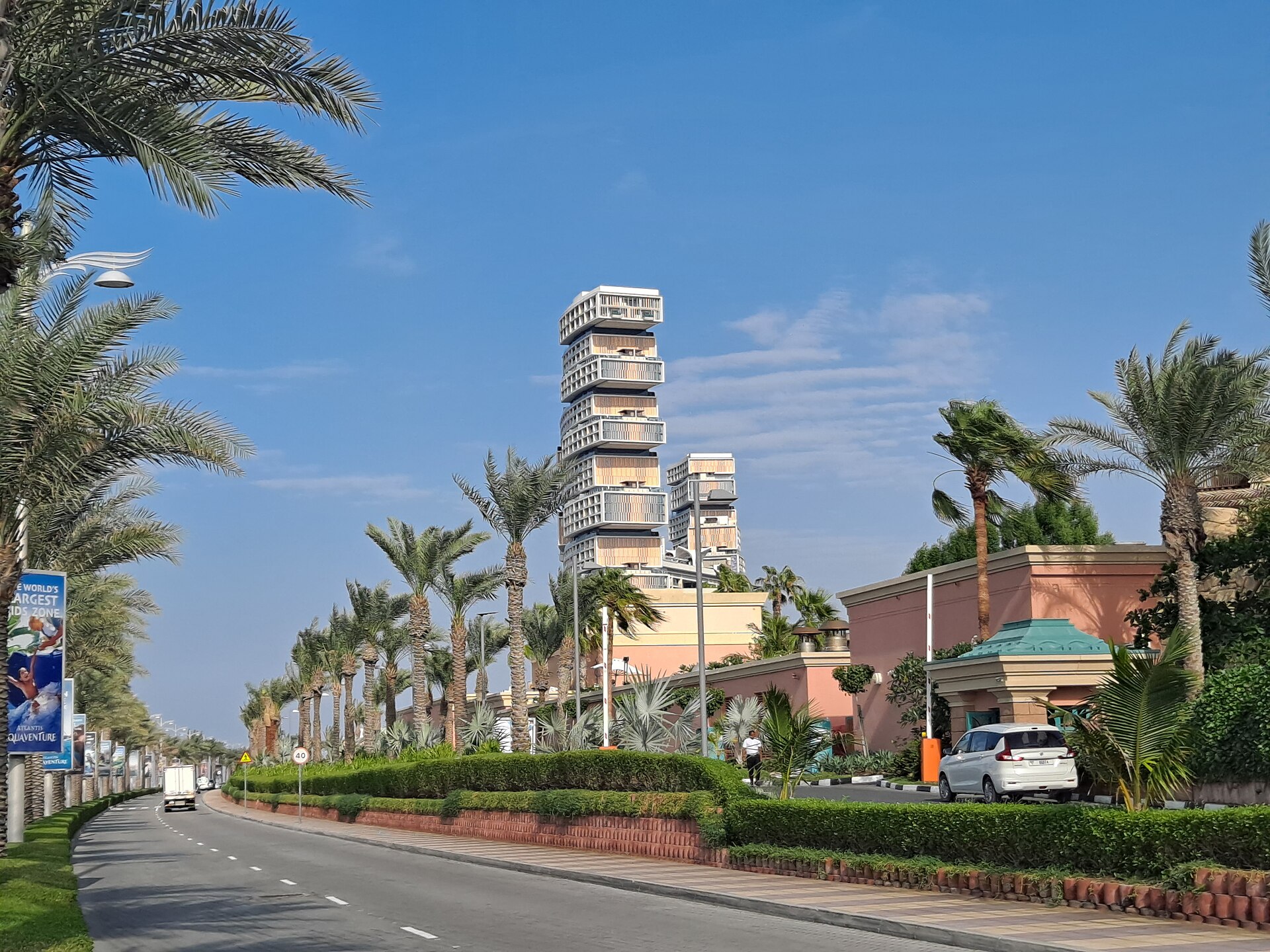
Not everything on the island lasts forever. The Pointe waterfront, with its restaurants, opened in 2018, and a fountain began operating there in 2020. The fountain closed on 15 May 2023, and tenants were given a year to leave: Nakheel decided to redevelop the site. Your view from a Palm apartment can change too.
Billionaires' Row
Dubai's highest-value deals take place here. A villa on frond N sold for AED 600 million, a penthouse at Como Residences for AED 500 million, and a five-bedroom penthouse at One at Palm Jumeirah for AED 275 million. Casa Del Sole, a mansion on frond G, sold for AED 302.5 million.
These figures say little about the cost of a typical apartment, but they explain who your neighbours are and why the island's new buildings are designed for buyers who do not negotiate over the price per square metre.
Orla and ORLA Infinity: at the tip of the crescent
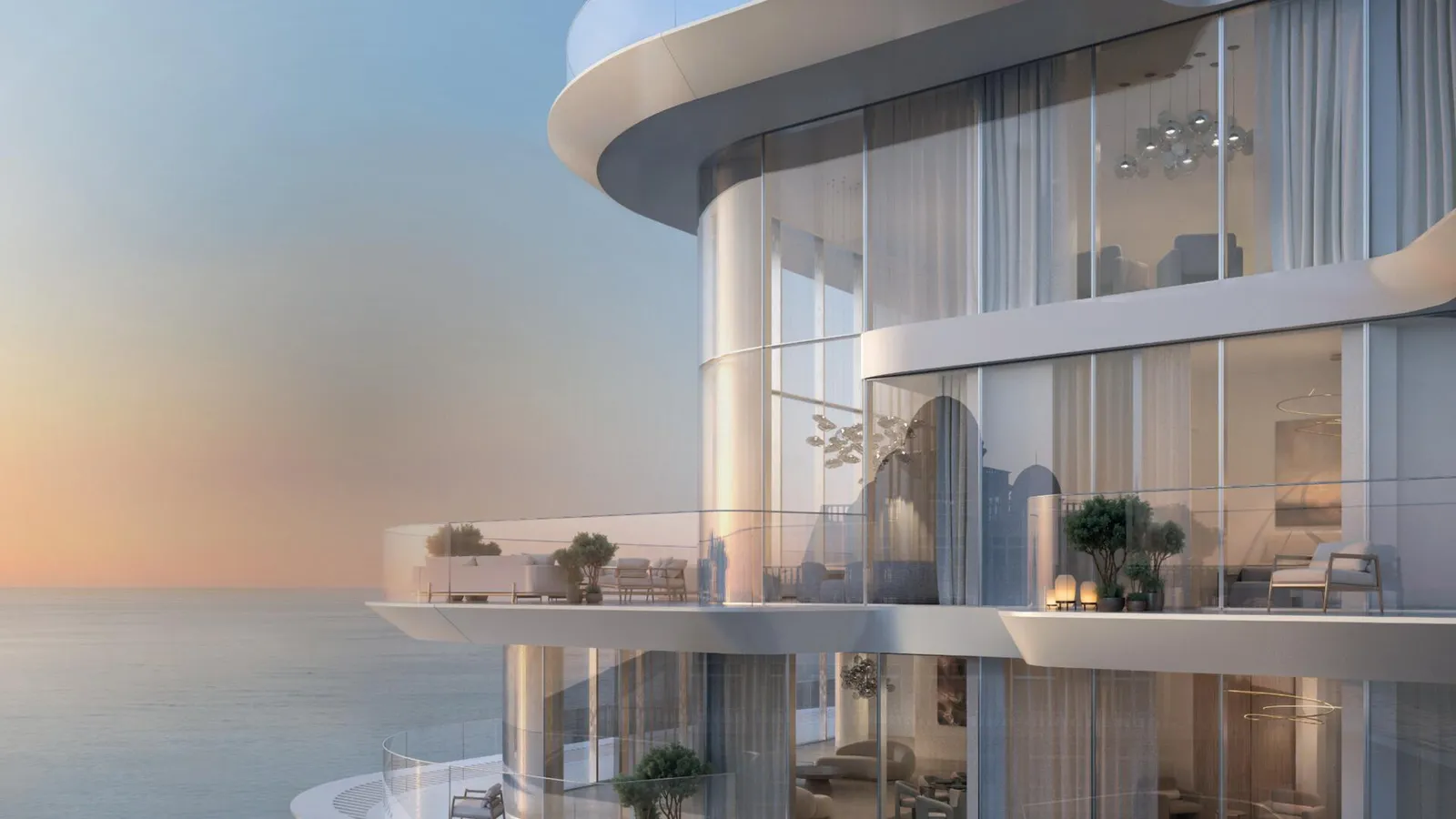
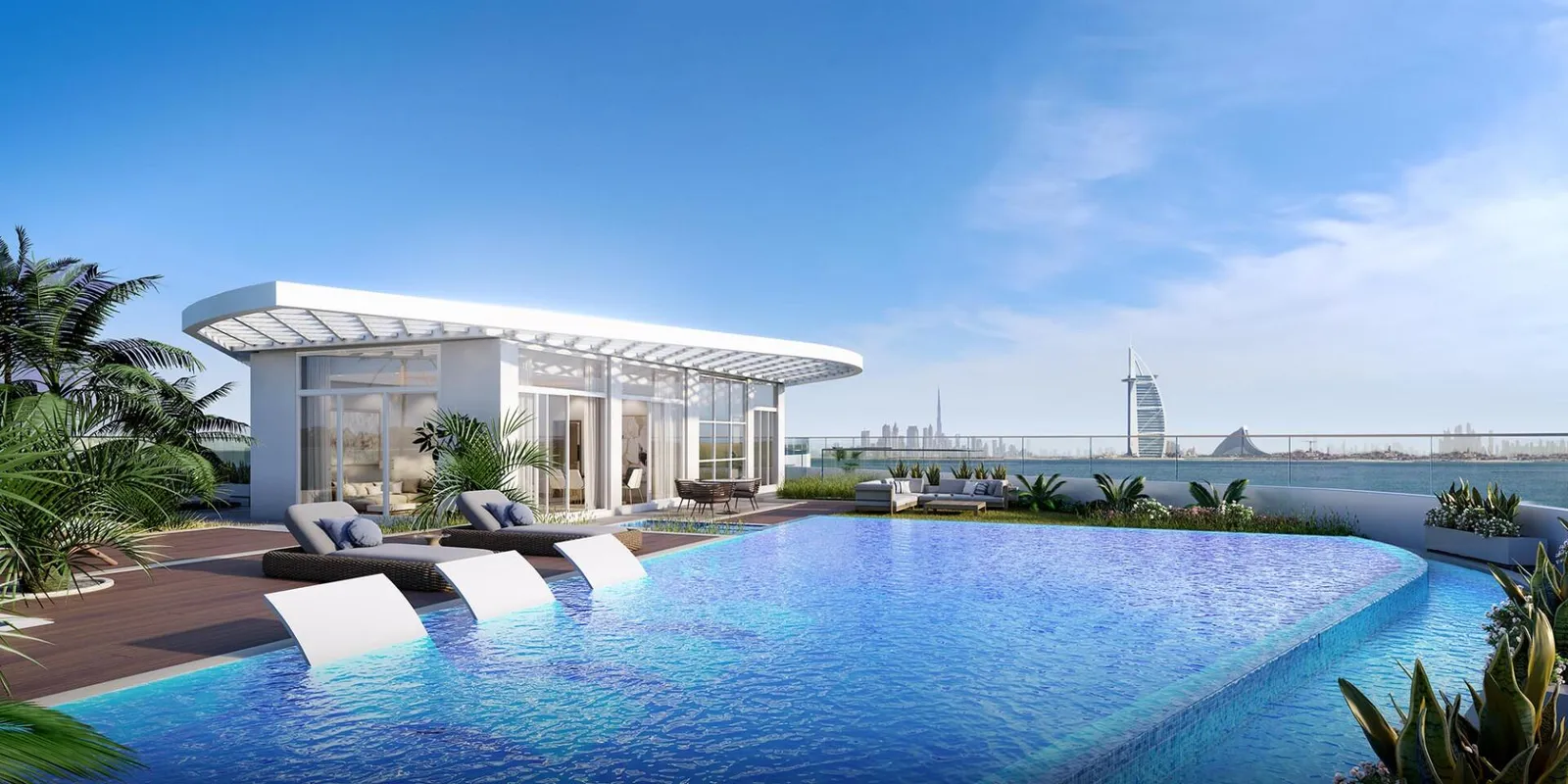
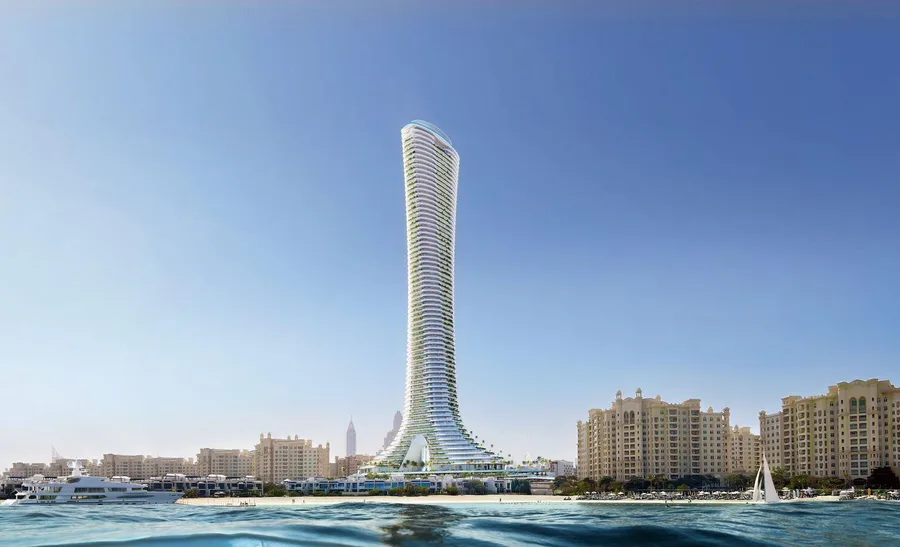
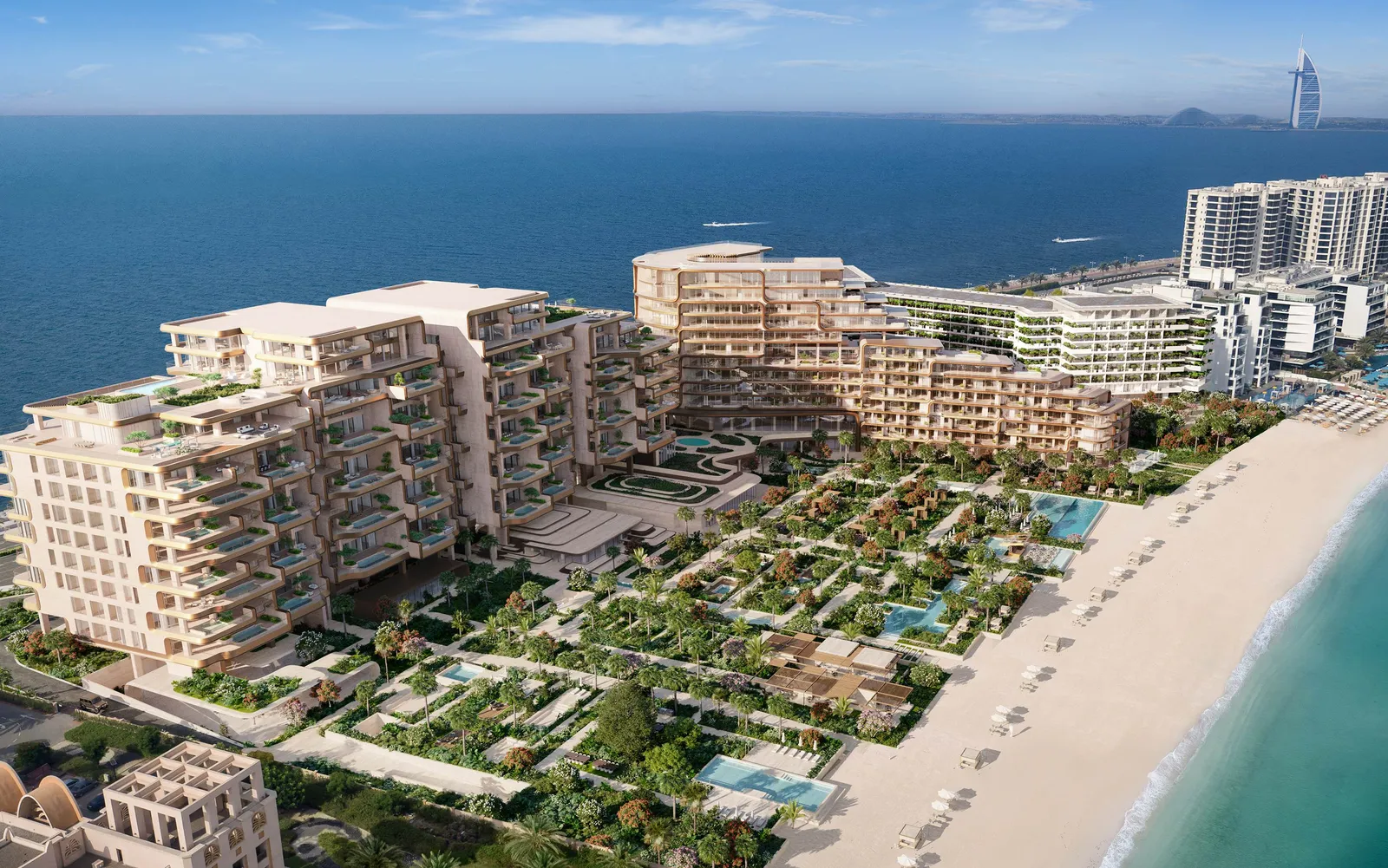
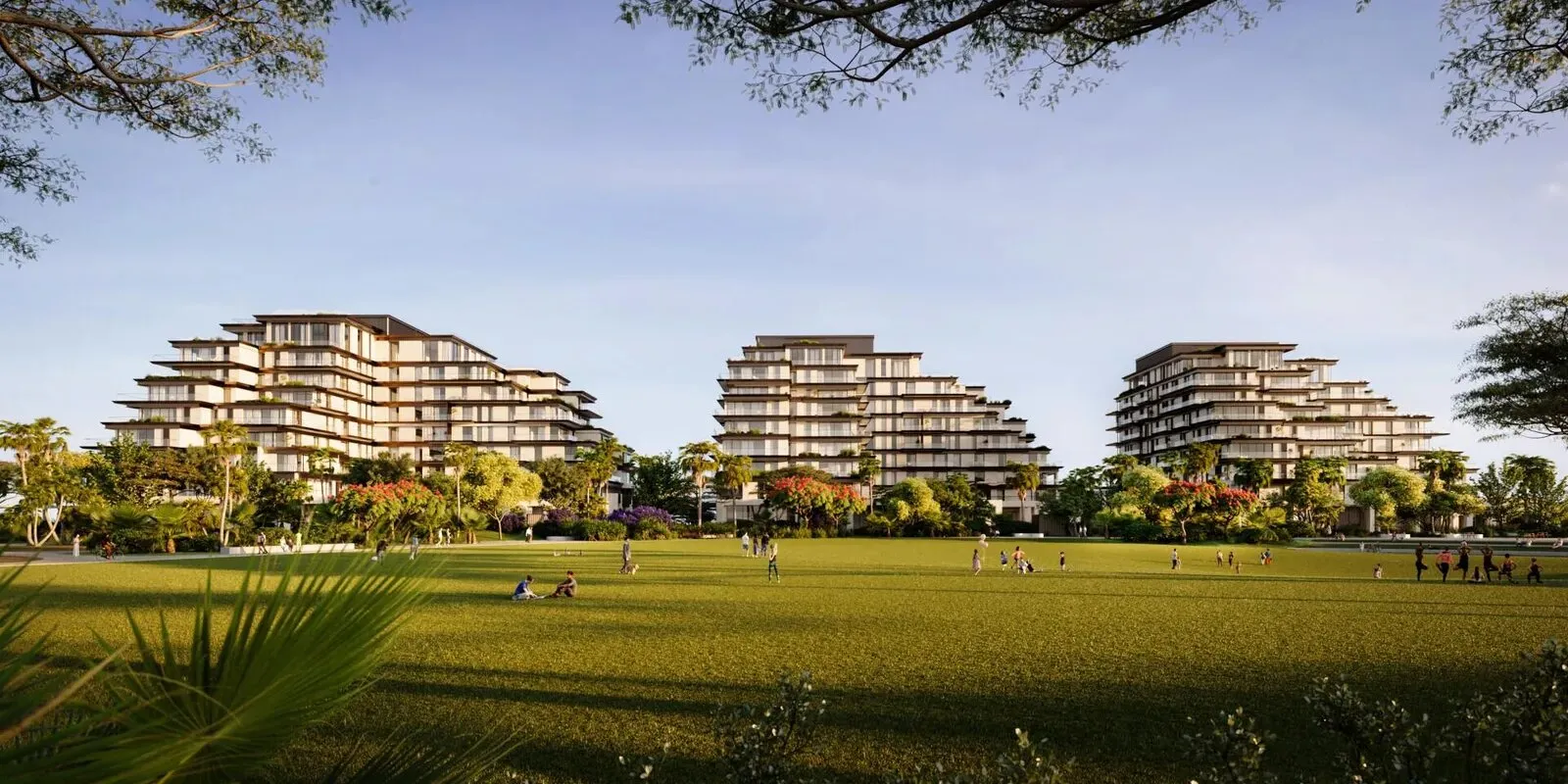
Orla is being developed by Omniyat, with architecture by Foster + Partners, the practice Norman Foster founded in 1967. The 29,000 m² site sits at the highest point of the crescent. Three stepped towers are linked to let wind pass through the complex and carry a breeze to the terraces.
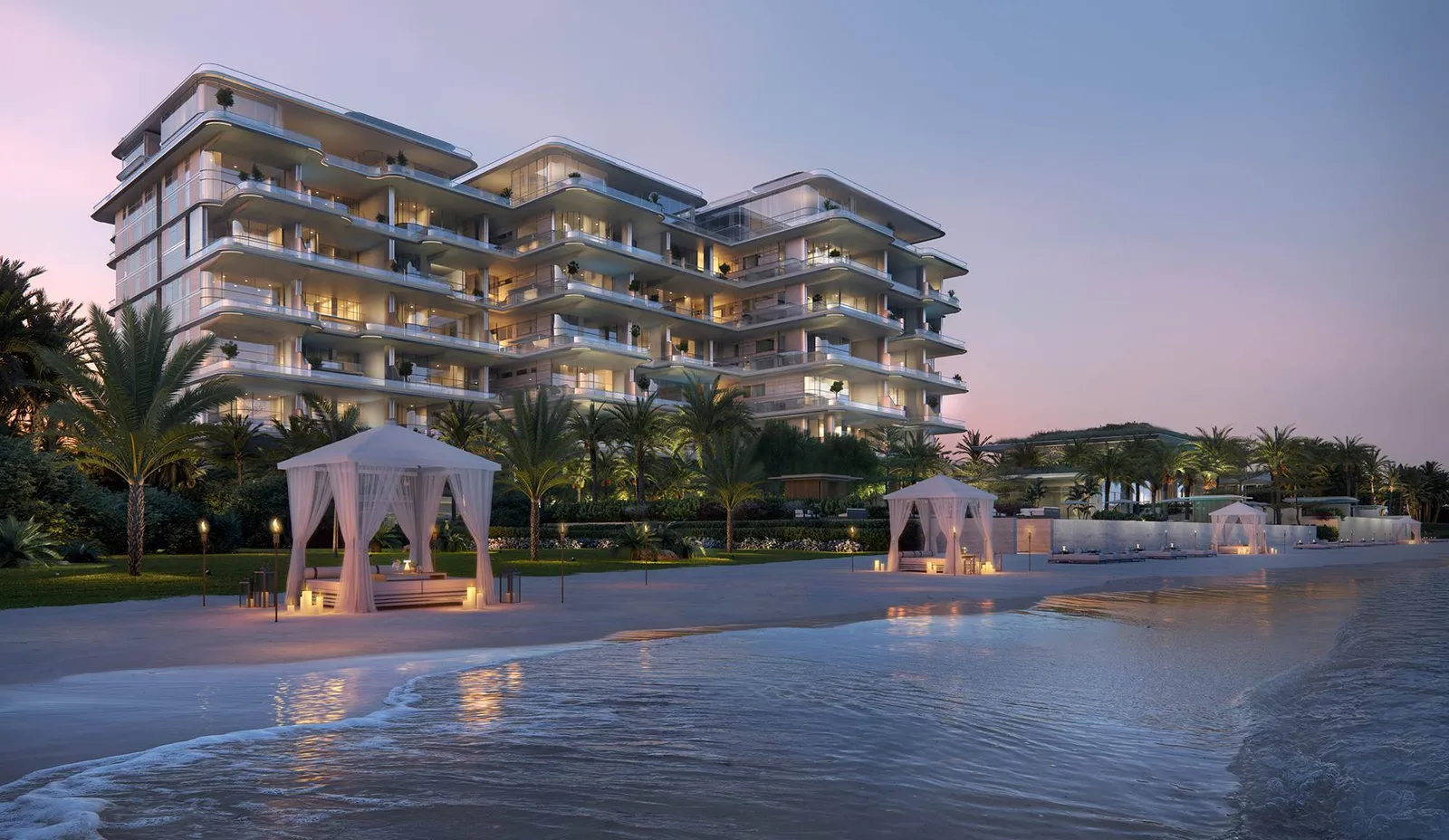
The property is managed by Dorchester Collection, a hotel brand. Orla has 89 residences, the 58,476 sq ft Luna Sky Palace, two super penthouses and a beach mansion. The residents-only beach club extends along 150 m of shore. Inside are three private cinemas, a bowling alley and a residents-only cigar room.
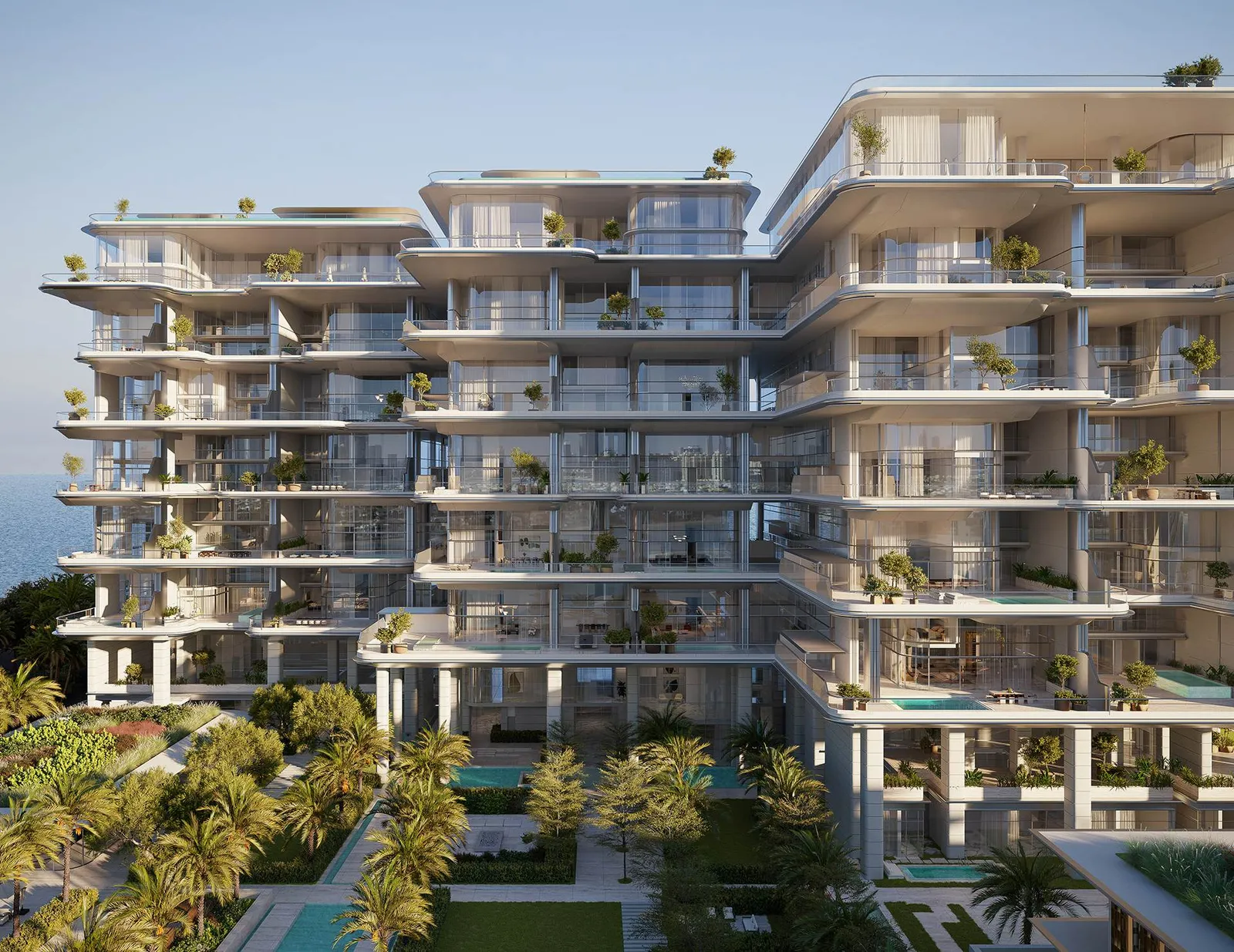
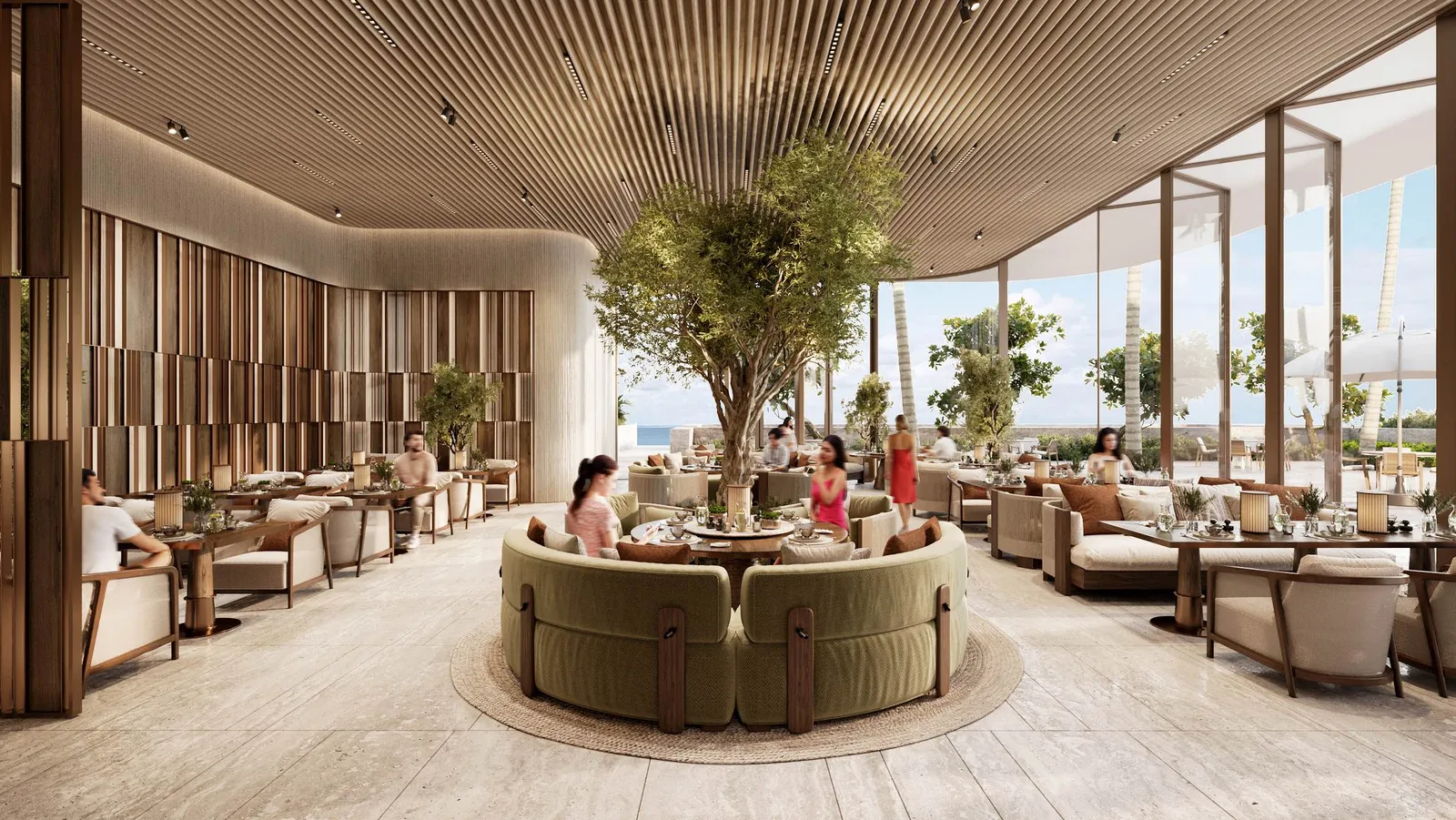
The scale of the residences is clear from apartment 203: it covers 426 m², with a further 297 m² terrace. The terrace has a 3 by 6 m pool. Double-height rooms rise to 6.5 m. Prices start at AED 52,000,000 for four bedrooms across 683 m², or AED 76,132 per m². Completion is due in Q4 2026, with construction 70% complete.
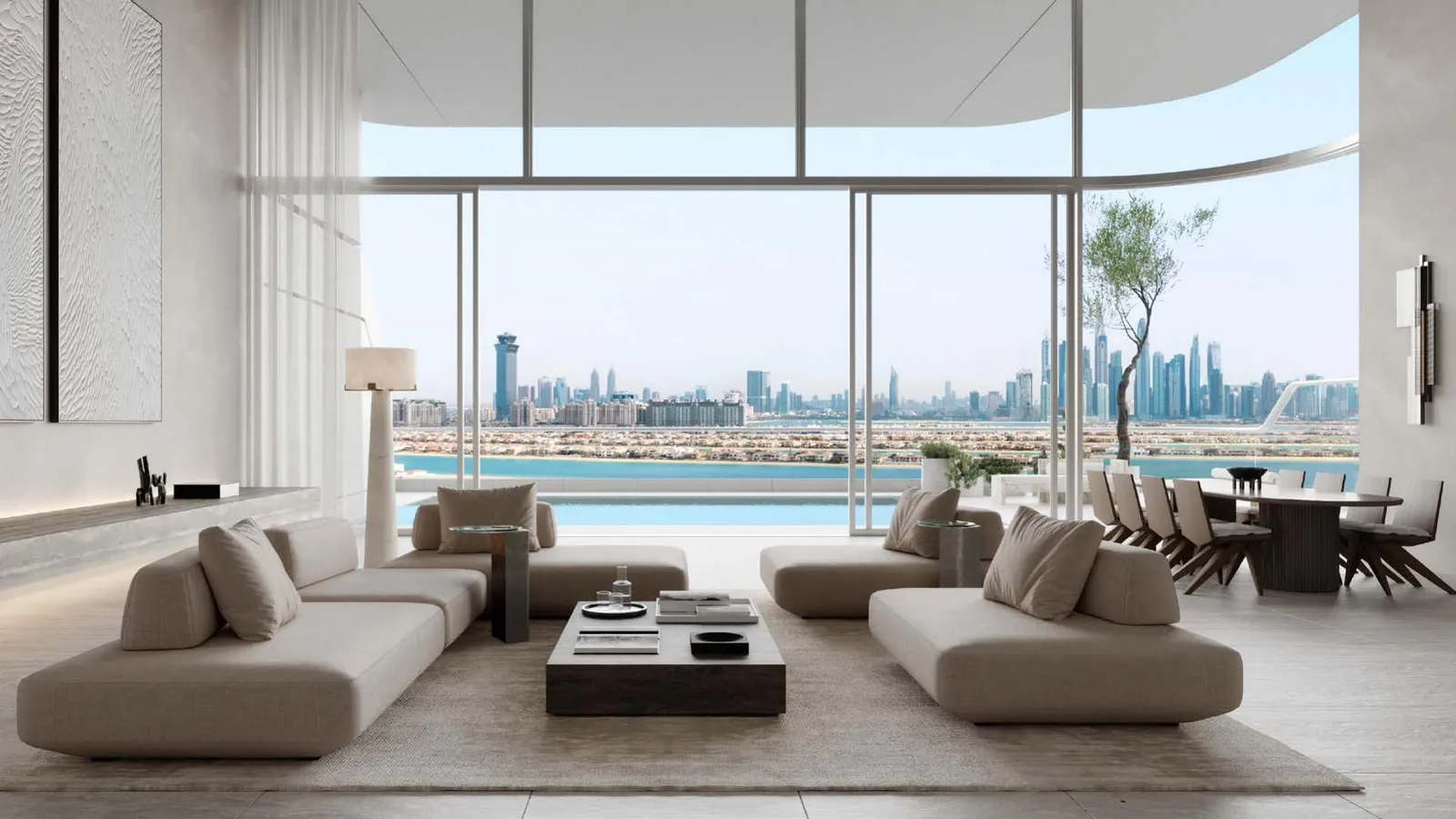
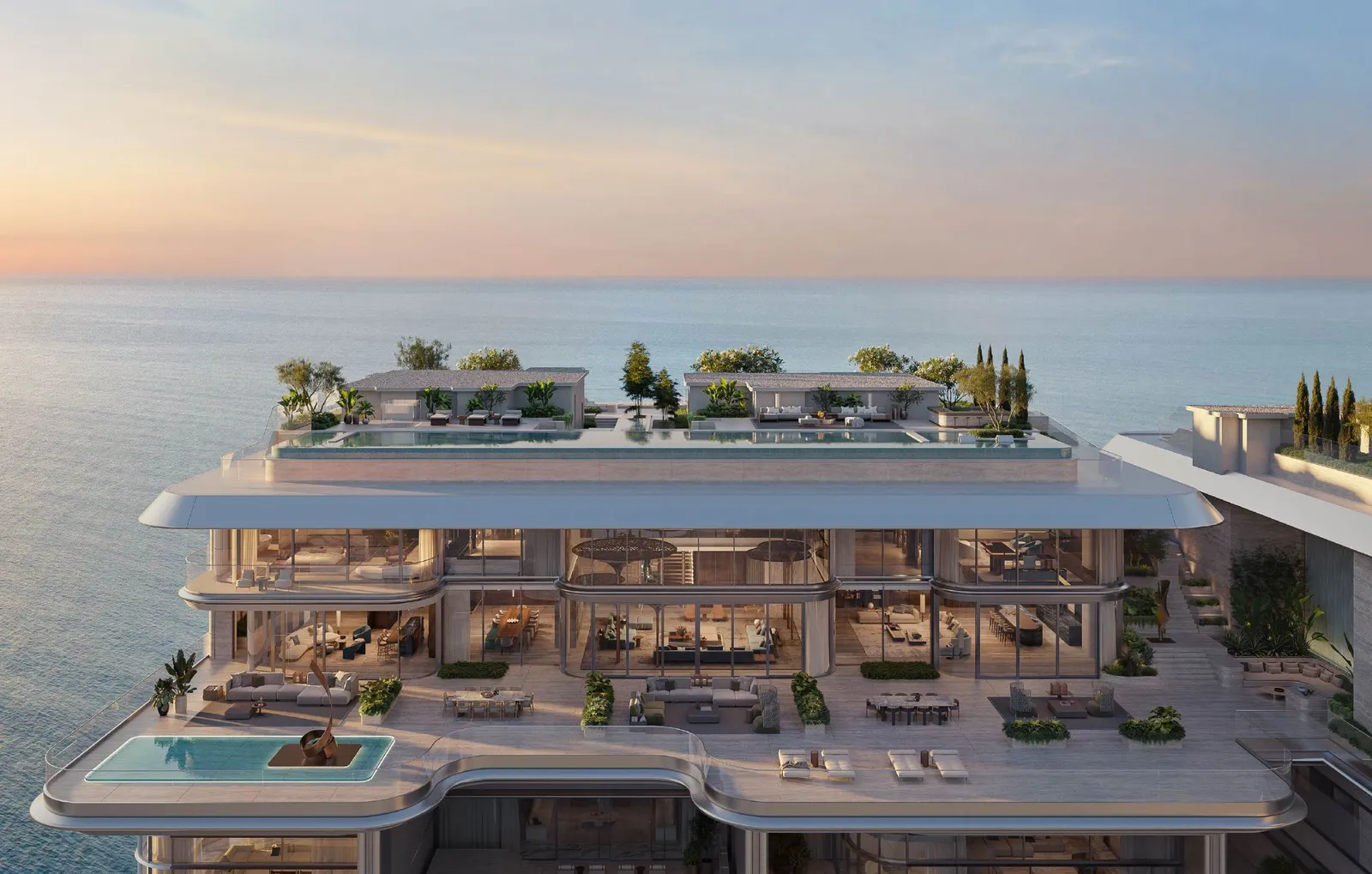
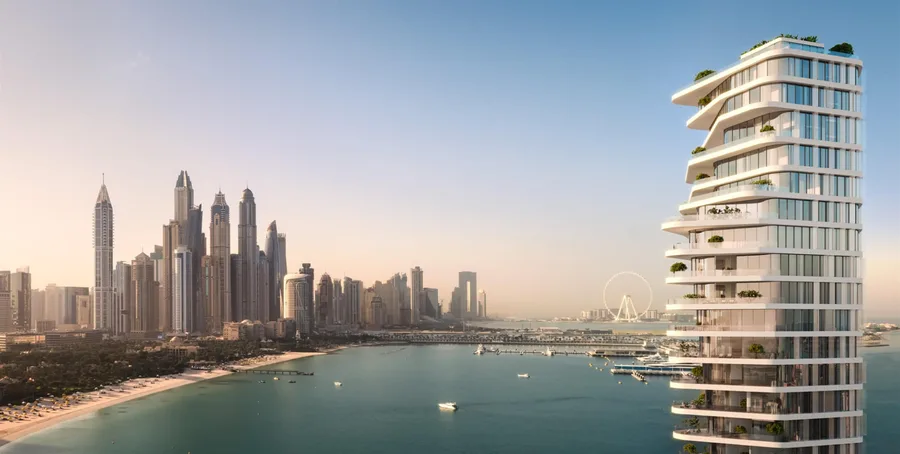
ORLA Infinity stands beside it, on the same 16,600 m² beachfront site. The building has 20 duplex residences, each with its own infinity pool up to 18 m long. Interiors were designed by YODEZEEN. The terrace follows a gentle curve, and the site has 270° views. Four bedrooms across 794 m² are currently for sale at AED 97,350,000, or AED 122,658 per m². Completion is due in Q1 2027, with construction 61% complete.
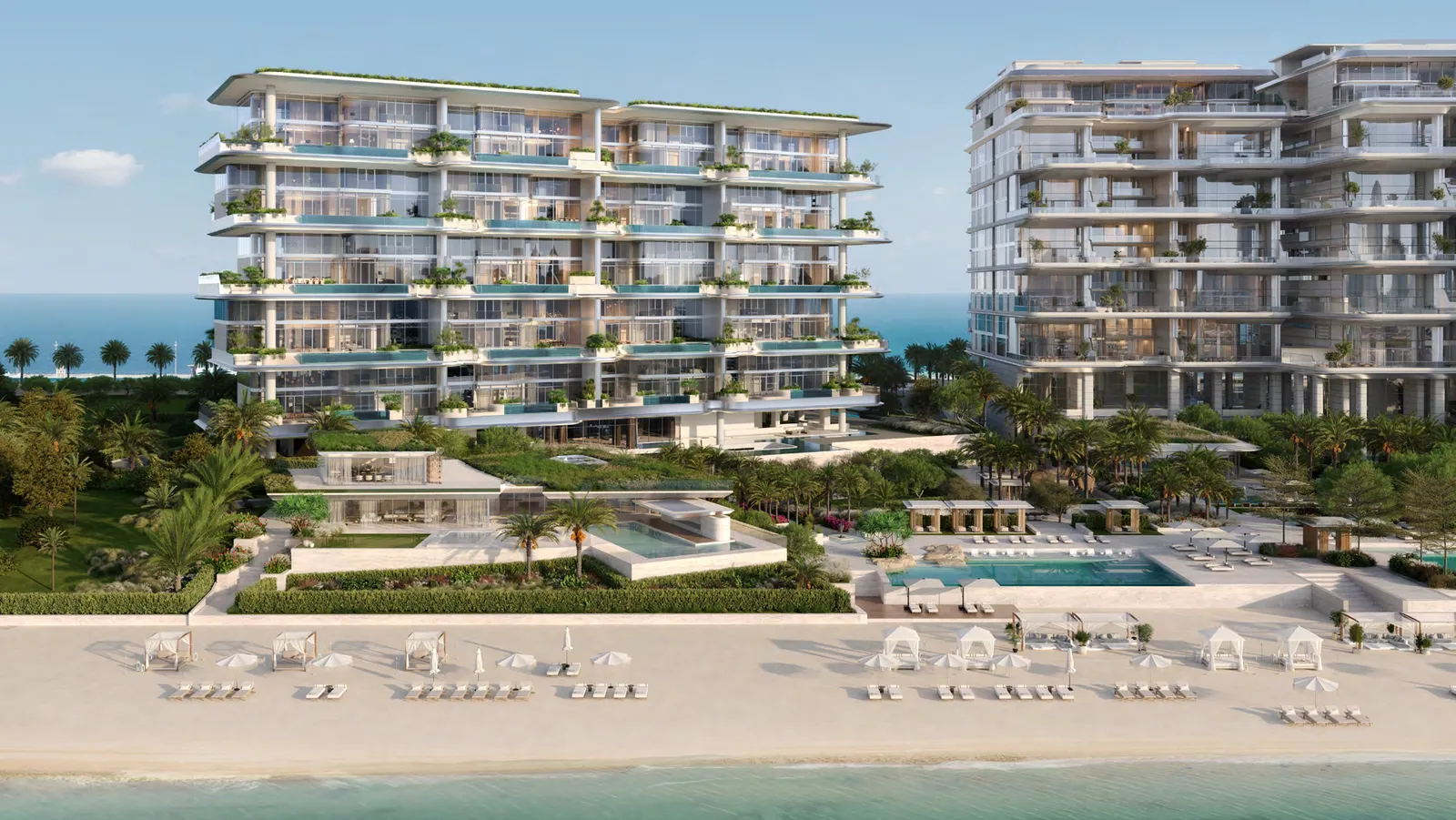
Both buildings share the same payment plan: 25% on booking, 25% during construction and 50% on handover, plus the 4% Dubai Land Department fee.
The Alba Residences: Zaha Hadid and a 25,000 m² garden
The Alba Residences: another Omniyat property managed by Dorchester Collection. The architecture is by Zaha Hadid Architects, with landscaping by Vladimir Djurovic. The building has 60 three and four-bedroom residences and three super penthouses.
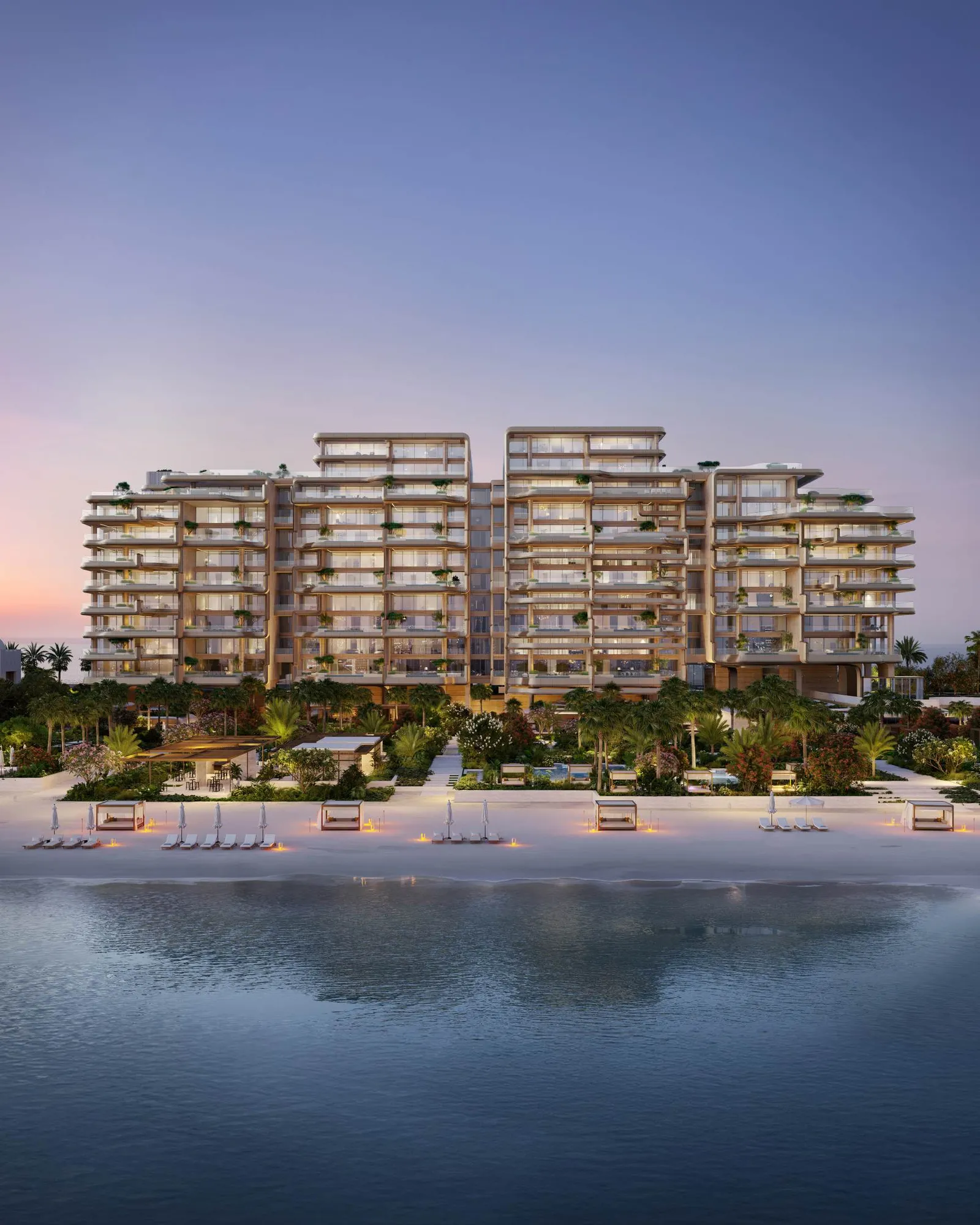
The building's main feature is tucked inside the courtyard: a 25,000 m² central garden and a 250 m private beach. Every residence has a terrace with a private pool and ceilings over 3 m high. Areas range from 499 to 642 m² including the terrace. The wellness programme covers 3,000 m², with cryotherapy chambers, hammams and ice plunge pools. The building is being developed to LEED and WELL Gold certification standards.
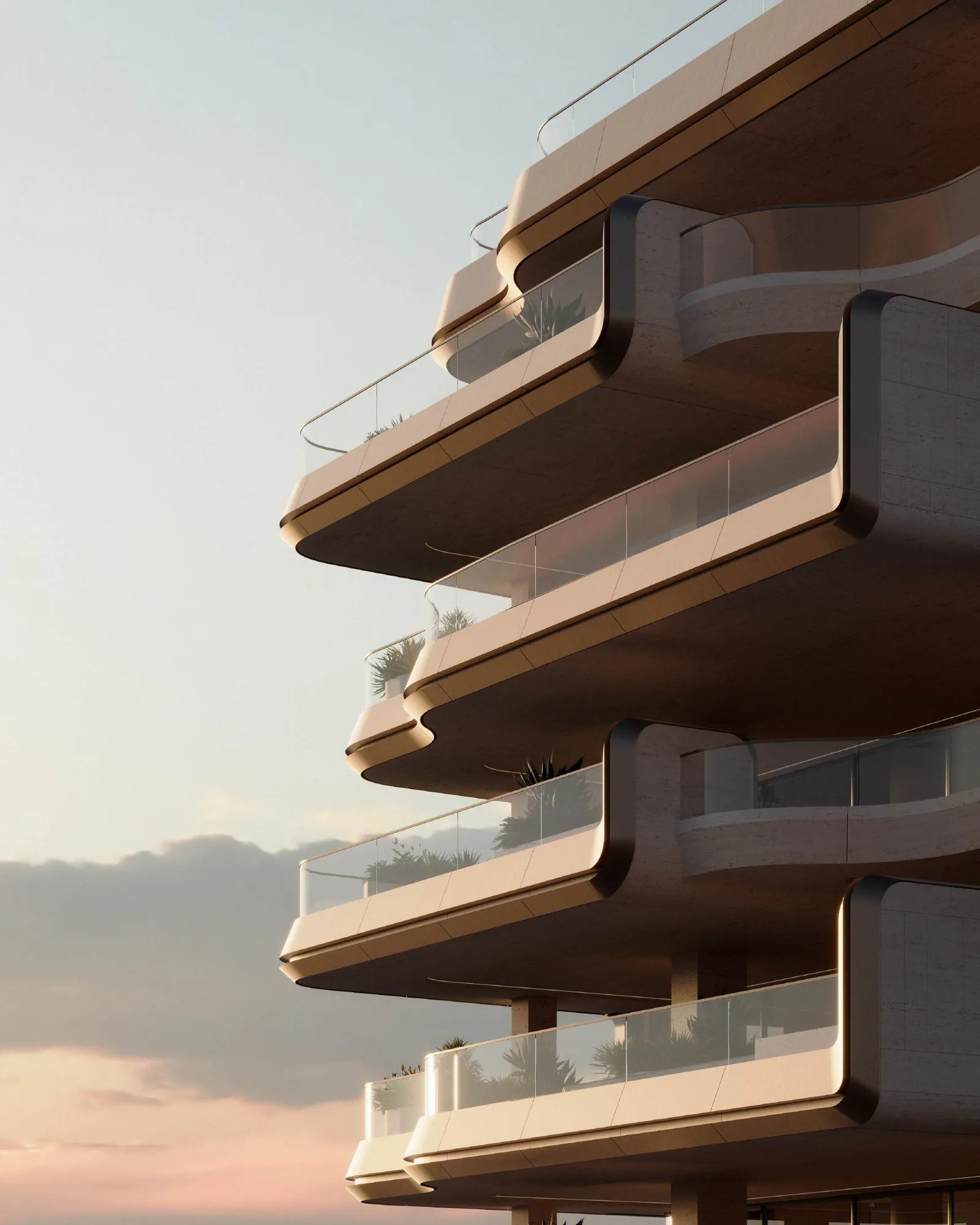
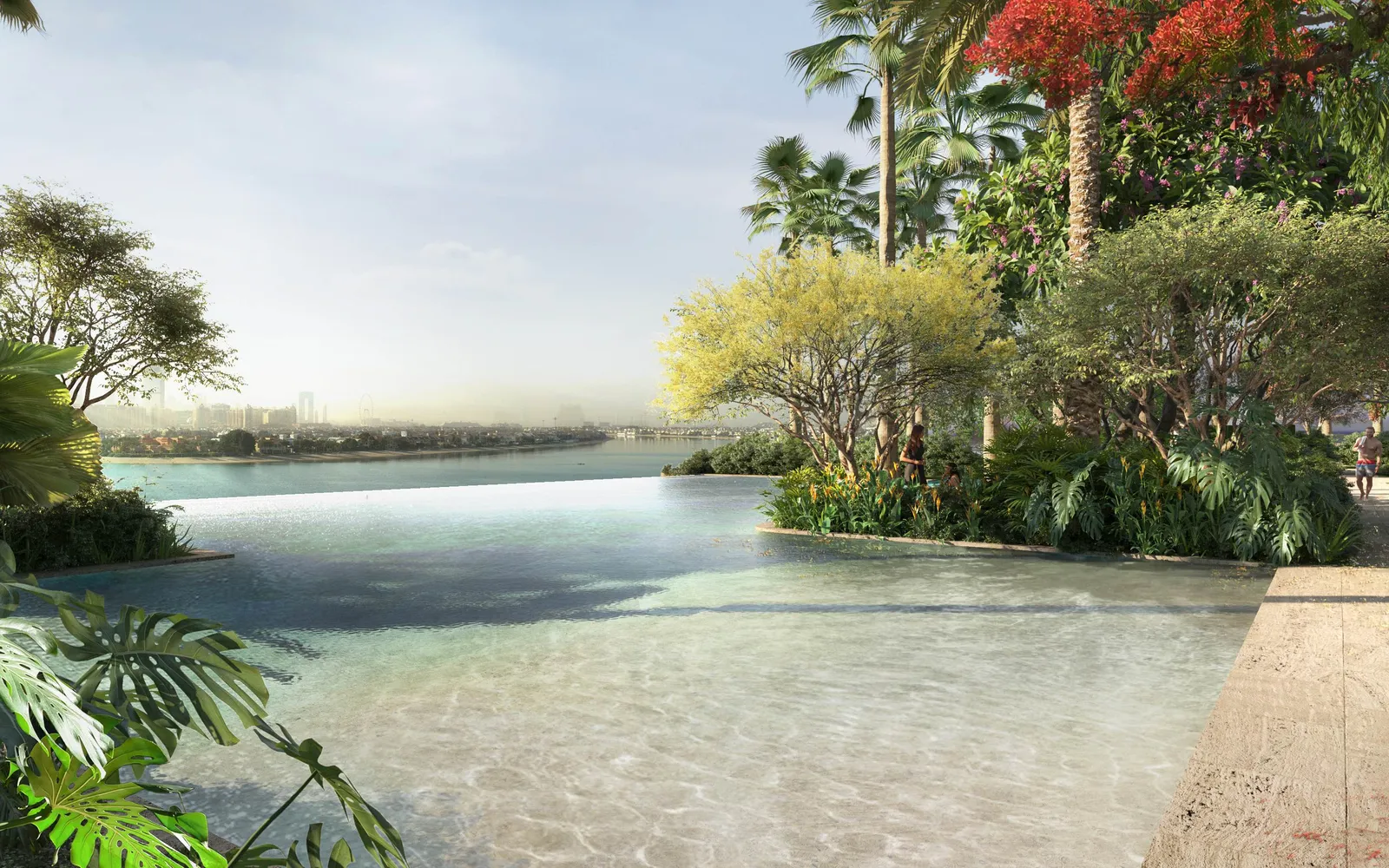
This is the least advanced of the high-end projects: construction is 8% complete, with completion due in Q3 2028. Prices start at AED 17,300,000 for two bedrooms across 148 m², or AED 116,971 per m². Payment: 5% on booking and 20% after 30 days, 35% during construction and 40% on handover.
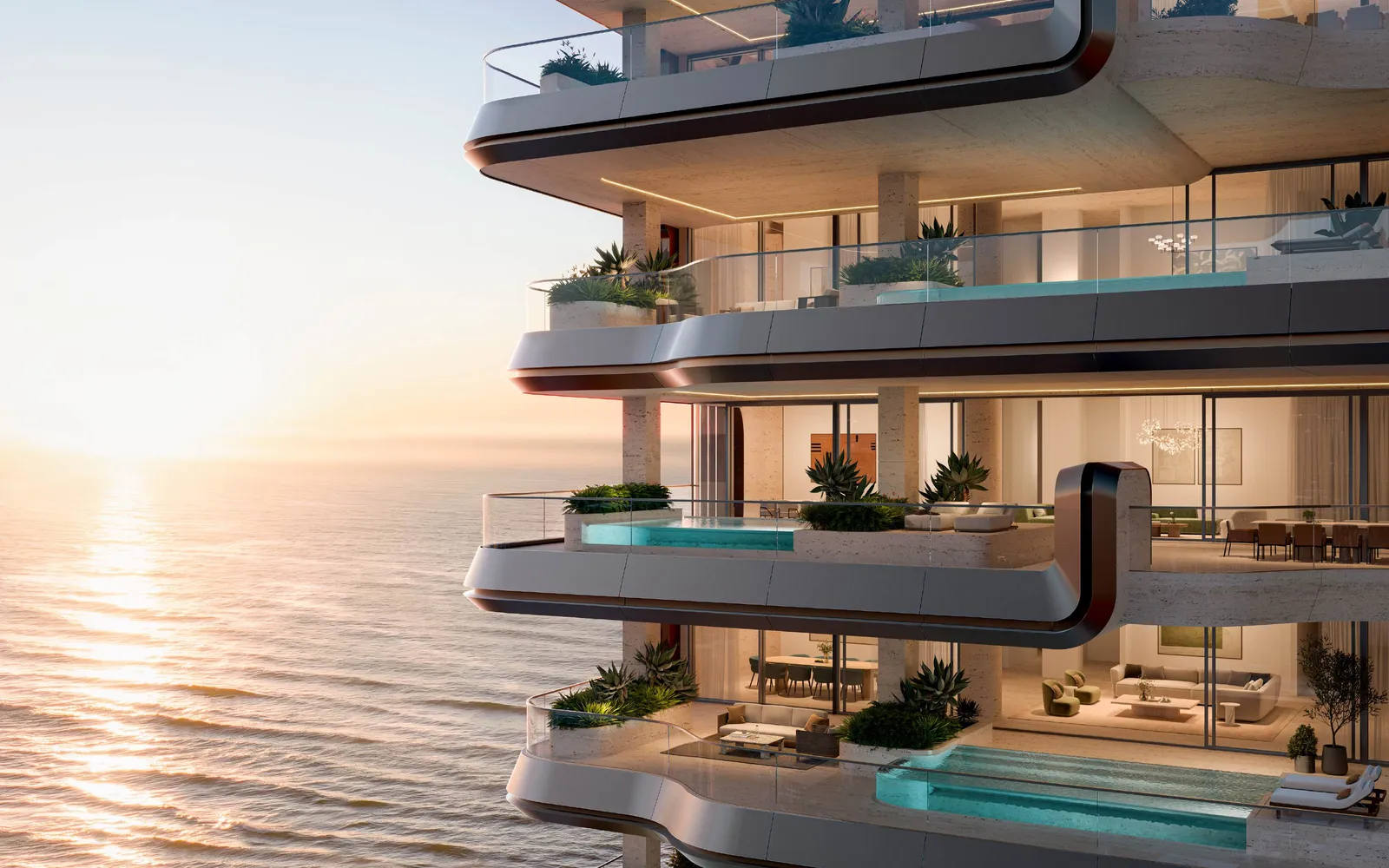
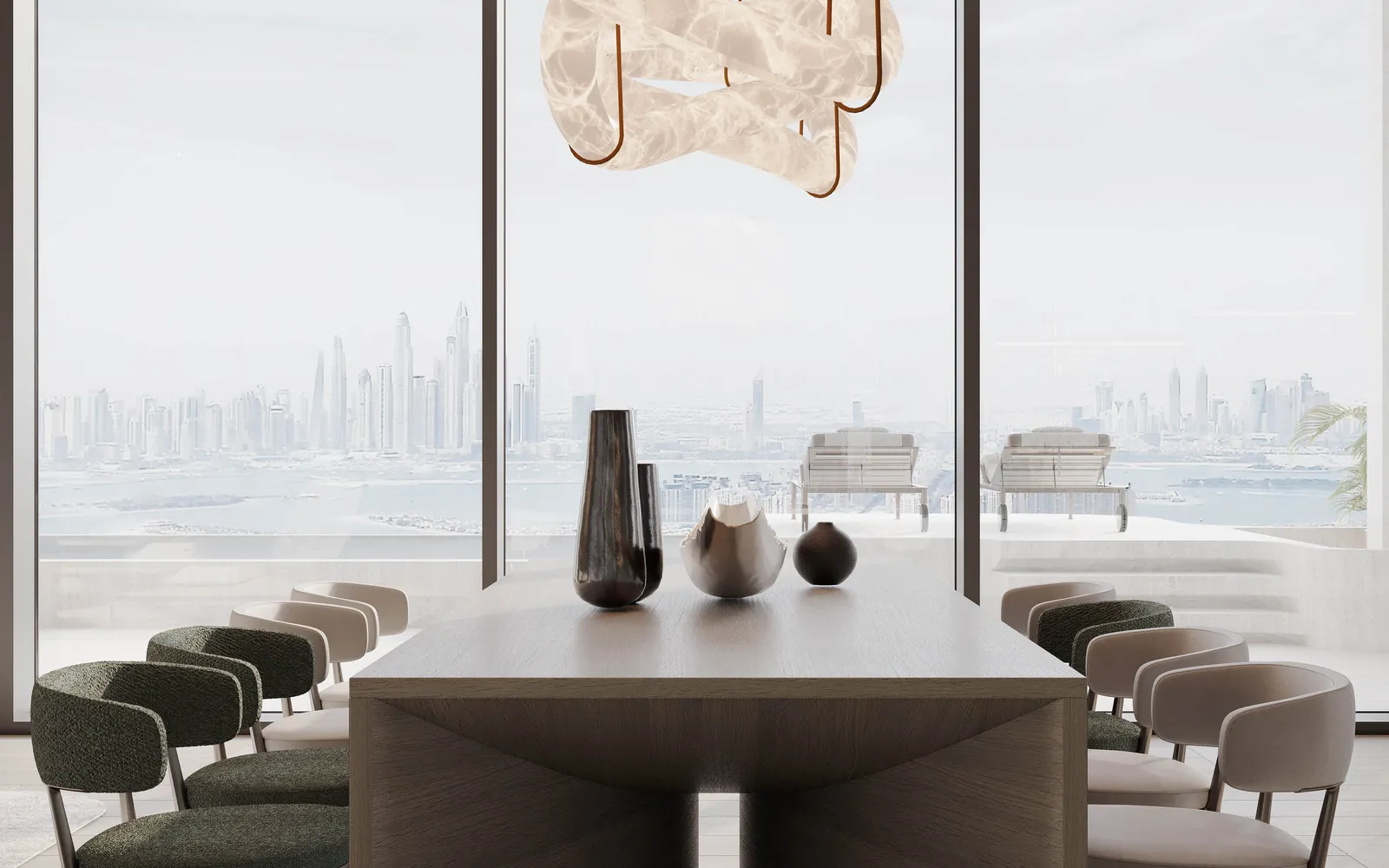
Passo: two towers and 250 m of beach
Passo is being developed by Beyond, an Omniyat Group brand, on the western crescent. The windows look out over Burj Al Arab, Atlantis The Royal and the Marina skyline.
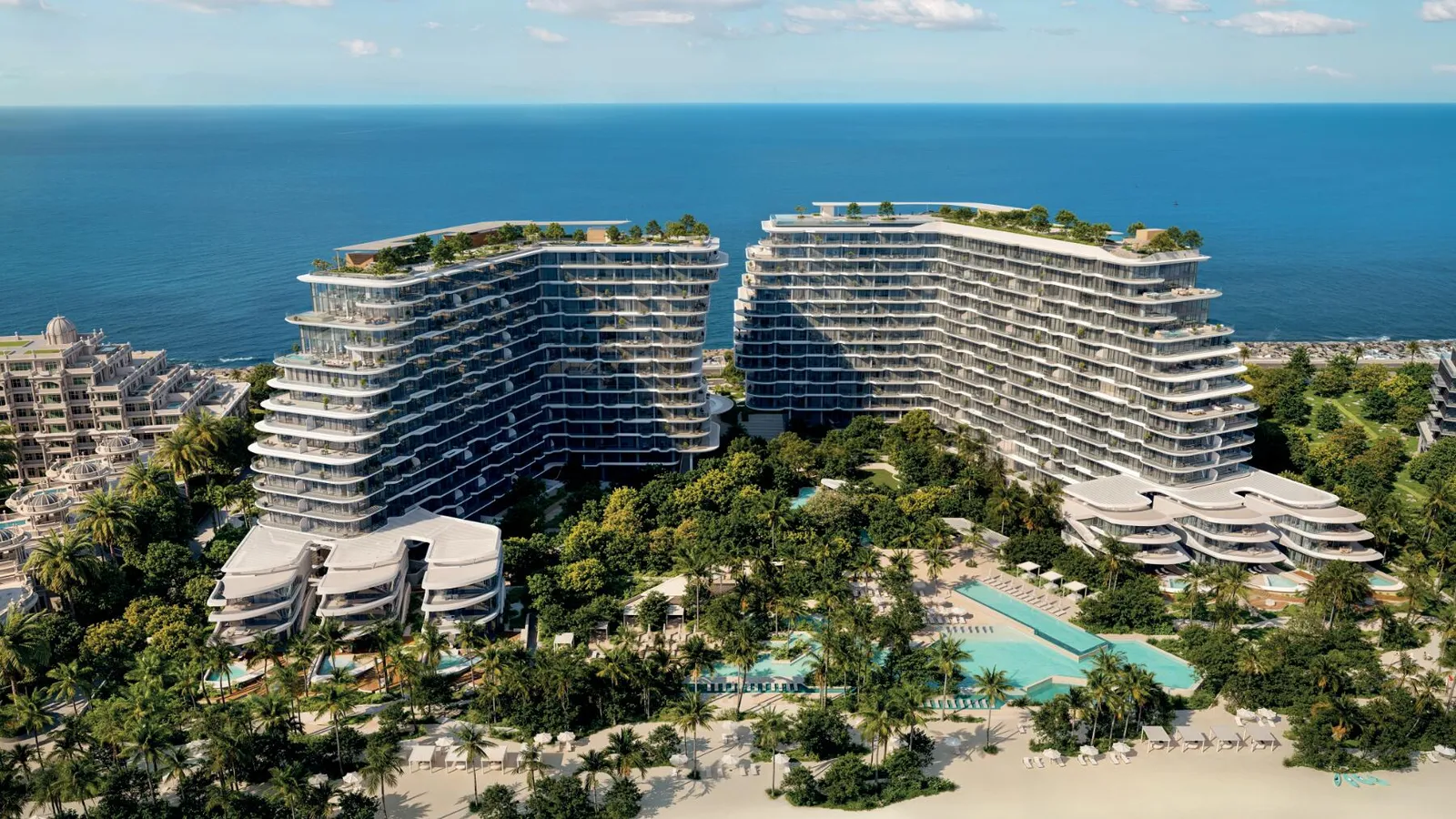
The project comprises two towers, Avita and Bella. It has 625 residences, five penthouses and six beachfront Beach Mansions. The shore extends for 250 m, with a 40 m-wide stretch of sand. There is a 260 m² Wellness Pavilion, a rooftop spa and a Montessori-based children's pavilion.
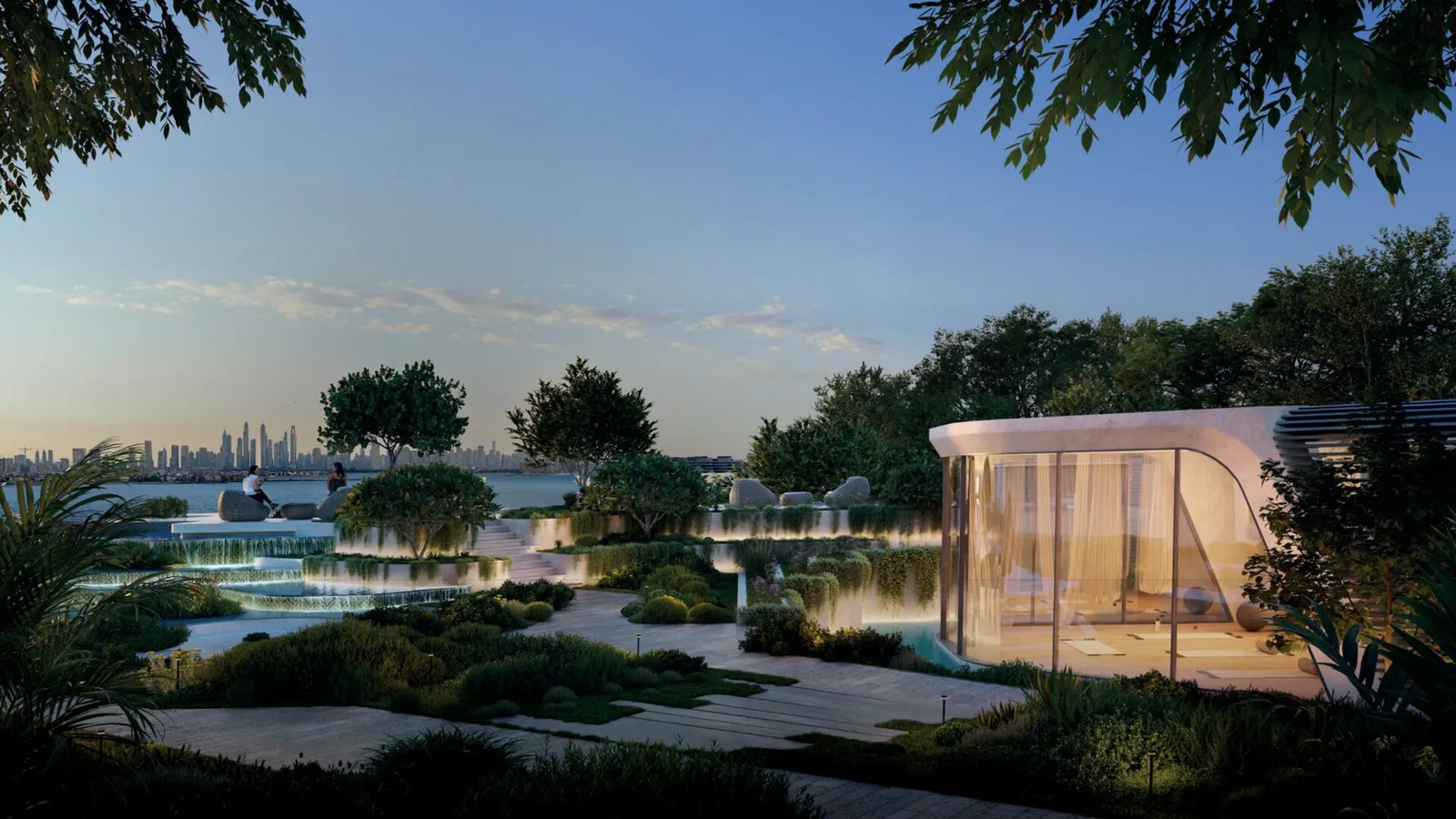
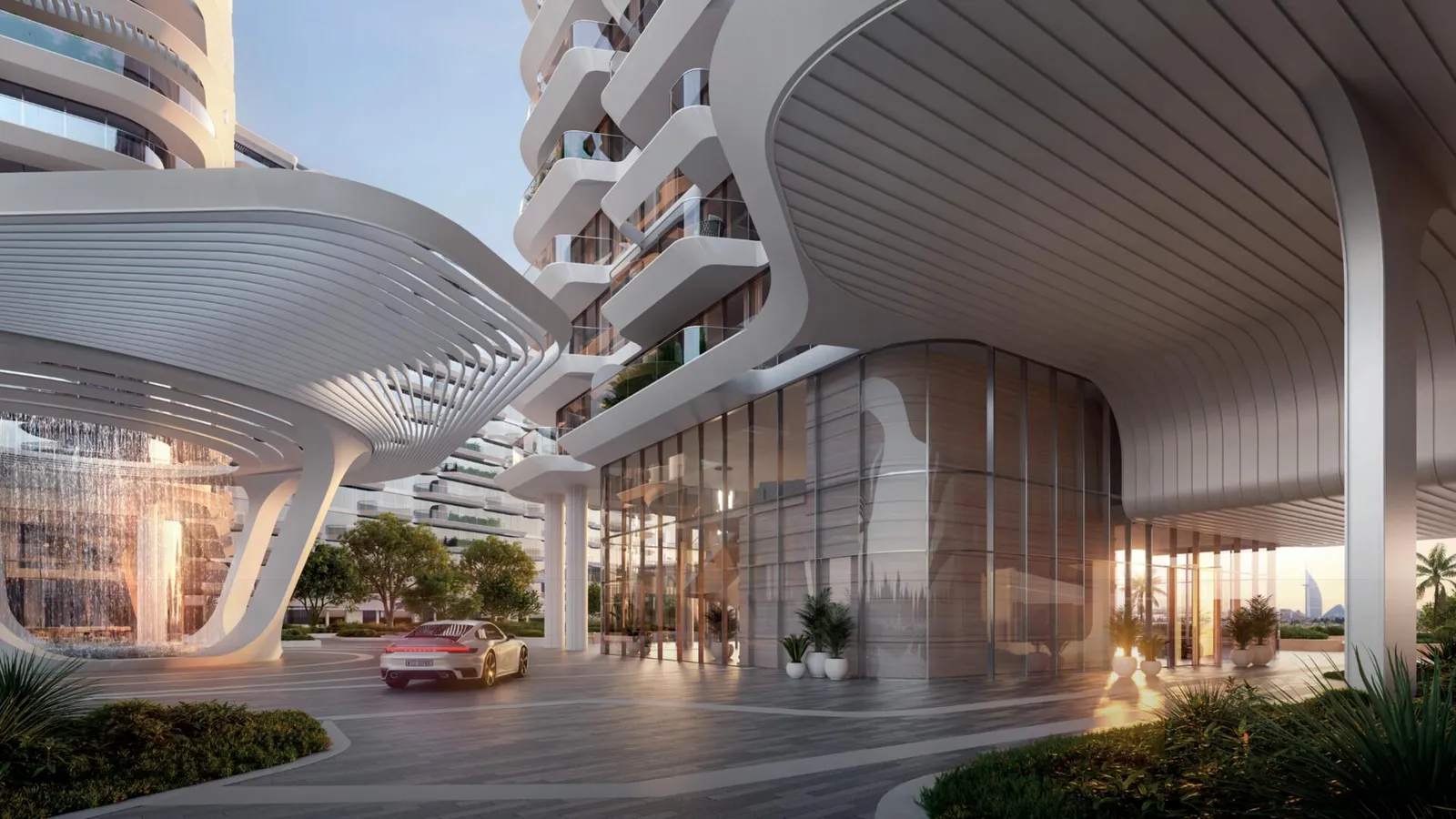
Passo is a rare case on the island: a new beachfront building with one-bedroom apartments. They start at AED 4,146,000 for 81 m², or AED 50,884 per m². Two-bedroom apartments start at AED 6,488,000. The Beach Mansions are sold out. The trade-off is time. Completion is due in Q4 2029, and construction has not yet started. The payment plan is 20% after booking, 20% during construction and 60% on handover.
Six Senses Residences: a 60,000 sq ft wellness club
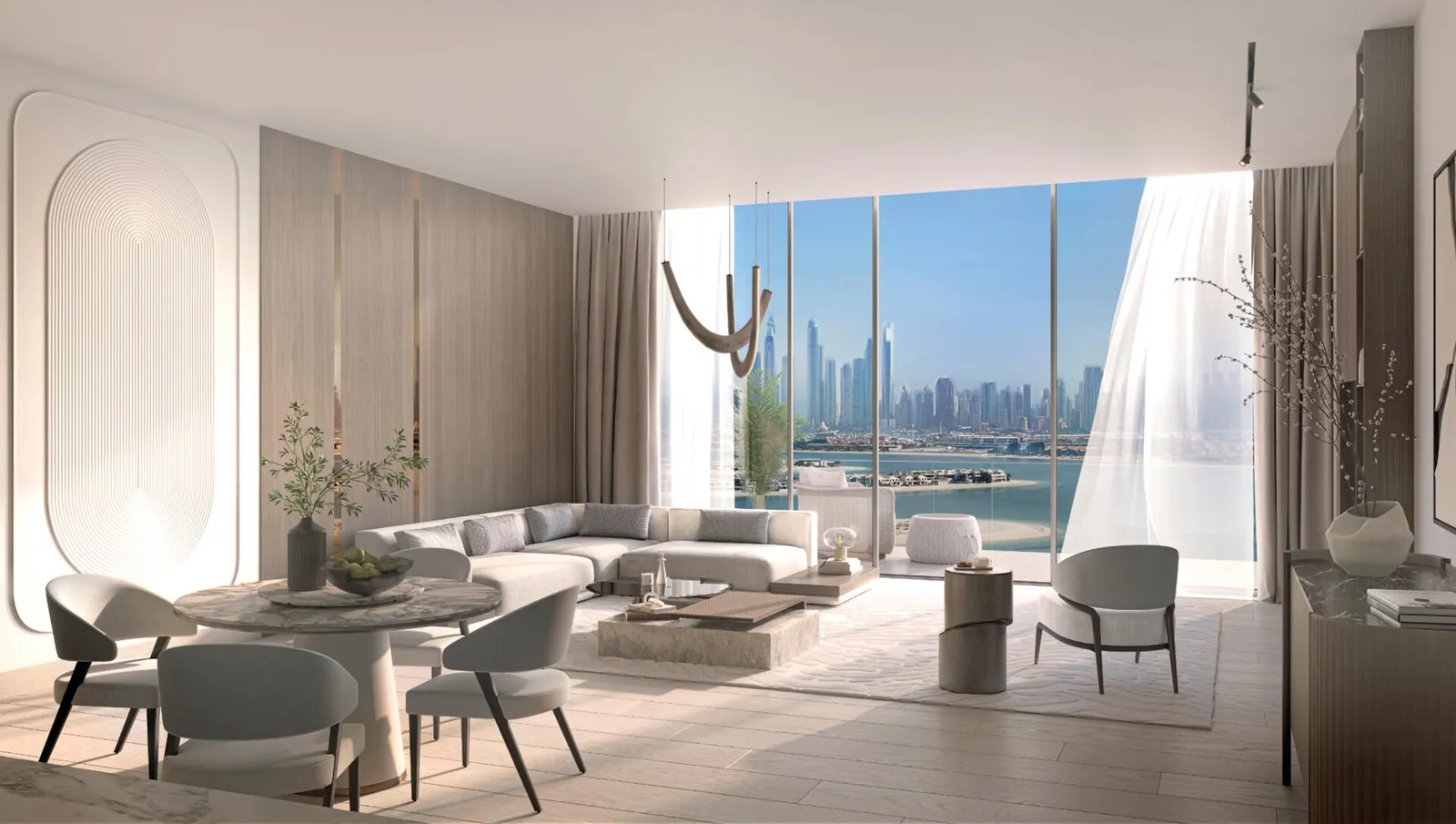
Six Senses Residences The Palm is being developed by Select Group with the Six Senses brand, its first property in the Emirates. The complex is on the western crescent and consists of five buildings: two nine-storey penthouse buildings, two seven-storey buildings with Sky Villas, and separate Signature Villas by the beach.
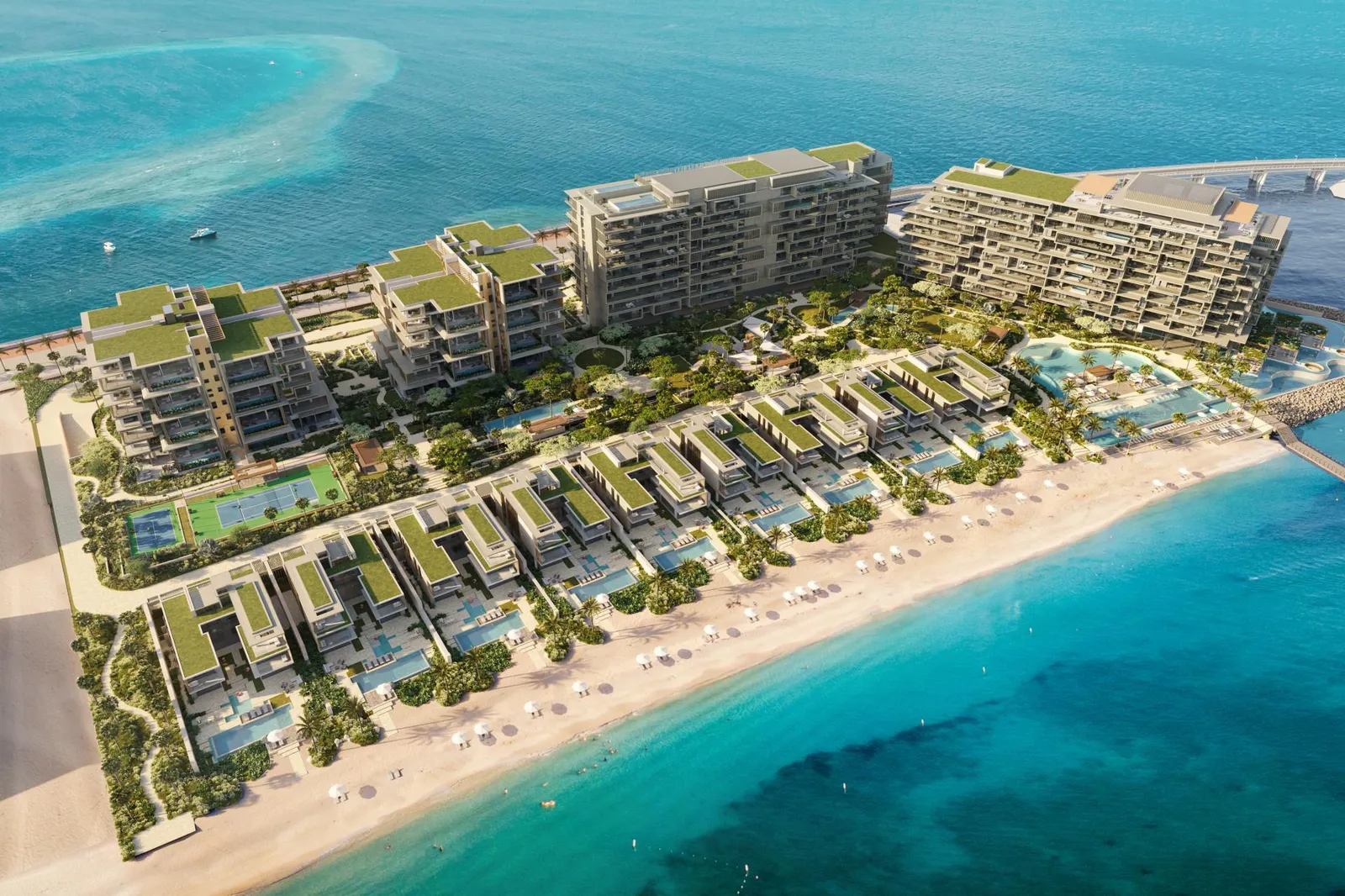
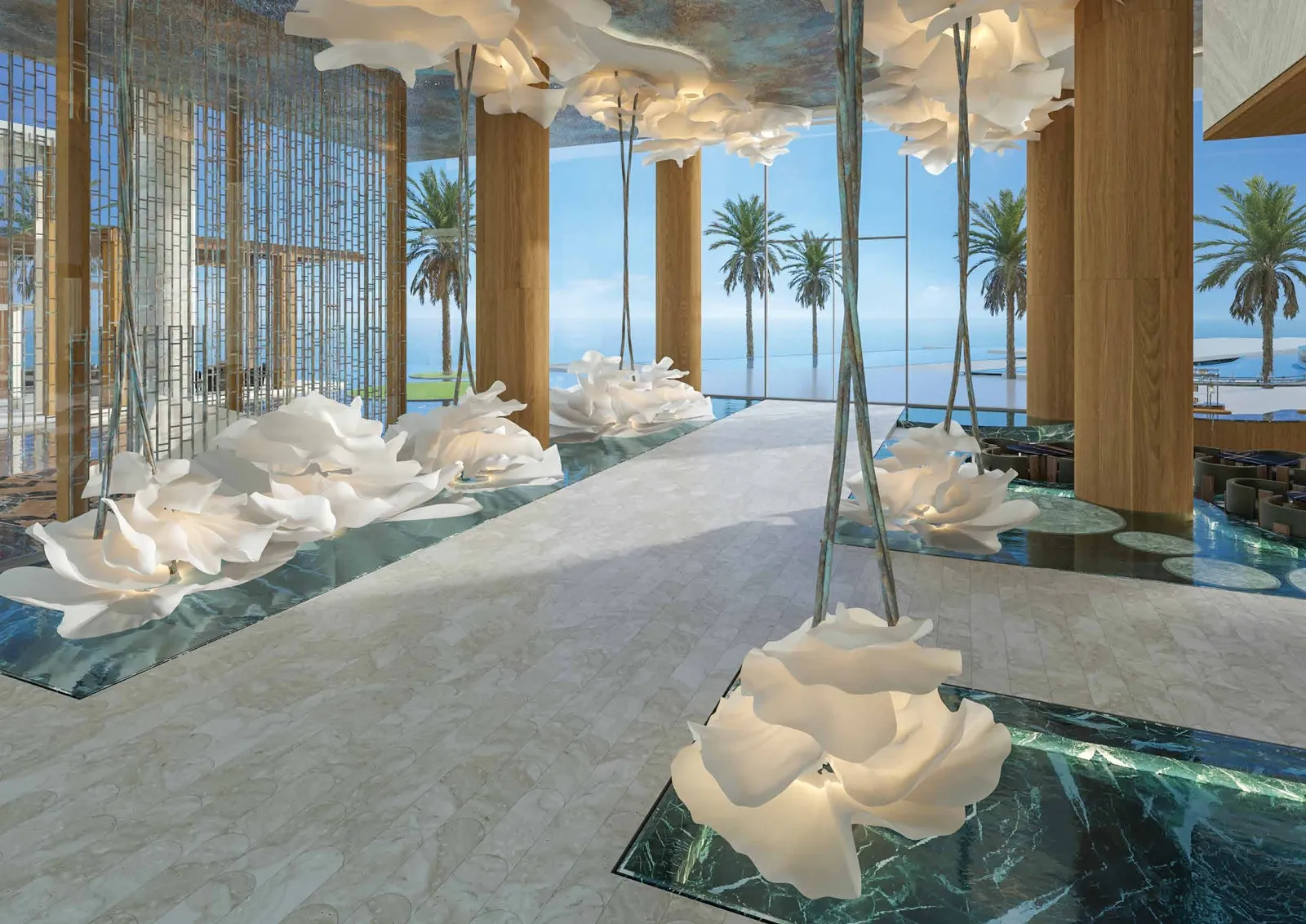
At the heart of the complex is Six Senses Place, a 60,000 sq ft wellness and leisure club with a spa, a pool with a massage circuit, a squash court, coworking space and meeting rooms. Membership is free for owners. Pets are permitted in the complex.
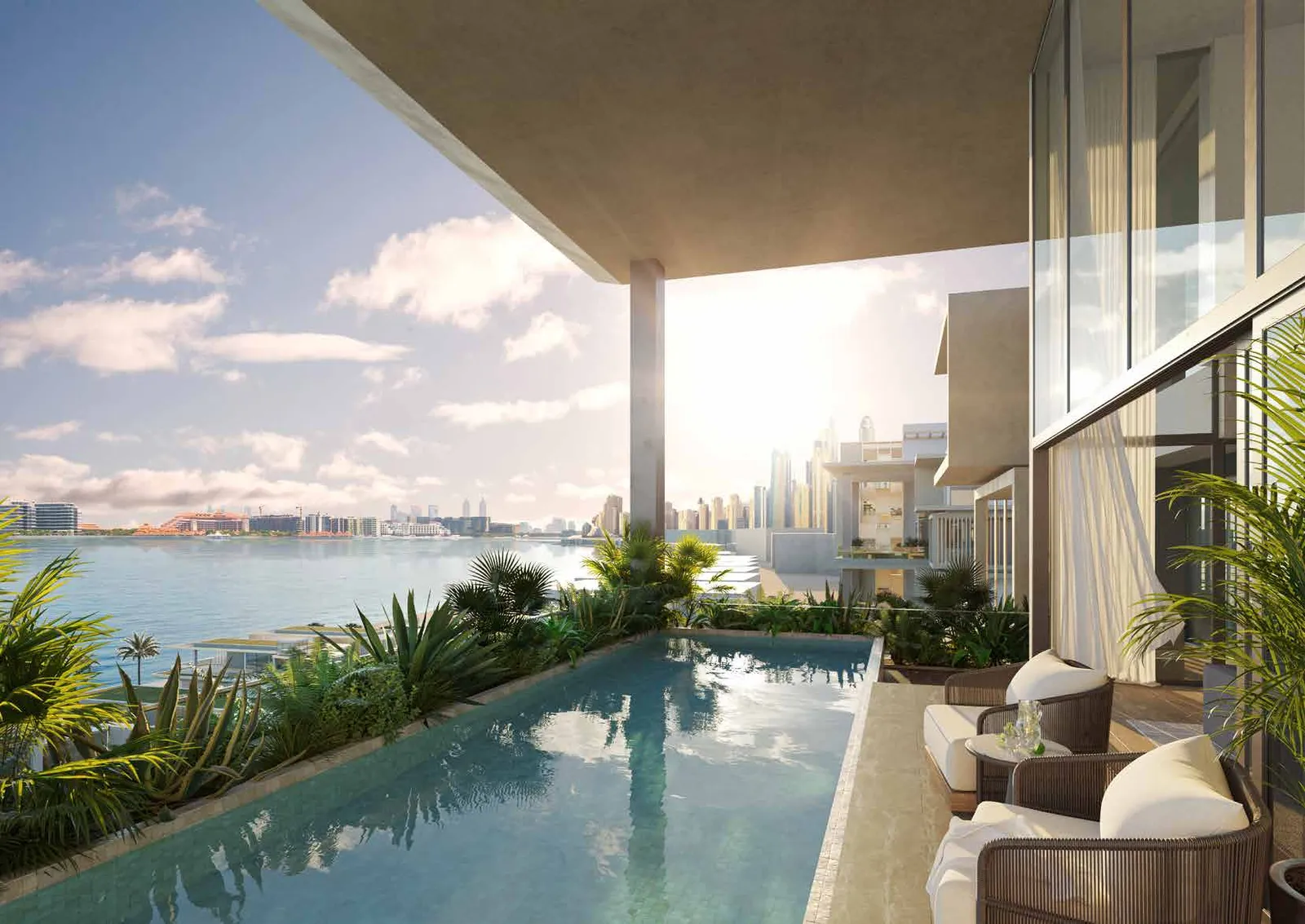
The complex has 193 apartments and is 98% complete, with scheduled completion in Q3 2026. Check whether the property has been handed over to residents at the time of enquiry. Three bedrooms across 417 m² are currently for sale at AED 23,400,000, or AED 56,084 per m². Payment is 100% on booking, with an escrow account at Emirates NBD.
Completed properties: Ellington Beach House, Mina, Muraba Dia
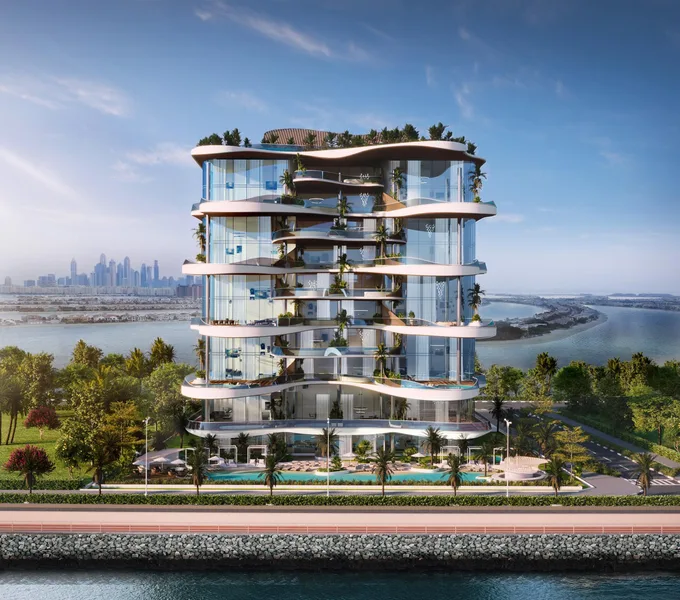
Ellington Beach House stands on the eastern crescent. It consists of two seven-storey buildings, South and North, with two lobbies, one accessed from the beach and the other from Crescent Road. The architecture draws on superyacht forms. The garden has padel and tennis courts, and the clubhouse has a show kitchen where you can invite a private chef. The building was completed in Q3 2024. Two bedrooms across 157 m² are currently for sale at AED 9,000,000, or AED 57,325 per m².
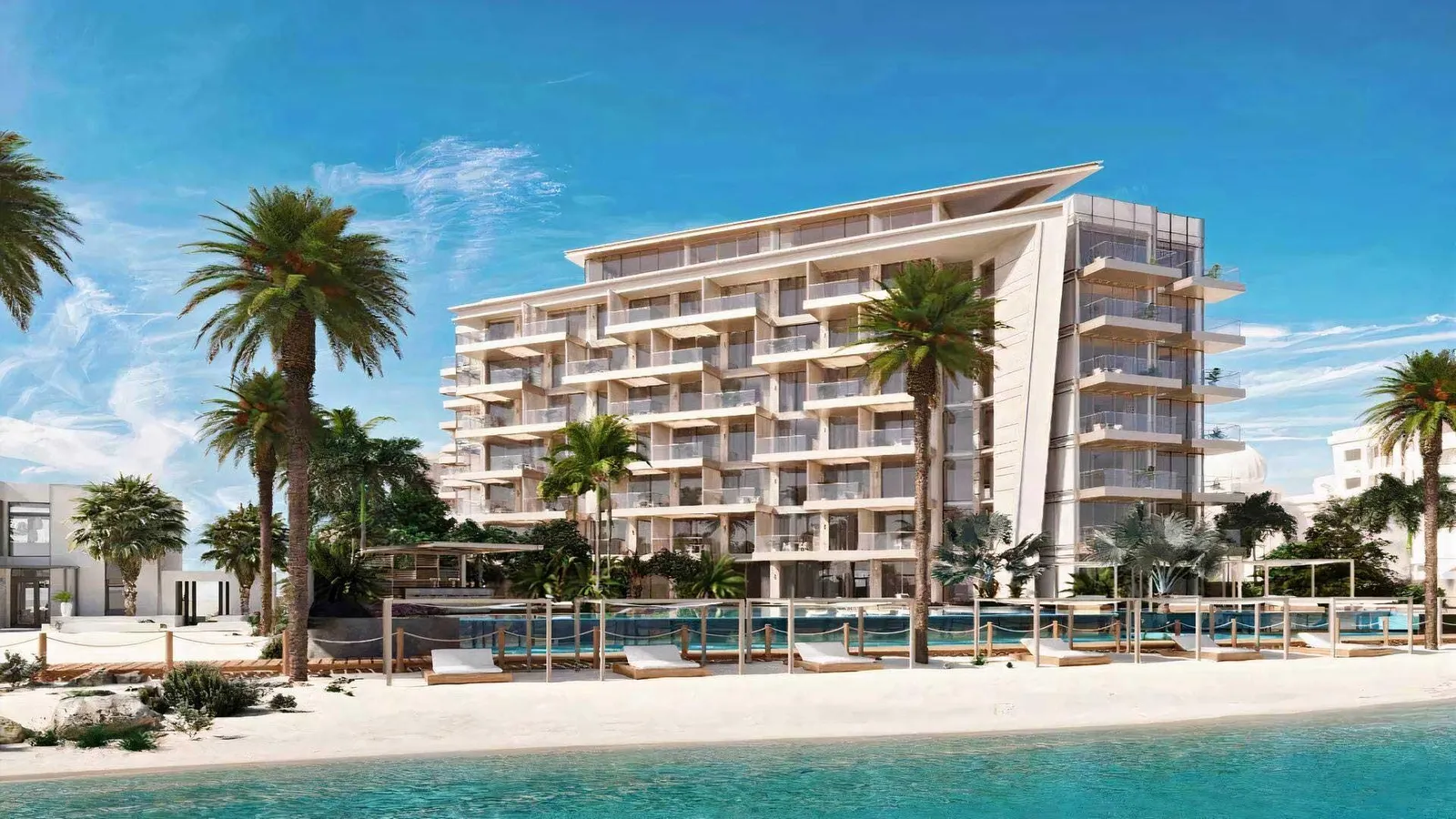
DIFC is 30 minutes away. The crescent is the island's outer ring.
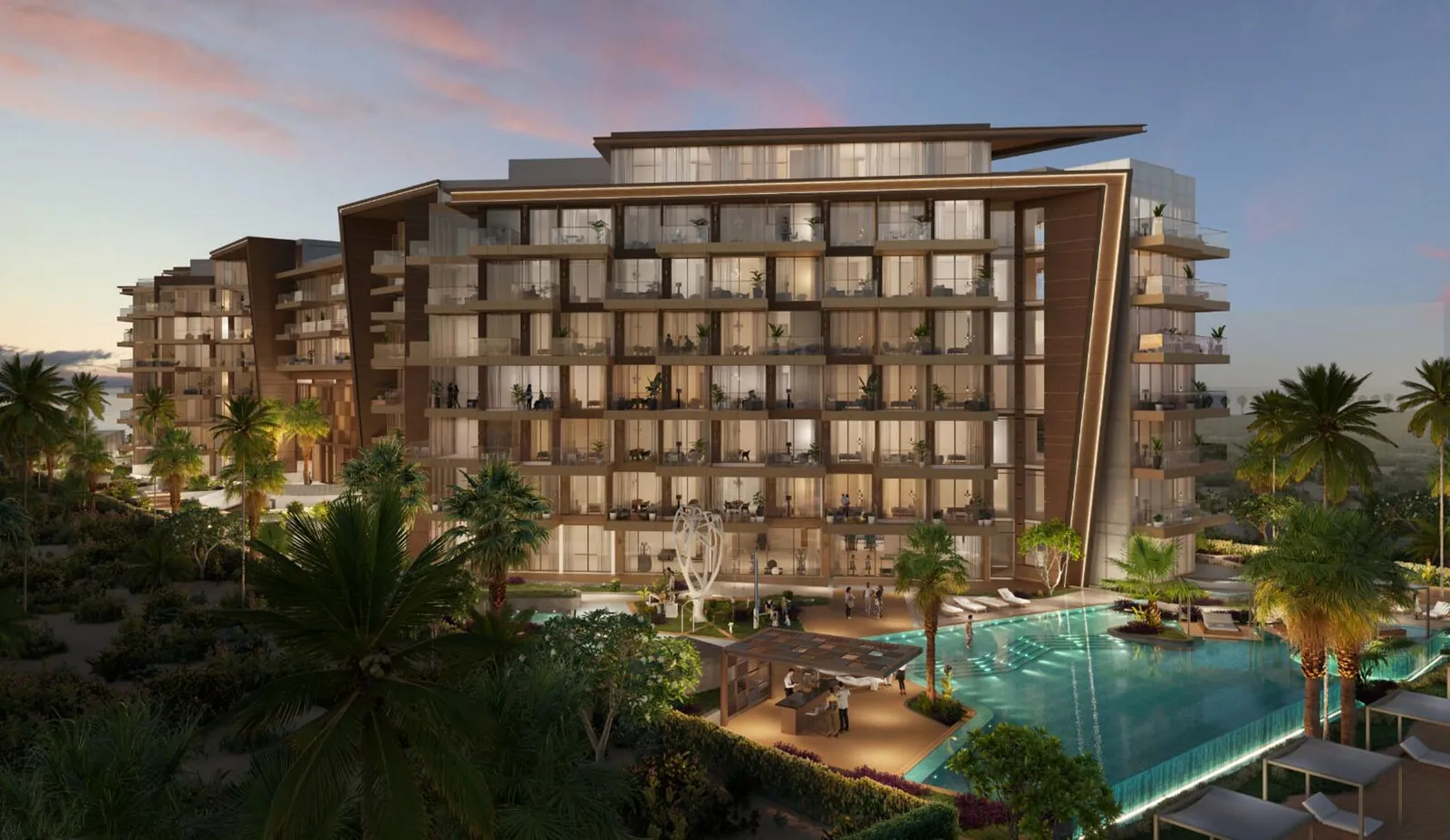
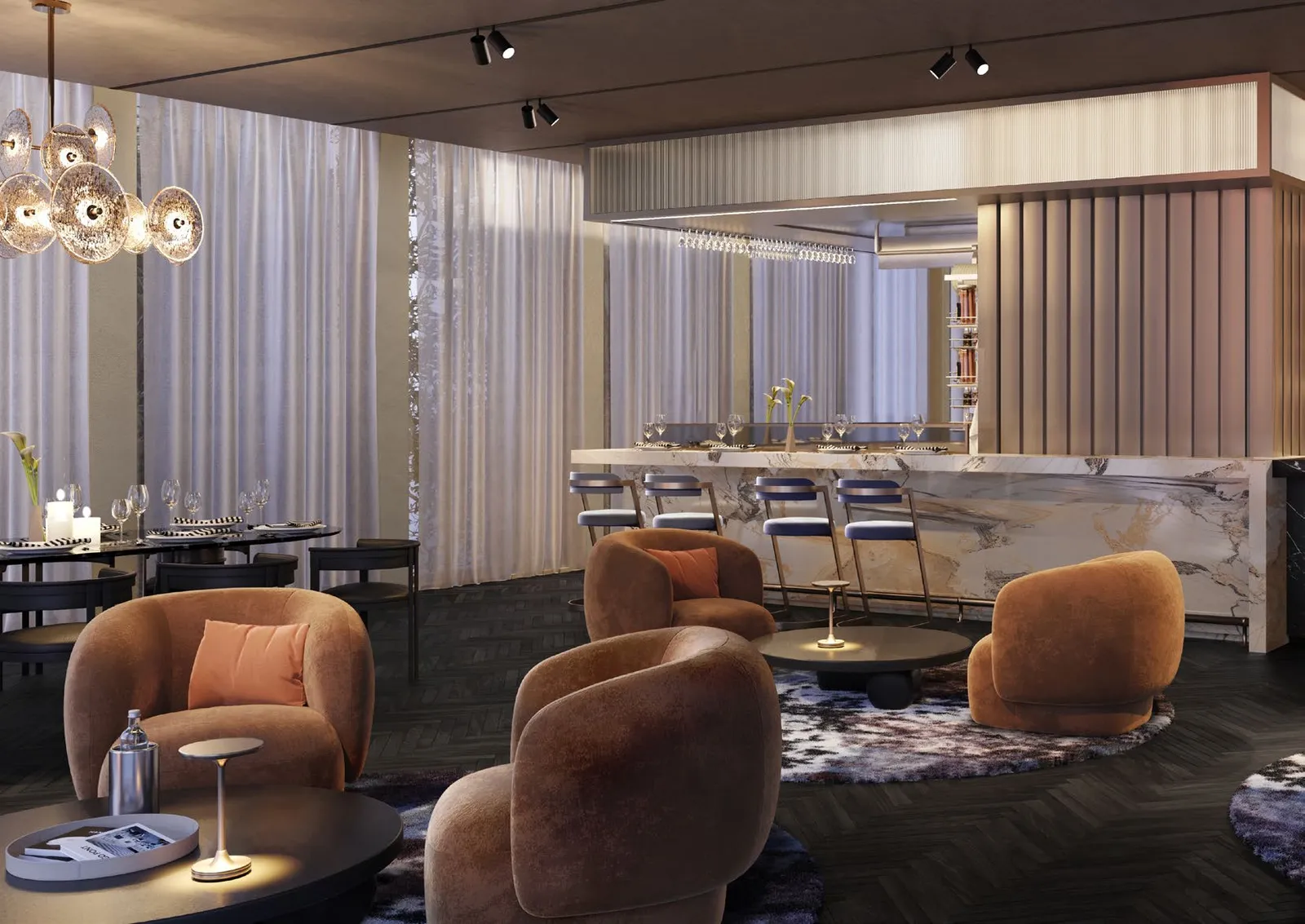
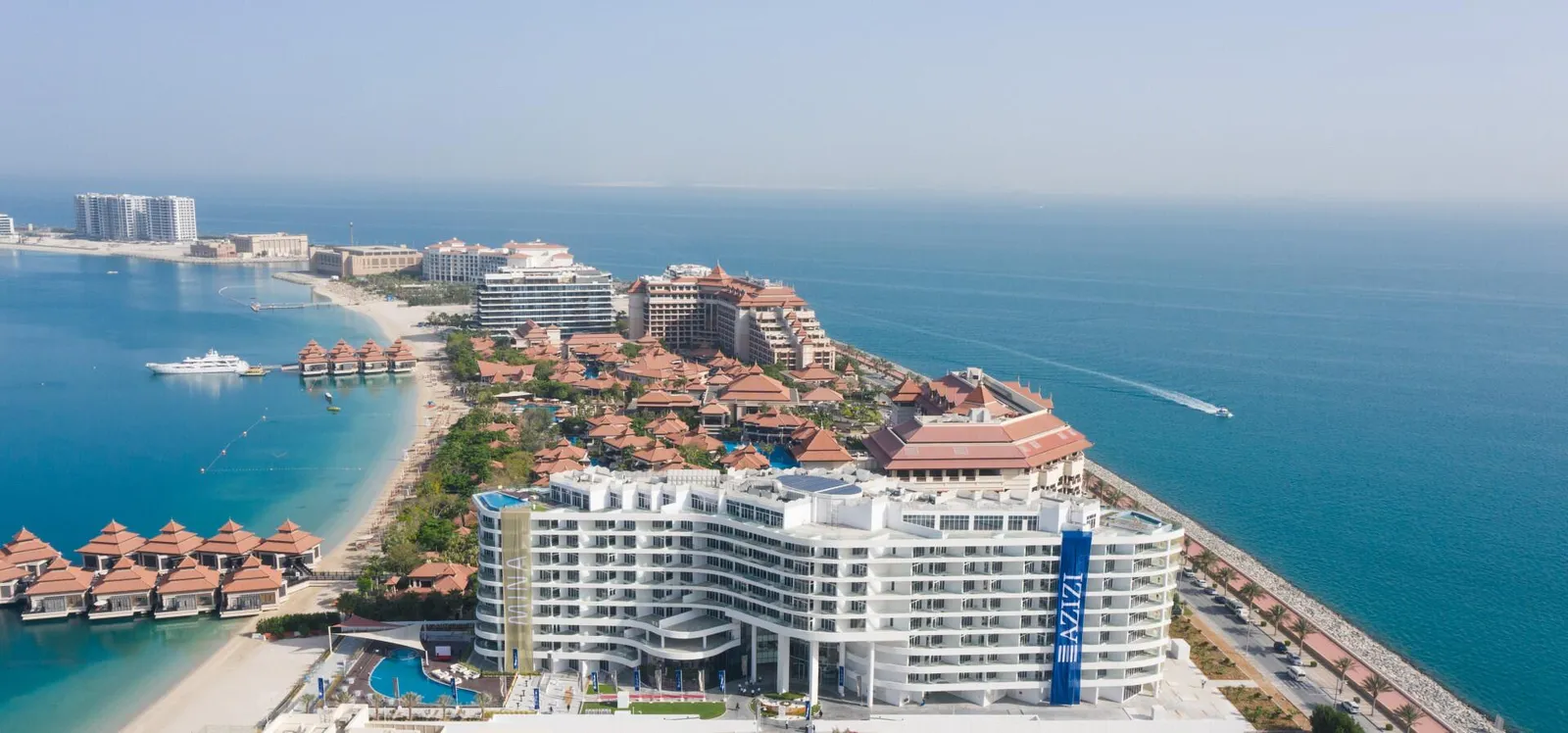
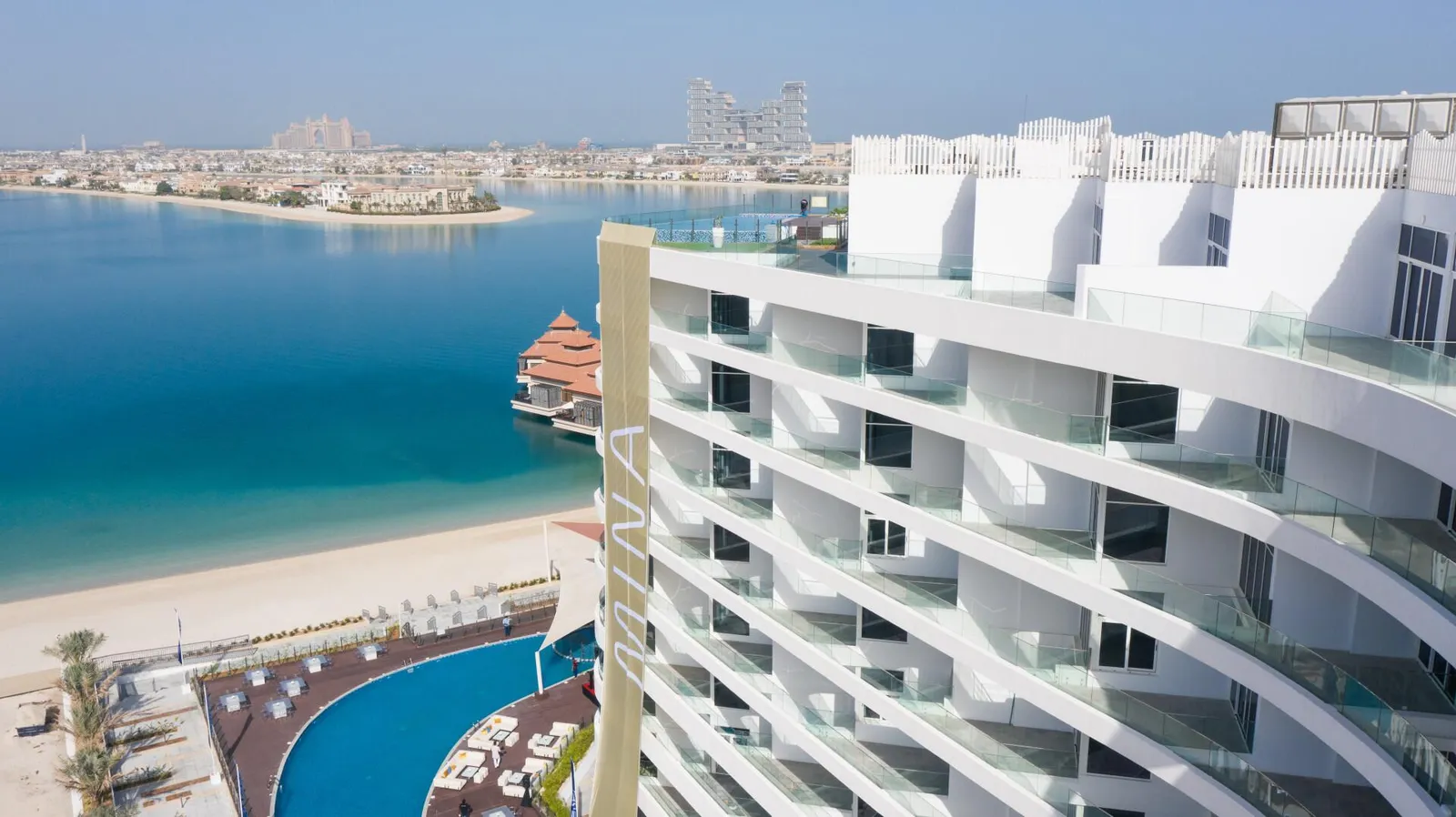
Mina by Azizi stands on the shore among five-star hotels, next to Anantara and Waldorf Astoria. The architecture references an ocean liner. The building has 174 apartments: 150 one-bedroom units, 20 two-bedroom units and four penthouses. It was completed in Q2 2021. Studios for sale start at AED 2,438,000 for 60 m², and one-bedroom apartments start at AED 3,868,000.
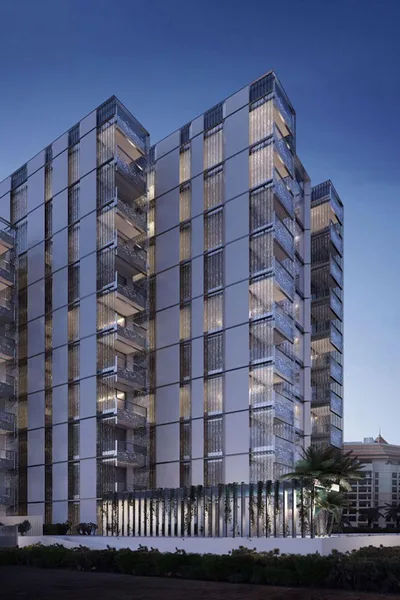
Muraba Dia: a nine-storey building on the eastern crescent, completed in Q1 2016. It was designed by Spanish practice RCR Arquitectes, with the motto “Living with light”. Each apartment is oriented east to west and has its own balconies. The building has 46 apartments and four penthouses. Four bedrooms across 445 m² are for sale at AED 23,001,600.
What else is being built and sold
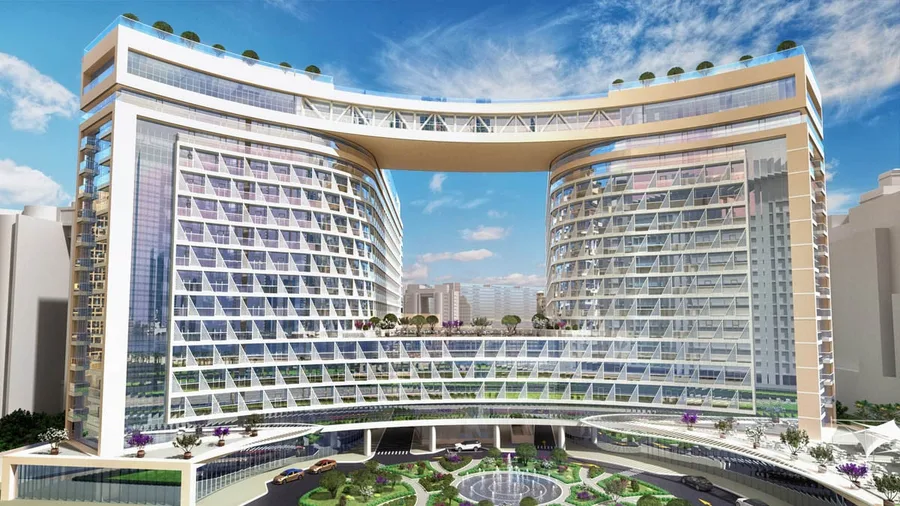
The most affordable way into a new Palm property is Palm Beach Towers by Nakheel, near the island entrance: 60 floors, 1,056 apartments, 83% complete and due for completion in Q4 2026. A one-bedroom apartment across 99 m² starts at AED 3,640,000, or AED 36,719 per m², the lowest price per square metre among new properties.
Ocean House by Ellington is due for completion in Q2 2027 and is 81% complete, with two-bedroom apartments starting at AED 11,097,828. Vitalia Palm Jumeirah Residences is due in Q1 2027, with two-bedroom apartments from AED 8,900,000 and construction 12% complete. Serenia Living is 100% complete, with four-bedroom apartments from AED 50,000,000.
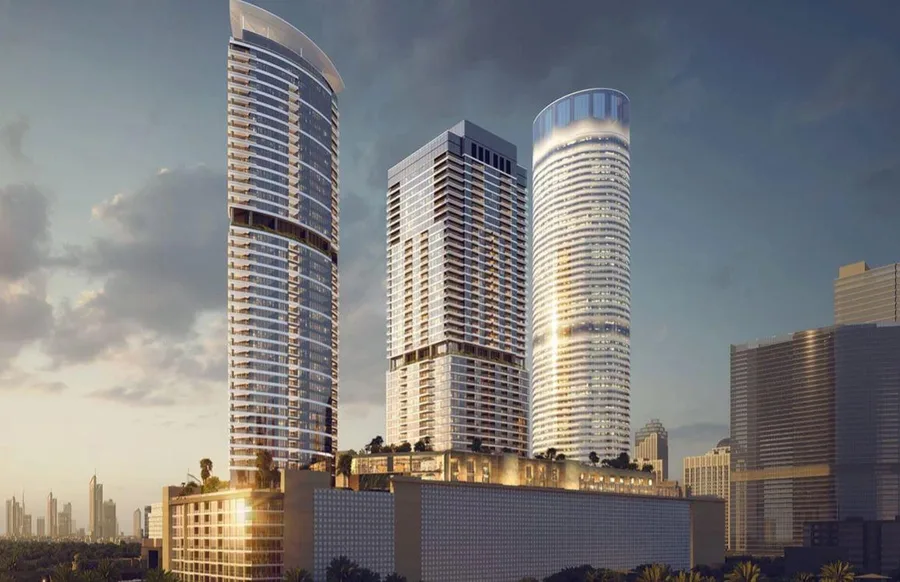
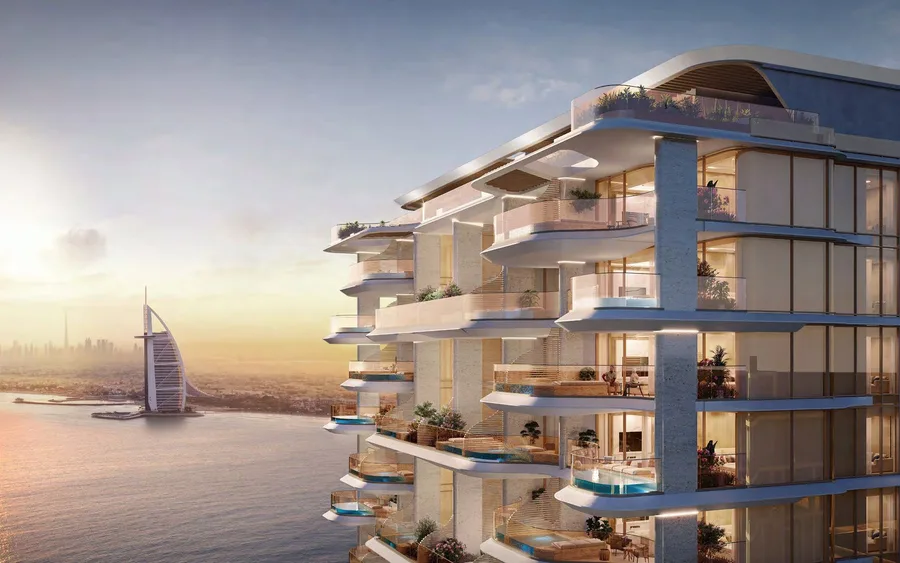
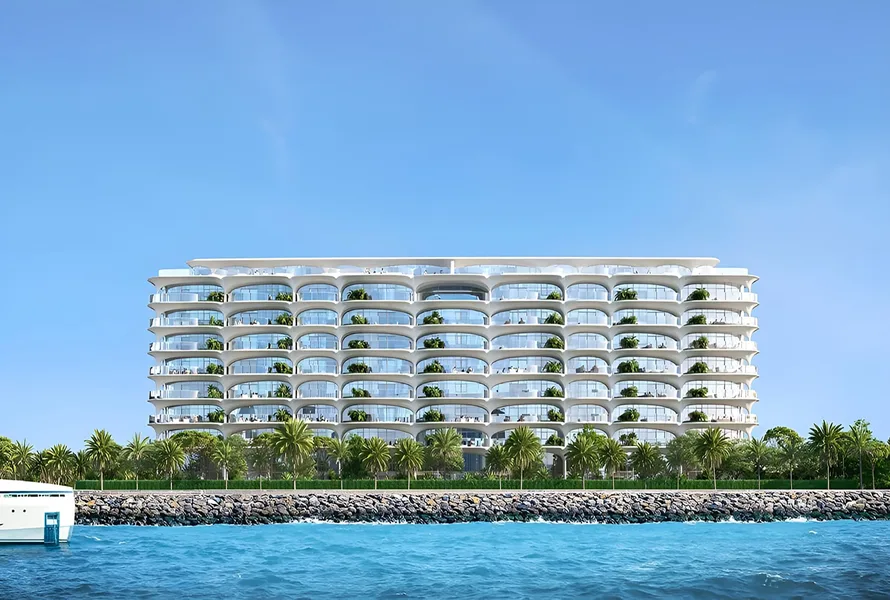
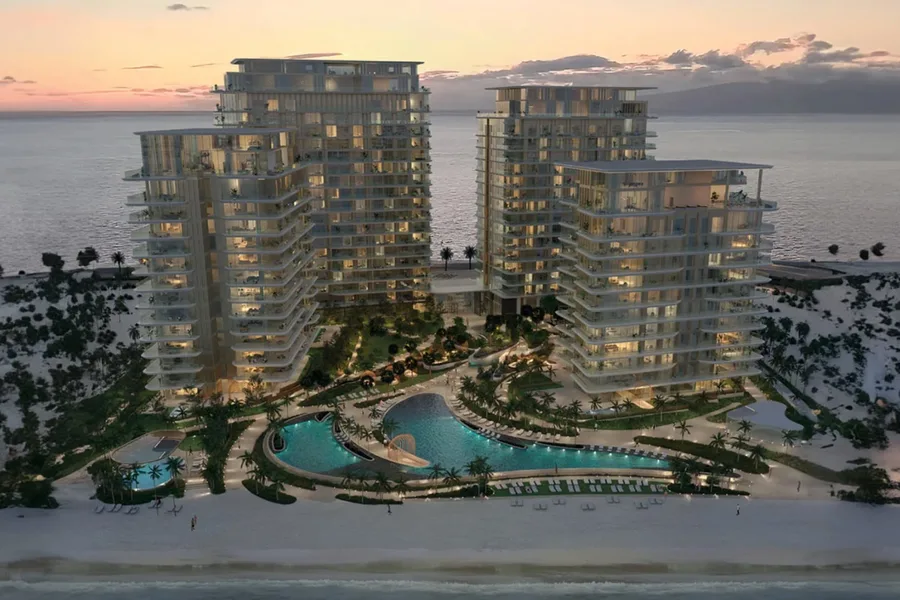
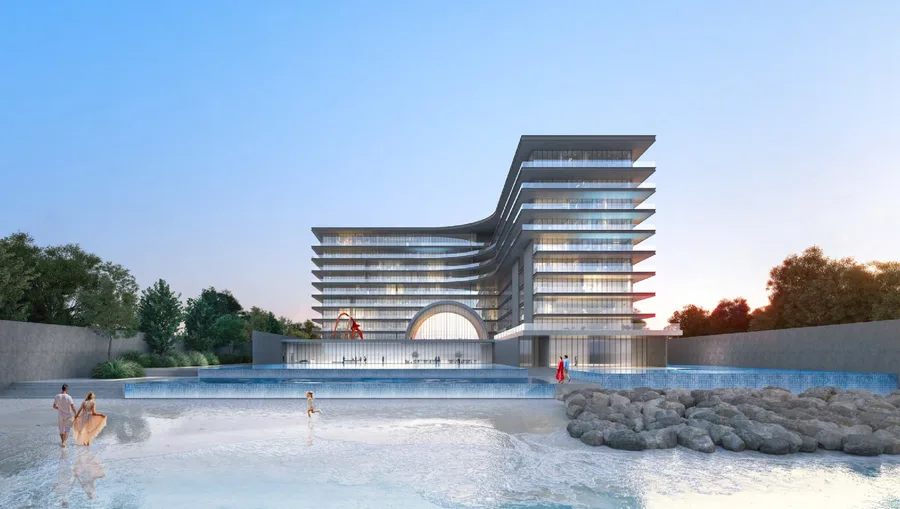
Some new properties in the catalogue are listed without prices, which are available on request. Armani Beach Residences by Arada was designed by Tadao Ando and is due for completion in Q4 2027. Como Residences by Nakheel rises to 72 floors and is due in Q1 2027. AVA at Palm Jumeirah, One Crescent, Luce, SLS The Palm, Olaia Residences and Maison Margiela Residences are also listed without prices.
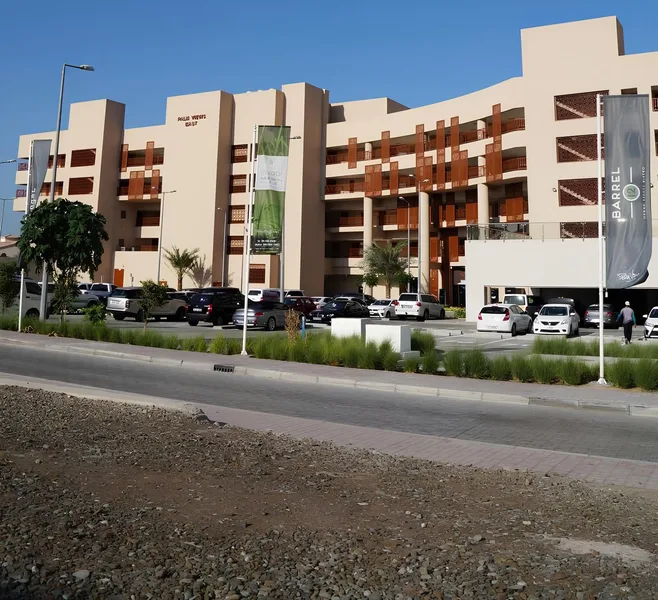
Apartments in completed buildings are for sale on the trunk. A 51 m² studio at Palm Views East costs AED 1,450,000, the lowest price on the island in our catalogue. A studio at Seven Hotel and Apartments costs AED 1,530,000, and one at Palm Tower costs AED 2,300,000 for 49 m².
The price of entry
The median entry price for new properties on the island is AED 17.3 million. For comparison, it is around AED 4.5 million in Dubai Marina, AED 4.1 million in Downtown and AED 2.8 million in Business Bay. The Palm is almost four times more expensive than the priciest of these districts. See our “How much it costs to enter the Dubai market” guide for comparisons with other parts of the city.
The ‘from’ price is more misleading here than usual: the same line includes a 1-bedroom apartment of 81 m² at Passo and a 4-bedroom apartment of 794 m² at ORLA Infinity. It is fairer to compare the price per square metre. On that basis, the spread is more than 3 times: from 36.7 thousand dirhams at the tower by the entrance to 122.7 thousand at the club residence at the top of the crescent.
In addition to the price, the buyer pays a 4% Dubai Land Department registration fee, followed by an annual service charge after completion. On the Palm, it is noticeably higher than in the city: AED 161 per m² per year at Palm Beach Towers, AED 269 at Ocean House, AED 301 at Passo, AED 377 at Armani Beach Residences, and AED 484 at Orla, ORLA Infinity and The Alba. We explain how this fee works in our guide to apartment running costs.
Payment plans for the island's properties vary. Palm Beach Towers requires 20% on booking, 40% during construction and 40% on handover. At Passo, 60% is due on handover; at Ocean House, half is paid upfront; and at Six Senses and Serenia Living, the full amount is paid on booking. We explain how to read these plans in our guide to developer payment plans in the UAE.
What you don’t see at a viewing
Who it suits and who it doesn't
| What matters to you | Which development | Why |
|---|---|---|
| A Palm address on a limited budget | Palm Views East, Seven | Completed studios from AED 1.45 million and AED 1.53 million |
| A new property below AED 5 million | Palm Beach Towers, Passo | One-bedroom apartments from AED 3.64 million and AED 4.15 million |
| Move in now and have your own beach | Ellington Beach House, Mina | Completed in 2024 and 2021 |
| Architecture by a recognised name | Orla, The Alba, Muraba Dia | Foster + Partners, Zaha Hadid Architects, RCR Arquitectes |
| Hotel service | Orla, ORLA Infinity, The Alba | Managed by Dorchester Collection |
| Wellness and spa | Six Senses Residences, The Alba | Six Senses Place covers 60,000 sq ft, and the wellness programme covers 3,000 m² |
| Long payment plan | Passo | 60% on handover, completion in 2029 |
Who it is not for. Anyone who drives to the centre every day: there is only one road off the island. Anyone who needs a metro station close to home. Anyone calculating rental income who is not prepared for a service charge of hundreds of dirhams per square metre. Read our guide to freehold ownership to see how foreign ownership works in the Emirates.
The second Palm: Palm Jebel Ali
Palm Jumeirah has a sister further along the coast. Reclamation for Palm Jebel Ali began in October 2002, and its breakwater was completed in December 2006, after which construction stopped for years. On 31 May 2023, Sheikh Mohammed announced a new master plan: an island twice the size of Palm Jumeirah, with up to 110 km of beaches and more than 80 hotels and resorts. Since 2024, contractor Jan De Nul has been working on the islands again.
In our catalogue, Palm Jebel Ali is listed separately, with seven projects, all by Nakheel. It is a different market with a different timeframe.
Buying mistakes
Quick answers
What is Palm Jumeirah?
An artificial palm-shaped island off the coast of Dubai. Construction began in June 2001, and Nakheel is the island’s developer. The island extends five kilometres into the sea and covers 560 ha.
What is the island made of?
The island was built from sand dredged from the Gulf seabed and rock. It required 7 million tonnes of rock from 16 quarries and 94 to 120 million m³ of sand. There is no concrete or steel in the island’s foundations.
How much does an apartment on Palm Jumeirah cost?
The most affordable apartment in a new development costs AED 3,640,000: a one-bedroom at Palm Beach Towers. The median entry price for new developments on the island is AED 17.3 million. In completed buildings, studios start from AED 1,450,000.
Can a foreigner buy a home here?
Yes. The Palm is one of the areas where foreigners may own property outright, or freehold. The list was issued in 2006 under Dubai Law No. 7.
Is the island sinking?
In 2009, surveying company Fugro NPA put settlement at 5 mm a year. Nakheel said it expected no more than 25 mm over 100 years and that settlement would cause cracks in the buildings.
How do you get to the island without a car?
Take the monorail from Gateway station on the mainland to Atlantis. The line is 5.45 km long. Dubai Tram serves Gateway station but does not go onto the island. There is no metro on the Palm.
Palm Jebel Ali: is it the same thing?
No. It is another island further along the coast. Reclamation began in October 2002, and the new master plan was announced on 31 May 2023. It is listed separately in our catalogue.
More guides
Tell us what you are looking for
Leave your number. A broker will call you, ask a few questions and send you a shortlist. No calls just to ask if you are still interested.