How to buy property in the UAE: from shortlist to keys
Booking, the SPA, Oqood, payments into escrow, snagging and the Title Deed. The rules have been checked against Dubai government websites.
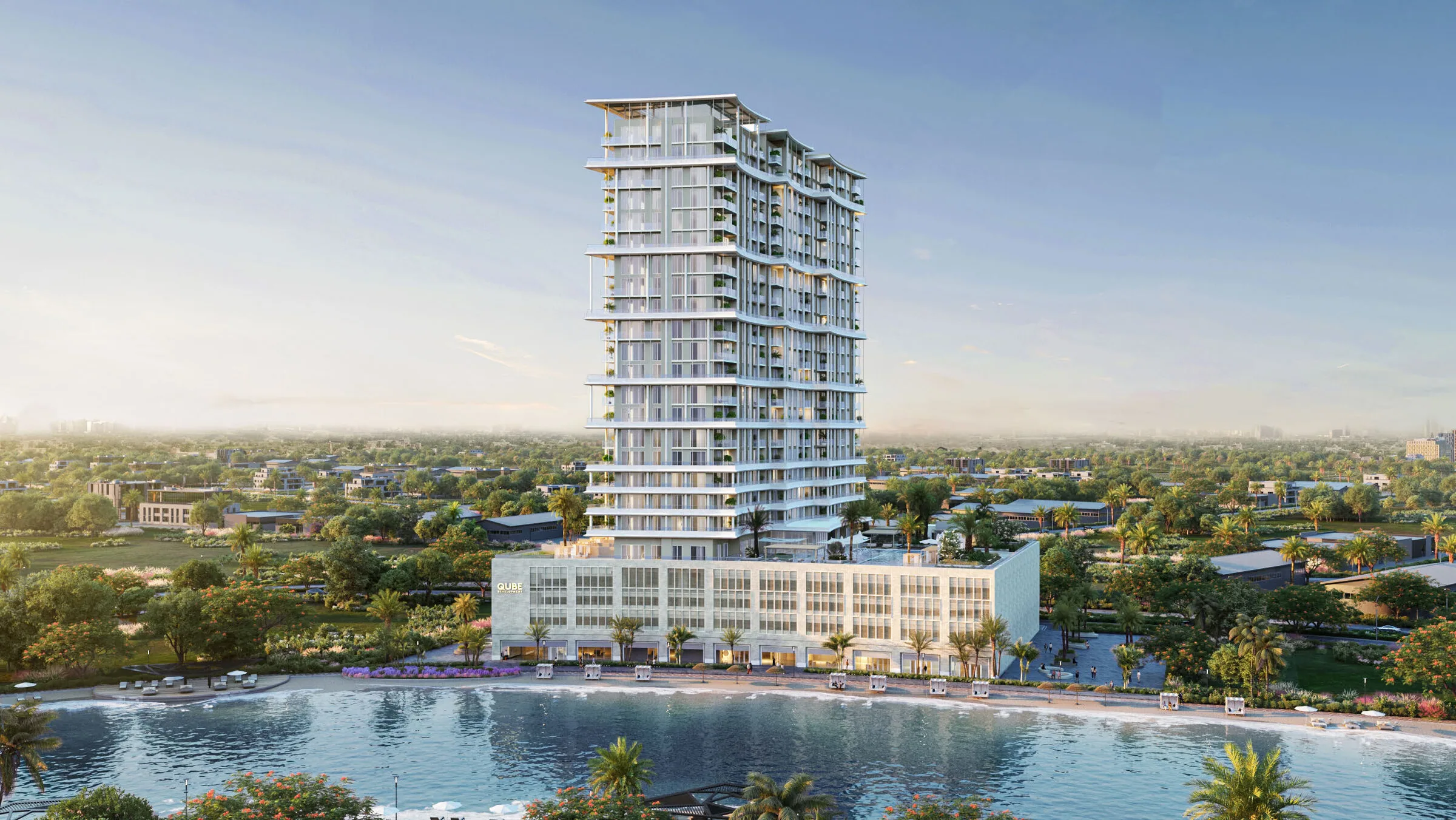
You can buy an apartment in Dubai as a foreigner without a UAE residence visa and without flying in: in freehold areas you can own the property outright; all you need is a passport. An off-plan purchase runs like this: booking, a contract with the developer, registration with the Dubai Land Department (DLD), scheduled payments into an escrow account, then snagging and the Title Deed at handover. On top of the price you pay the 4% Dubai Land Department fee. Below is the whole process step by step, with figures from the 1,057 projects in our catalogue, Dubai’s rules and stories from our clients.
Who can buy and what you are buying
In Dubai, foreigners can buy in freehold areas: there you can own an apartment, villa or plot with no restrictions, just like a UAE national. The areas are listed in Dubai Regulation No. 3 of 2006, and almost all new developments bought by foreigners sits inside them. Of the 1,296 projects in our catalogue across the Emirates, only a handful are sold leasehold, that is, as a lease for a fixed term. There is no age limit for buyers. How full ownership differs from a 99-year lease is explained in our guide to freehold.
Abu Dhabi has different rules. Foreigners can buy in nine investment zones: Yas, Saadiyat, Reem, Al Maryah, Lulu, Al Raha Beach, Saih Al Sedairah, Al Reef and Masdar City. Since April 2019, foreigners have been able to own property freehold in these zones. In Sharjah, a foreigner gets only a right of use for up to a hundred years. The rest of this guide is about Dubai, where most deals happen; Abu Dhabi and Ras Al Khaimah have their own section.
Twenty years of a market open to foreigners
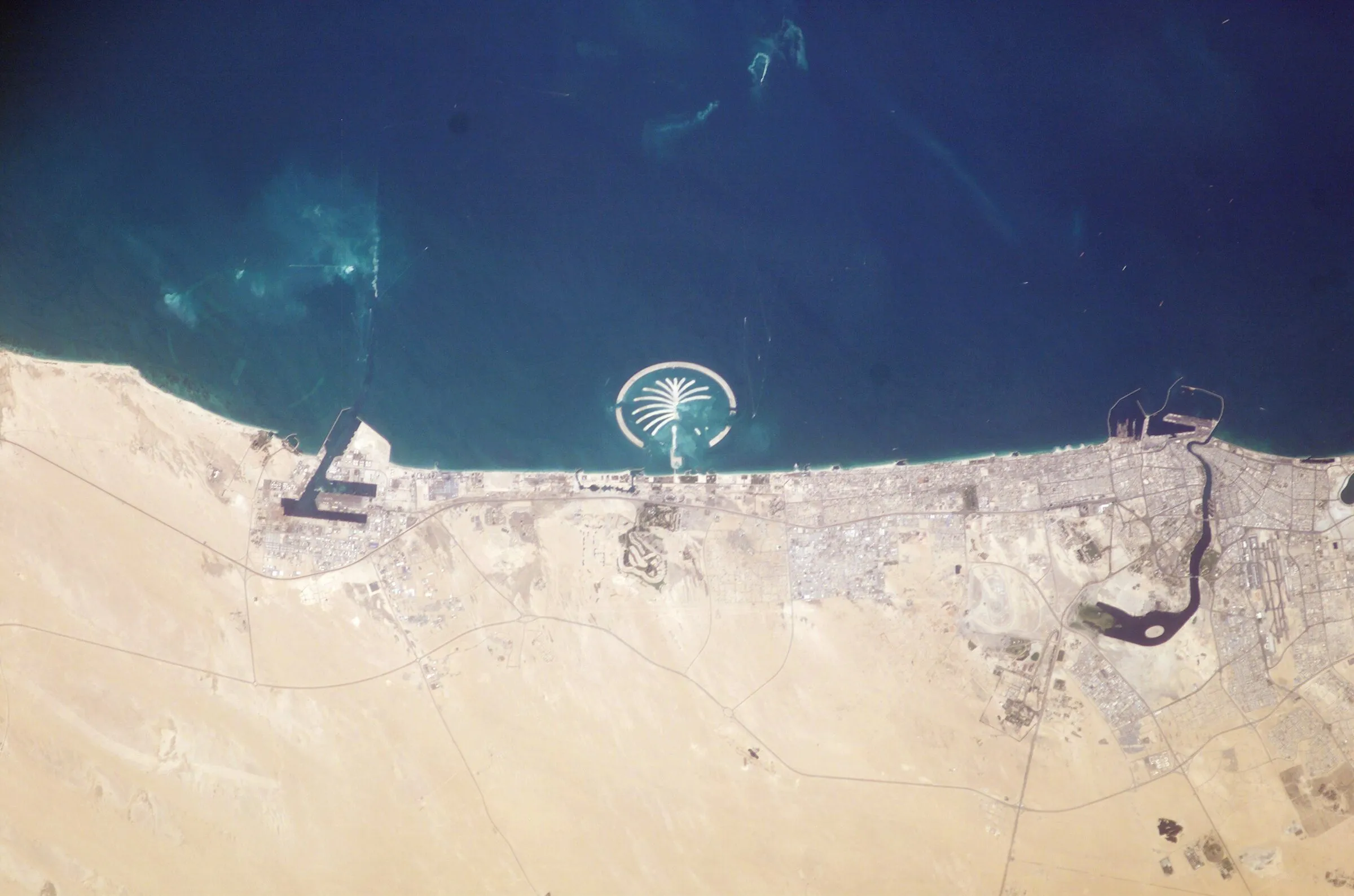
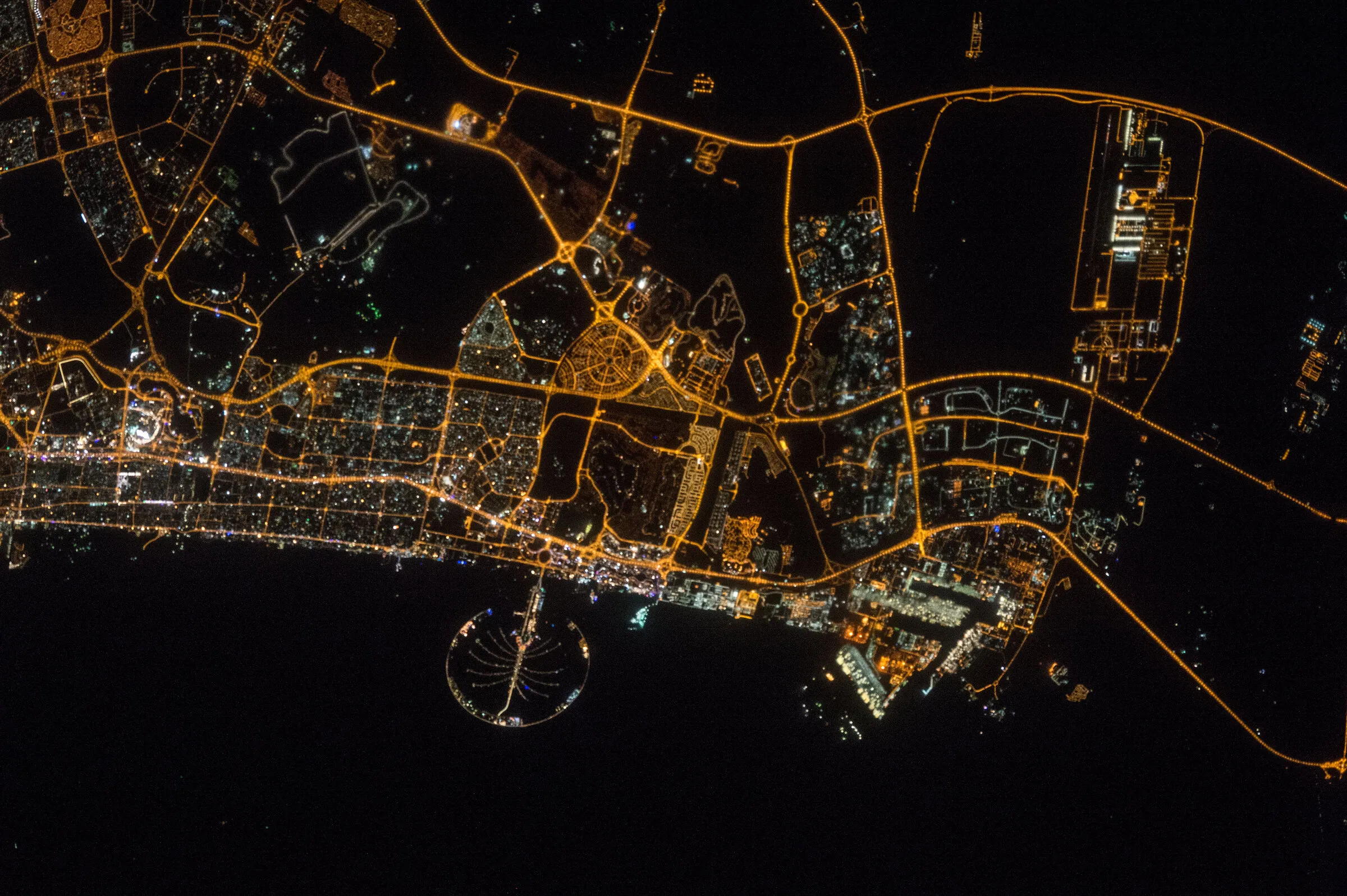
Dubai’s market for foreign buyers is young. When astronauts took this picture from orbit, there was not a single house on the Palm, and the freehold regulation came only three years later, in 2006. A year after that, Law No. 8 of 2007 required developers to keep buyers’ money in escrow accounts. Today’s market rests on these two rules.
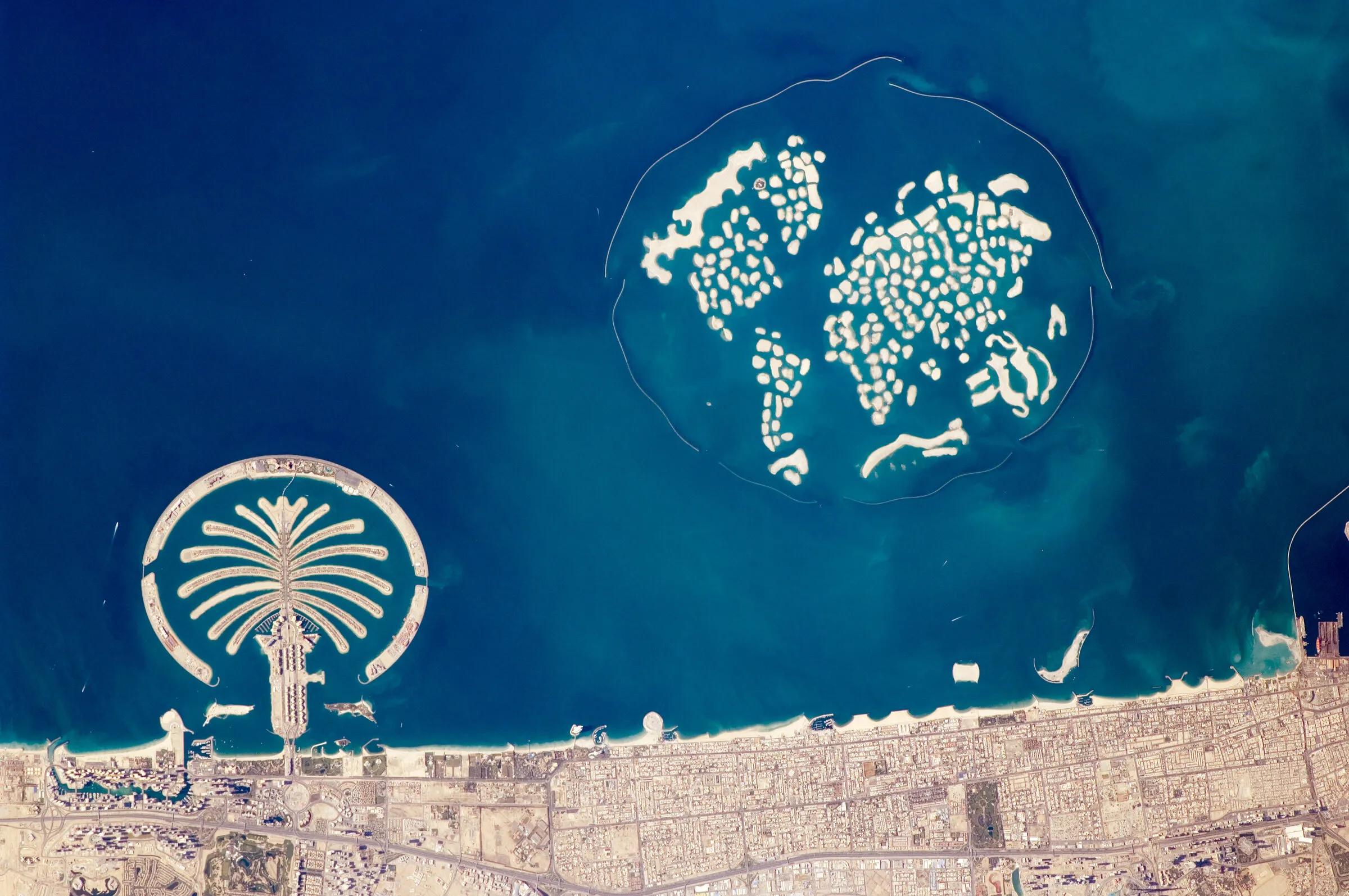
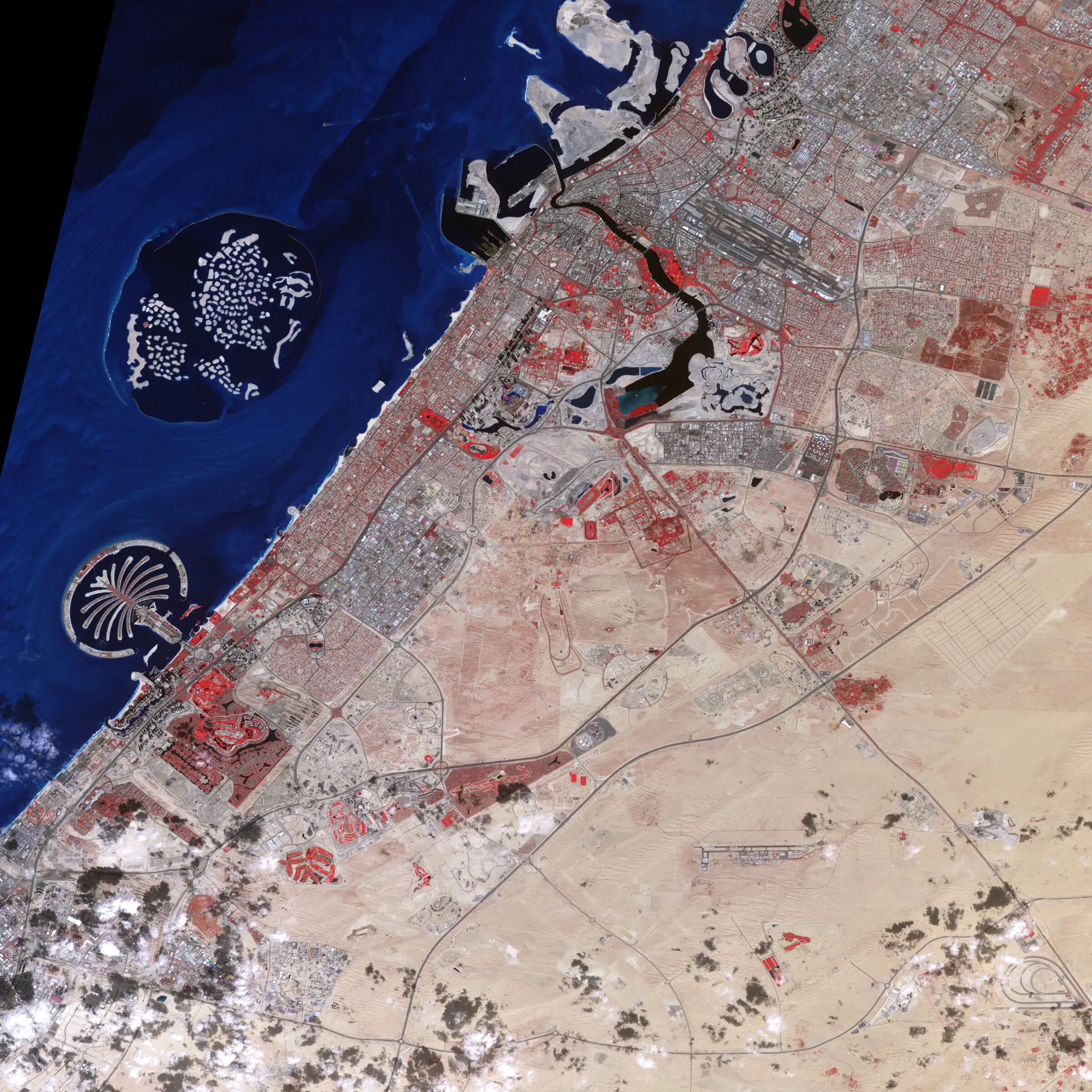
The World islands in the second image show the gap between what is advertised and what is handed over: the islands are reclaimed, yet the image shows no houses on them. The lesson for buyers is the same as twenty years ago: pay for stages you can already see, and check where the money is held.
Off-plan or ready
Most foreigners buy off-plan in Dubai. The reason is the payment plan: the developer takes part of the price upfront and the rest in instalments until handover, sometimes after it too. A ready apartment is almost always paid in full on the day of the deal, with your own funds or a mortgage.
In our catalogue, 500 Dubai projects are due for handover in 2026 and 2027. Construction is already under way on these projects, and you can see what you are buying. The trade-off is a shorter payment plan: the closer the handover, the more you pay upfront. A project at foundation stage gives the softest plan and the lowest price, but you wait three to four years.
A ready apartment on the secondary market makes sense when you need income from the first month, or a visa. The two-year investor visa is granted only on a ready property with a Title Deed. More on visas below.
Your goal and budget: where to start
Choose the area to fit your goal, not the other way round. To rent out, you need areas where people rent: near the Metro, business districts and schools. To live in, the park, the beach and the commute matter. If the aim is to preserve capital, the developer’s name and the building’s resale liquidity decide it.
The second figure to settle before you choose is the cash you need upfront. That is the first payment, the 4% fee and registration. For an apartment at AED 1.5 million with a 20% first payment, you will need about AED 360,000 upfront. The full entry cost across the market is covered in our guide to the cost of buying property in Dubai.
| Area | Entry from | Median | Projects |
|---|---|---|---|
| Jumeirah Village Circle (JVC) | AED 515K | AED 1.12M | 110 |
| Dubai South | AED 507K | AED 1.09M | 38 |
| Town Square | AED 1.03M | AED 1.61M | 15 |
| Al Furjan | AED 1.2M | AED 1.87M | 14 |
| Dubai Hills | AED 1.49M | AED 1.84M | 19 |
| Business Bay | AED 790K | AED 2.05M | 65 |
| Dubai Creek Harbour | AED 1.65M | AED 2.88M | 22 |
| Dubai Islands | AED 1.67M | AED 2.63M | 82 |
| Dubai Marina | AED 1.85M | AED 4.52M | 14 |
| Palm Jumeirah | AED 1.53M | AED 10.55M | 18 |
The table is calculated from our catalogue each time the page is built. “Median” means half the projects in the area are cheaper and half are more expensive. The gap between JVC and the Palm is almost tenfold, and it is not only about the sea. In JVC and Dubai South people buy to rent out; on the Palm and in the Marina they pay for the view and the address.
How to check the developer and the project
The buyer’s main protection in Dubai is the escrow account. Under Dubai Law No. 8 of 2007, all buyer payments go into a separate project account at a bank. The developer’s creditors cannot touch this money. The developer receives it in stages as construction progresses. After handover, the bank holds 5% in the account for another year. If the project is cancelled, the law requires the money to be returned to buyers. Of the 1,057 Dubai projects in our catalogue, 912 list an escrow bank.
What to check before you book:
Price growth isn’t promised either. Based on our analysis of 2025, more than half of new projects did not rise in price. The launch price in an advert usually refers to one apartment in the building: the smallest and least practical one.
Booking: your first payment
It all starts with the booking. The developer asks for 3 to 5% of the price and reserves a specific apartment for you. The booking confirmation states the unit number, the price, the payment plan and the deadline for paying the rest of the first instalment. Check them before you pay: these figures will carry over into the contract.
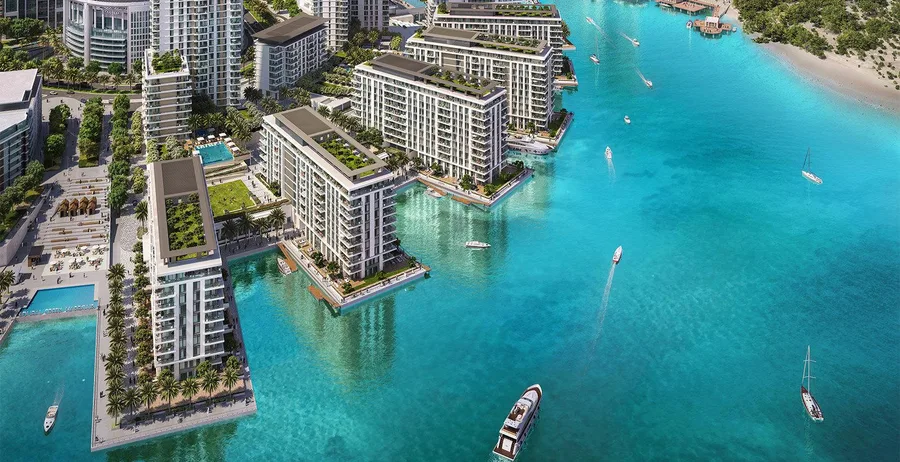
What this looks like in practice. Our client was buying an apartment on Saadiyat in Abu Dhabi for $3 million. There were more than two thousand applications for 140 apartments in the building. Payment from the client’s company account was agreed with the developer in advance, and the wet-signed documents were sent by courier from Europe. Without this preparation, the apartment would have gone to the next in line.
The SPA and Oqood registration
After the first payment, the developer sends the sale and purchase agreement (SPA). It sets out the payment schedule, the handover date, penalties for both sides and the resale terms. The contract is signed electronically; you don’t need to fly in.
The developer then registers the contract in the Dubai Land Department’s Interim Real Property Register, known as Oqood. The law allows 90 days from signing. The Oqood certificate arrives by email: it is proof of your rights to the off-plan apartment until the Title Deed is issued.
The Dubai Land Department fee is 4% of the price. Under the department’s tariff, it is split equally: 2% is paid by the seller and 2% by the buyer. But in the payment plans of the developers in our catalogue, the full 4% appears as a separate line on top of the price and is paid by the buyer. Sometimes the developer covers the fee as part of a promotion. In one of our deals, on a $2.7 million villa, the developer paid the $54,000 fee itself.
Payments on schedule
A payment plan is written as three numbers: how much on booking, how much during construction, how much on handover. “20/40/40” means 20% upfront, 40% in instalments during construction and 40% on handover.
51% of Dubai projects ask for 20% of the price as the first payment, and 17% ask for 10%. Another 107 projects are sold for full payment only. In 219 projects, part of the price is paid after handover, while renting the apartment out.
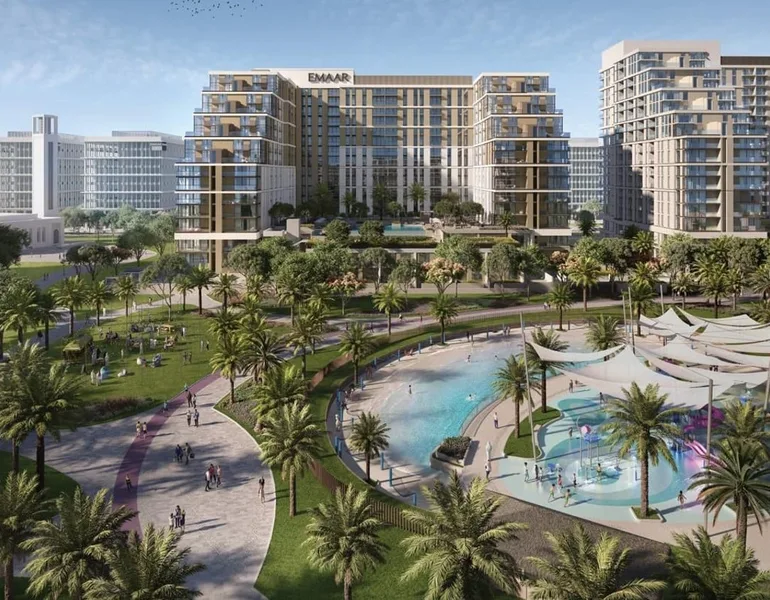
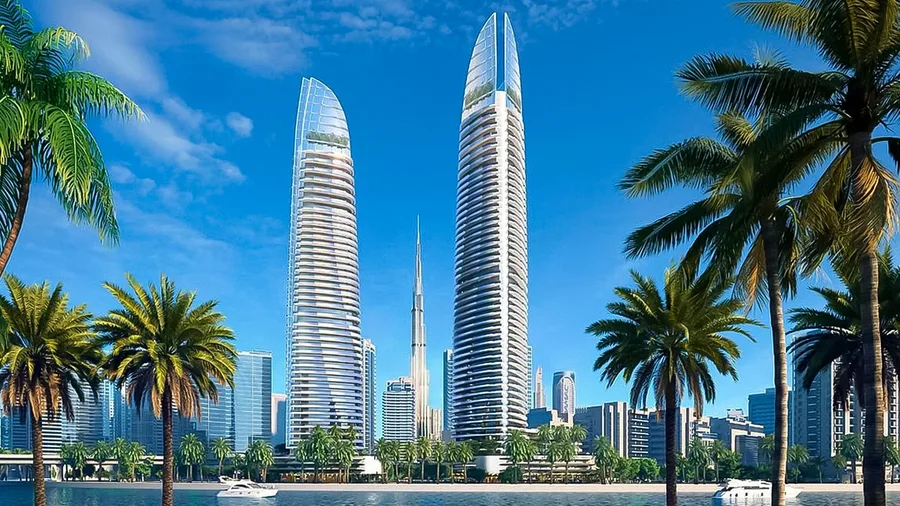
We explain how to read a payment plan, and where the catch is, in our guide to developer payment plans. The main rule here: pay on time. Late payment in Dubai is expensive.
If a payment is late
After a one-off delay, the developer usually waits a month or two and charges late-payment penalties. If arrears build up, the developer serves a 30-day notice and is then entitled to terminate the contract. Dubai law ties how much the buyer loses to how complete the building is:
| Construction progress | What the developer may do |
|---|---|
| Over 80% | Keep what has been paid and claim the balance, sell the unit at auction, or terminate the contract and retain up to 40% of the price |
| 60 to 80% | Terminate the contract and retain up to 40% of the price |
| Under 60%, construction under way | Retain up to 25% of the price |
| Construction not started | Retain up to 30% of the amount paid |
| Project cancelled | Refund everything the buyer has paid |
Penalties can be out of all proportion. In 2026 a client came to us who had run up $11,200 in penalties on a $17,400 debt after four months of arrears. We negotiated with the developer and had them halved, to $5,600. Better not to let it get that far: if you can see you won’t manage the next payment, talk to the developer before it falls due.
There is a flip side to this. The developer puts apartments that buyers have walked away from back on sale, sometimes 10 to 15% below market. That is how our client bought a villa in Tilal Al Ghaf for $2.6 million: the previous buyer had stopped paying. Later the villa was worth $3.08 million. The client had paid in 55% of the price and made $354,000, a 25% return on the money invested.
Reselling before handover
You can sell an apartment before handover, but only with the developer’s consent. The developer issues a No Objection Certificate (NOC) once you have paid a set share of the price, usually 30 to 50%. The threshold is written into the contract, so read it before you book. The developer decides what the NOC costs.
Not everyone manages to sell at a profit before handover. In our experience, only a small share of the market is resold this way: buildings with a big name, good floors, apartments bought at the very launch. The worst case we have seen went like this. An apartment was bought for $250,000 to sell on, no buyer was found, and it went for $200,000. Short-term rental brought in $27,000 a year instead of the expected $45,000.
Snagging and keys
When the building is complete, the developer invites you to the handover inspection and issues the final payment request. Don’t sign the handover certificate on the same day. Bring in a snagging inspector: they will check the apartment and draw up a snag list, which goes to the developer. The developer fixes the defects, the inspector checks again, and only then do you sign. An inspector costs about $400 in 2025 and about $545 in 2026.
After the final payment, the Dubai Land Department issues the certificate of ownership, the Title Deed. From that moment the apartment is fully yours. Next, transfer the electricity, water and cooling contracts into your name, or you won’t be able to rent the apartment out.
The warranty is written into law. Under Dubai Law No. 6 of 2019, the developer is liable for the structure for 10 years and for faulty building systems for 1 year. That year is your window to find everything: leaks, air conditioning, electrics. Move in, or put a tenant in, before it ends.
If you are buying a ready property
A ready property involves fewer steps. The parties sign a memorandum of understanding (MOU), and the seller obtains a NOC from the developer. In freehold areas the deal cannot be registered without it. The parties then meet at a Real Estate Registration Trustee office, the buyer pays, and the Title Deed is issued in the new owner’s name the same day. Registration takes about 25 minutes.
Mortgages in the UAE are available to foreigners too. For expatriates, the Central Bank of the UAE allows loans of up to 80% of the price for a first home up to AED 5 million, up to 70% above that amount, and up to 60% for a second home. For an off-plan property, the bank lends no more than 50%. The loan term is up to 25 years, the amount no more than seven times annual income, and repayments on all debts no more than half of income. There are no separate rules for people who don’t live in the UAE.
What you pay on top of the price
Everything added on top of the price:
| Item | Off-plan | Ready property |
|---|---|---|
| Dubai Land Department fee | 4% of the price, a separate line in the first payment to the developer | Under the tariff, 2% is paid by the buyer and 2% by the seller. Who pays what is recorded in the MOU |
| Contract registration | AED 1,000 through the developer’s portal, under the department’s tariff | AED 250 for the Title Deed, plus minor fees |
| Real Estate Registration Trustee office | Not needed | When a mortgaged property is sold: AED 4,200 for a property worth AED 500,000 or more and AED 2,100 for a cheaper one. The centre confirms the exact amount when you book |
| Developer NOC | Needed only if you resell before handover | Mandatory in freehold areas. The developer sets the price |
| Mortgage registration | 0.25% of the loan amount, AED 250 per document and the registration centre fee | |
| Broker | Specify the ready-property mortgage-registration fee. | |
| VAT on residential property | 0% on the first sale of a home within three years of completion; subsequent sales are exempt. Commercial property: 5% | |
Every year the owner pays a service charge for the building’s upkeep. Across 1,601 projects in our catalogue, the median is AED 168 per square metre a year and the minimum is AED 12. For an 80-square-metre apartment, that comes to about AED 13,400 a year. The owner pays it even if the apartment is let. The approved rates for every building are shown free of charge in the Service Charge Index in Dubai REST. The owner’s other costs are covered in our guide to what a Dubai apartment costs you each year.
A visa through property ownership
Property in Dubai can qualify you for a visa. In 2026 the conditions were relaxed noticeably.
The two-year visa is not issued for an off-plan apartment: it must be ready, with a Title Deed. For a Golden Visa on off-plan property, check on the day you apply: UAE visa rules change often.
Buying without flying in
An off-plan apartment in Dubai can be bought entirely remotely: booking, contract, payments and registration all happen without a trip. You need a passport. A ready apartment can also be bought without flying in, through a representative holding a power of attorney.
Documents from Russia come with one catch. The UAE is not party to the Hague Convention, so an apostille is not accepted there. A power of attorney and other papers signed abroad are legalised at a UAE consulate and then at the UAE Ministry of Foreign Affairs. Allow time for this.
Since October 2025, a ready apartment can be bought and sold entirely in the Dubai Now app through UAE Pass. But this is only for those with an Emirates ID and a UAE bank account.
Plan the payment separately. Transfers from Russia to the UAE are restricted, and the payment method must be agreed with the developer before booking. Another thing people remember too late is a will. Draw one up and register it in the UAE right after the purchase, so your family doesn’t have to deal with the local inheritance rules.
Renting it out
Annual leases are registered in the Ejari system. Rent can be raised only within the Dubai Land Department Rental Index: since January 2025 it allows increases of 0 to 20%.
You cannot offer short-term lets yourself without a permit from Dubai’s Department of Economy and Tourism. Owners work through a licensed company, which takes about 20% of the income. Work out the yield after these costs: advertisements usually quote it before these costs.
A typical mistake looks like this. An apartment for $300,000, forty minutes from the centre, was bought on the promise of a 10% annual yield. It delivered 5%: $15,000 a year instead of $30,000.
Taxes
In the UAE, individuals pay no tax on income from property they own: it counts as income from personal investment. The first sale of a new home is VAT zero-rated, and resale and residential rent are VAT-exempt. In Dubai, the tenant pays a 5% municipality fee on the annual rent, together with the electricity and water bill.
If you are a tax resident of Russia, income from renting out and selling an apartment in the UAE is taxable in Russia, and you file the return yourself. How it is calculated is explained in our guide to tax on selling an apartment.
Abu Dhabi and Ras Al Khaimah
Abu Dhabi opened its market to foreigners later than Dubai, and there are fewer developers. The registration fee is lower: in the payment plans of Abu Dhabi projects in our catalogue it is 2% on top of the price. Deals are registered through the DARI system.
In Ras Al Khaimah, the 4% fee is paid at handover rather than at launch, which works in your favour if you resell before completion. Deals are registered by the local real estate regulator. There are fewer developers here than in Dubai, so check the project and the escrow account just as carefully.
What you don’t see at a viewing
Mistakes that cost buyers money
Which option fits your goal
| Goal | What to choose | What to look at |
|---|---|---|
| Rental income from year one | A ready apartment, or one completing this year, near the Metro | Rent against the Rental Index and the service charge |
| Spread the payments | A project at foundation stage with 10 to 20% upfront | Developer track record and resale threshold |
| Residence visa | Ready property with a Title Deed | Two-year visa: any price; Golden Visa: from AED 2 million |
| Preserve capital in dollars | The developer’s name and an established area | Resale liquidity |
| Living there with your family | Dubai Hills, Creek Harbour, Sobha Hartland | Schools, parks, the commute |
Everything on the UAE off-plan market, with prices and payment plans, is in our catalogue. Prices by Dubai area are on a separate page.
Quick answers
Can a foreigner buy an apartment in Dubai?
Yes. In Dubai’s freehold areas, a foreigner can own an apartment, villa or plot outright. You don’t need a residence visa or a trip to buy off-plan: a passport is enough.
How much do you pay on top of the price for an off-plan property in Dubai?
The 4% Dubai Land Department fee, which the developer collects with the first payment. Plus the contract registration fee: through the developer’s portal it is AED 1,000 under the department’s tariff.
Who pays the 4% fee on a ready apartment in Dubai?
Under the Dubai Land Department tariff, the buyer pays 2% and the seller 2%. The parties can agree otherwise and record it in the MOU.
What first payment do you need for an off-plan property in Dubai?
Most often 20% of the price, in some projects 10%. On top of that comes the 4% Dubai Land Department fee.
Do you get a visa for buying an apartment in Dubai?
Yes. The two-year investor visa is granted for a ready apartment of any value in sole ownership, or for a share worth at least AED 400,000. The 10-year Golden Visa is granted for property worth AED 2 million or more.
Can you buy an apartment in Dubai remotely?
Yes, you can buy off-plan property without flying in: booking, contract and payments are all done remotely. Documents signed abroad are legalised through a UAE consulate: the UAE does not accept apostilles.
What happens if you don’t pay the developer on time?
The developer charges penalties and, after a 30-day notice, can terminate the contract. How much the developer may retain depends on completion: up to 25% of the price if the building is under 60% complete, and up to 40% if it is more than 60% complete.
More guides
Tell us what you are looking for
Leave your number and a consultant will call you back, ask a few questions and send you a shortlist. We won’t keep calling just to ask whether you are still interested.